Liberty Mountain and Whitetail Resort are close enough to the metropolitan area for an after-work night session or a spontaneous day trip. Both have extensive snowmaking. Both offer night skiing. Both are now part of Vail Resorts and included on the Epic Pass.
And for years, DCSki readers have debated which one they prefer.
On paper, Whitetail looks like the stronger ski mountain. It has substantially more vertical, longer runs, and a high-speed quad that can rack up an impressive amount of vertical in a few hours.
But then you ski Liberty.
Its mountain is smaller, but its terrain twists in different directions, wraps around to a separate backside, and contains a collection of short steeps that give it a character quite different from Whitetail. It just has a different vibe.
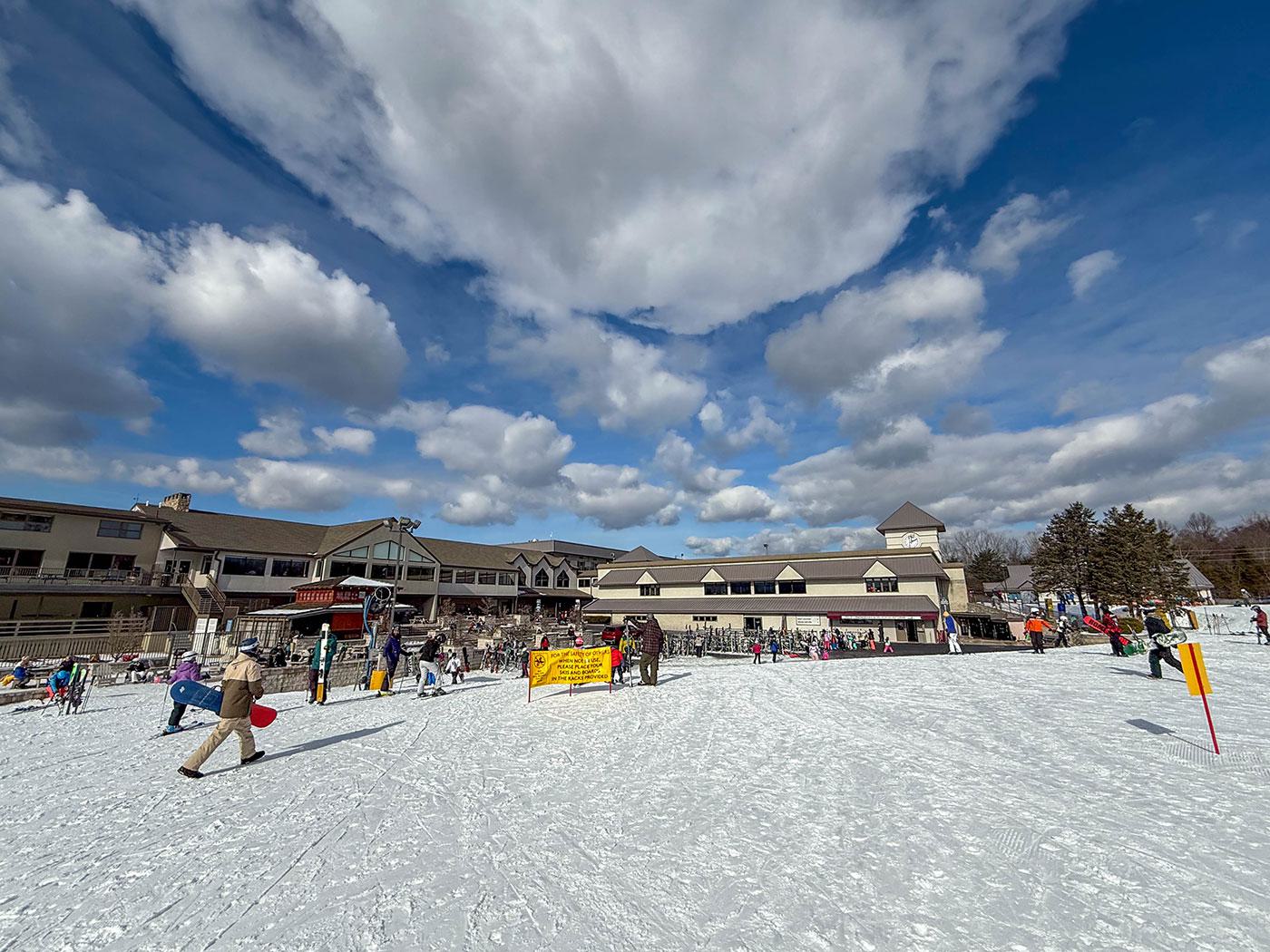
DCSki’s Editor spent years automatically choosing Whitetail due to its elevated vertical and high-speed quad. The statistics simply looked better. After finally skiing Liberty, he realized he had been missing out on a ski area that’s special in its own right.
The Mountains
Whitetail has the obvious advantage in vertical.
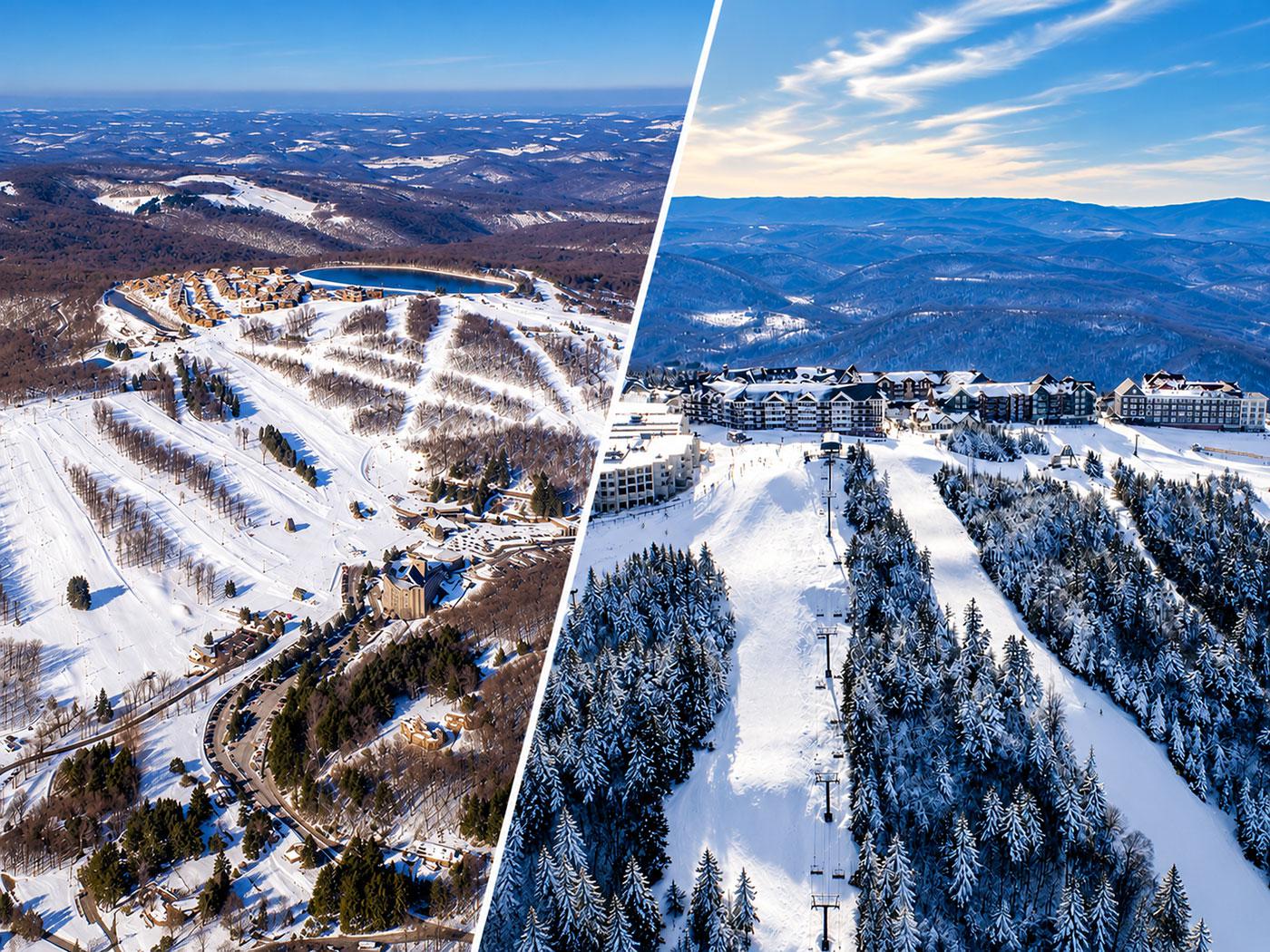
The Mercersburg, Pennsylvania resort rises 935 feet, with 23 trails spread across 117 skiable acres. Its longest run approaches a mile. Of the 30 Mid-Atlantic ski resorts that DCSki covers, Whitetail is in the Top 9 in terms of vertical.
Liberty has a modest 620 feet of vertical, 16 trails, and approximately 100 skiable acres.
The extra 315 feet of vertical at Whitetail definitely makes a difference.
Whitetail’s main intermediate terrain drops fairly continuously from the summit. Angel Drop, Limelight, Snow Dancer and their neighbors allow skiers to settle into a rhythm and make sustained turns before reaching the bottom. A high-speed quad brings them quickly back to the top.
A DCSki Forum member who skied seven-hour days at both resorts described Whitetail’s blue runs as longer and more consistent in pitch. Using a tracking app, he logged more than 27,000 vertical feet in one day at Whitetail and credited the express quad with making repeated laps particularly efficient.
But Liberty uses its smaller vertical differently.
The front side contains beginner and intermediate terrain, while the backside offers a collection of steeper runs including Upper Heavenly, Upper Strata, Upper Eastwind and Upper Ultra. None provide the sustained descent found at Whitetail, but there is more variety in how the terrain is arranged. The trails wander around the mountain on their way down; they’re not straight-down affairs like many of Whitetail’s slopes.
DCSki Columnist Jim Kenney once summed up the distinction nicely in a Forum comparison: he considered Whitetail the stronger mountain from a pure terrain standpoint, but often had more fun at Liberty.
That may be the central difference between the two.
If you like longer, sustained runs and piling up vertical: Whitetail has the edge.
If you like moving around a mountain and sampling different kinds of shorter terrain, you’ll definitely enjoy Liberty.
Beginners
Both resorts have invested heavily in beginner terrain and instruction, and both are reasonable places to learn.
Liberty dedicates a substantial portion of its lower mountain to easy terrain served by its own lifts. Dipsy Doodle gives progressing beginners a longer green-circle route, while the flatter learning terrain provides space for someone who is still figuring out how to stop and turn.
A recent DCSki Forum discussion comparing beginner lessons at the two mountains described Liberty’s lower terrain as particularly forgiving for someone who wants to ease into the sport.
Whitetail’s beginner area is similarly separated from the main mountain, with very gentle terrain at the far skier’s left. From there, the long and wide Sidewinder provides a particularly good next step.
The mountain itself is arranged rather conveniently at Whitetail for progression: terrain generally becomes more difficult as you move across the trail map from left to right.
For someone on their first day, Liberty’s broad collection of easy lower-mountain terrain is a comfortable place to learn.
For a beginner who is progressing quickly and wants a longer run, Whitetail’s Sidewinder is hard to beat.
Intermediate Skiers
Whitetail may be at its best for intermediates.
The center of the mountain contains a collection of long blue cruisers served by the high-speed Whitetail Express quad. On an uncrowded weekday, an intermediate skier can make a large number of runs without much downtime.
The terrain is straightforward. Ride up, pick another route down, repeat.
Liberty’s blue terrain is shorter and less uniform. Some trails change character along the way, and several routes on the backside include steeper upper sections before mellowing farther down.
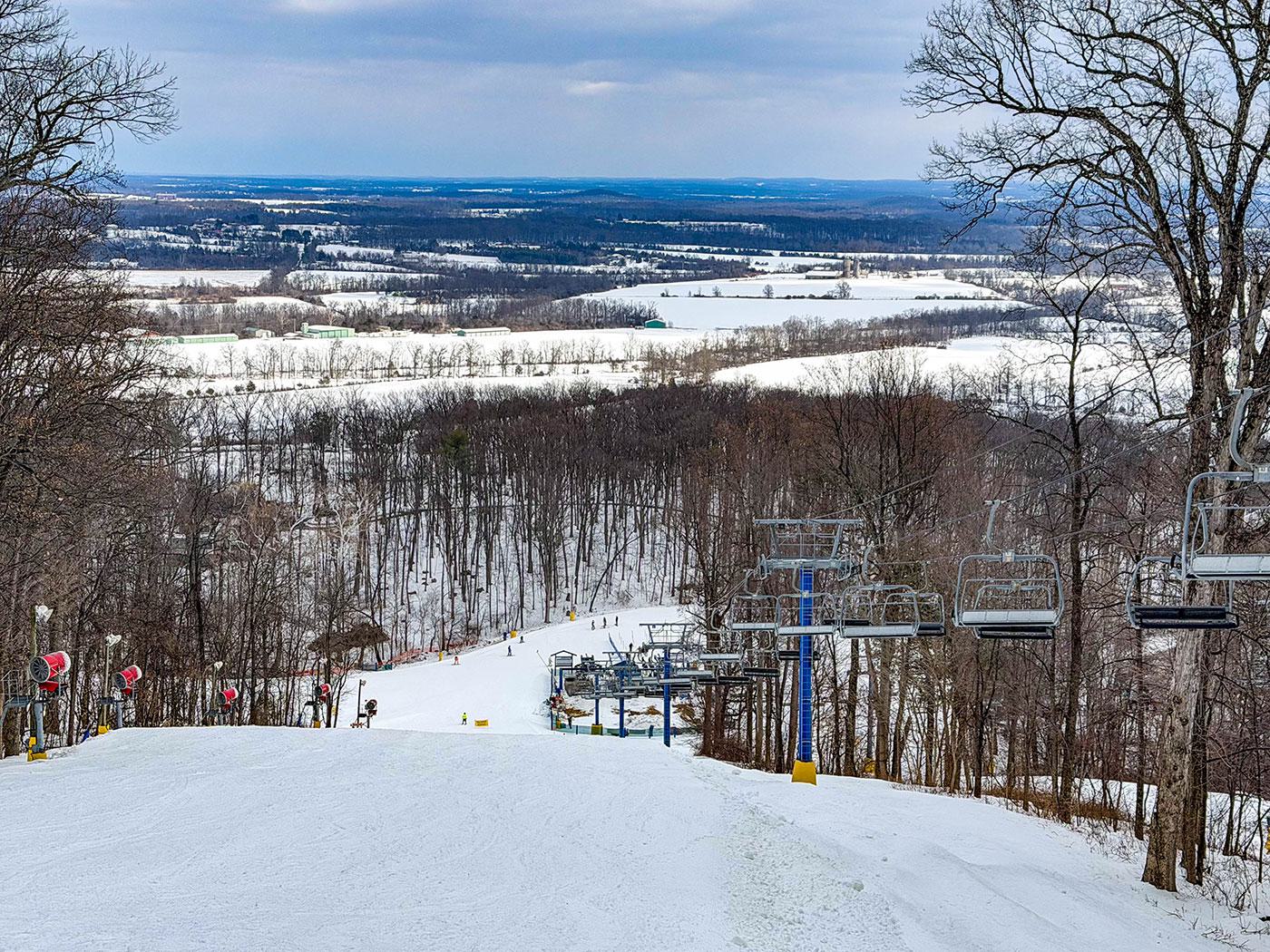
That can make Liberty feel more varied, although Whitetail provides a better opportunity to settle into longer turns and work on technique over a sustained pitch.
DCSki readers comparing the resorts have repeatedly identified that difference: Whitetail’s intermediate runs are longer and more consistent; Liberty’s terrain changes more from trail to trail.
Advanced Terrain
Whitetail has the longer mountain and sustained steeps. Three advanced trails are grouped together on the right side of the mountain and served by their own quad chairlift: Bold Decision, Exhibition, and Far Side. To get there, skiers have to descend the short-but-steep Drop In, which serves as a nice filter to prevent more novice skiers from accidentally ending up in an area they probably shouldn’t be.
Whitetail’s double black diamond-rated Bold Decision has a genuinely steep section towards the end; it’s common for skiers to pause at the beginning of that steep part and question their life choices.
Liberty counters with its backside.
Upper Ultra, Upper Eastwind, Upper Strata and Upper Heavenly contain some genuinely steep pitches, albeit in short bursts. Depending on grooming and natural snowfall, bumps can add considerably more personality.
DCSki bump skiers have historically given Liberty considerable credit in this category. One Forum discussion described Liberty as the most reliable of the nearby resorts for finding moguls, while other members have repeatedly cited its short backside steeps as the reason they enjoy the mountain.
Whitetail often allows black diamond Exhibition to bump up, but that’s pretty much the only place you’ll find moguls at Whitetail.
Lifts and Laps
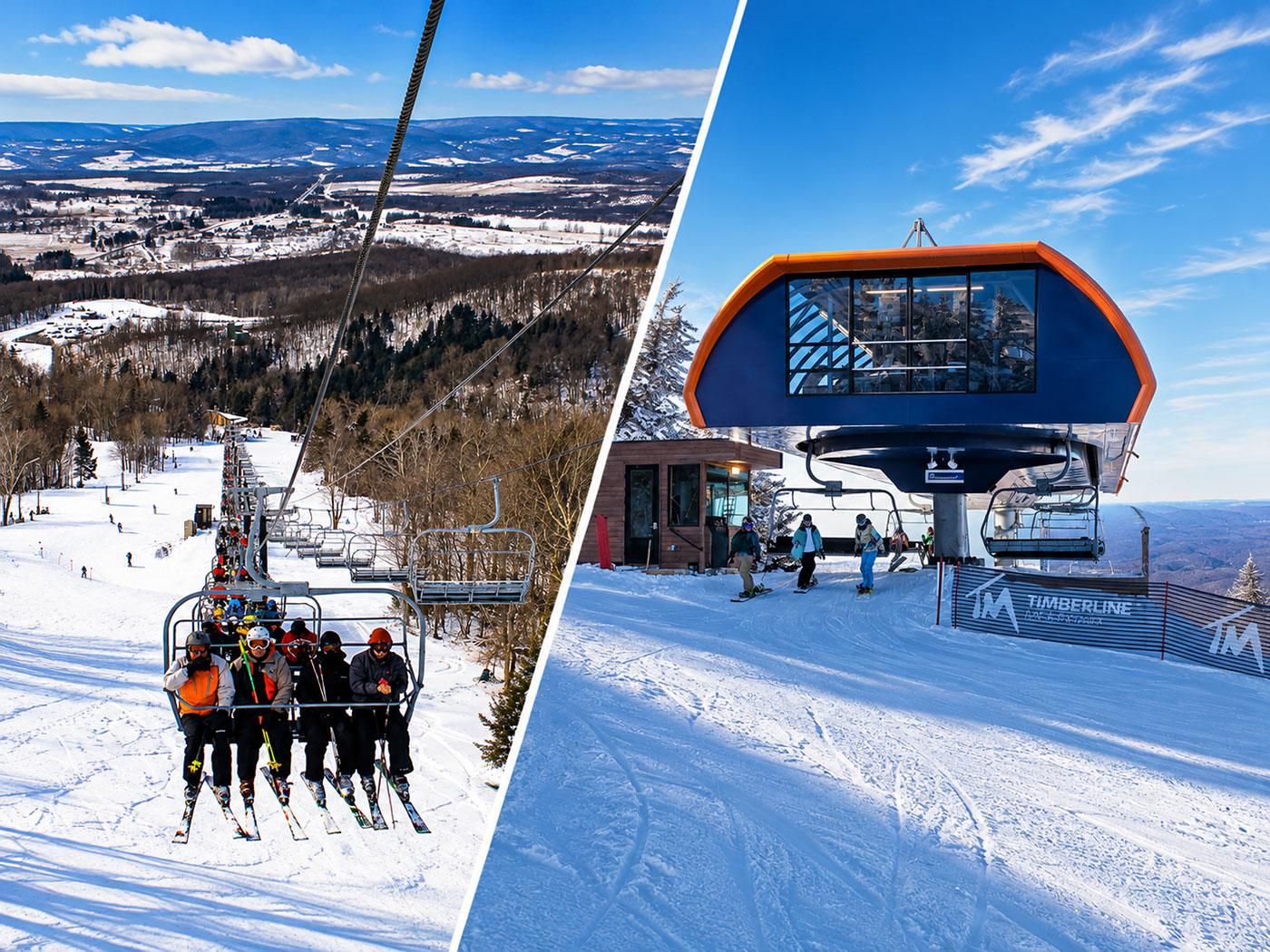
Whitetail’s high-speed quad is a standout here, and helps skiers quickly get to the top of its 935-foot vertical.
Its high-speed quad serves most of the main mountain and makes the resort extremely efficient when lines are short. If your goal is to ski hard for three or four hours and accumulate as much vertical as possible, Whitetail is difficult to beat among the close-in Washington-area resorts.
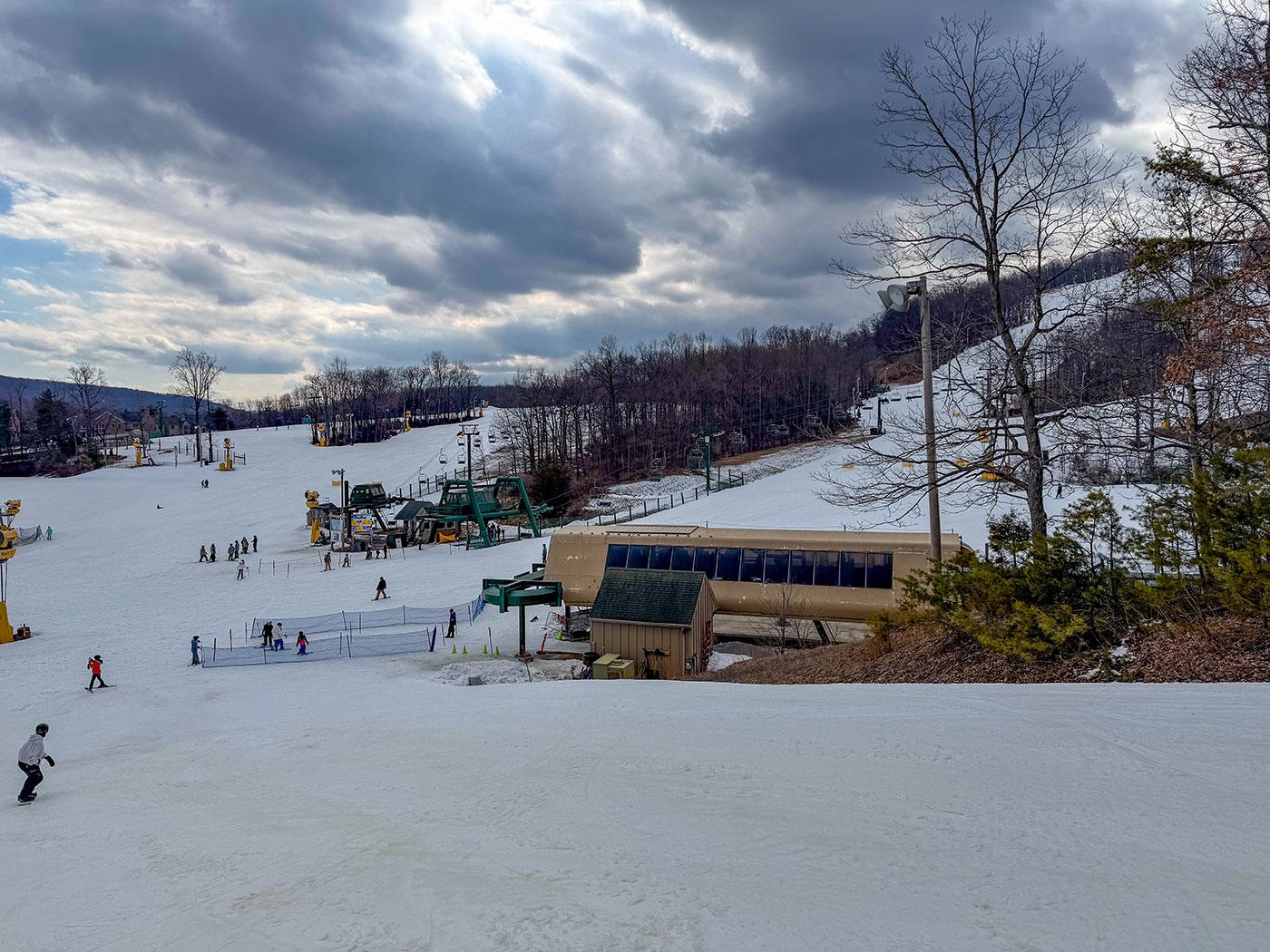
The Whitetail Express is starting to get long in the tooth, though. It was the first high-speed lift in the Mid-Atlantic region when Whitetail first opened in the early 1990s, and it’s now one of the oldest still-running lifts of its type. In recent years, DCSki readers have reported times when the lift has broken down. As the only way to get to the majority of Whitetail’s intermediate and expert terrain, when the high-speed lift goes down, that’s a big problem, making the majority of Whitetail’s terrain effectively inaccessible. It doesn’t happen often, but it’s always wise to check condition reports before heading to the slopes.
Liberty relies primarily on tried-and-true fixed-grip quads, which are simpler in design and less expensive to maintain.
That means more time sitting on a chairlift, although its lift network also divides skiers among several parts of the mountain. Once you head to the backside, the experience can feel somewhat removed and quieter from the activity around the main base, and that’s not a bad thing.
Both resorts have eight or more lifts when surface lifts are included, but the high-speed quad gives Whitetail a clear operational advantage for skiers making repeated summit laps.
Of course, there’s an important qualifier.
A high-speed chair isn’t especially high-speed when several hundred people are standing in front of it.
Which brings us to crowds.
Crowds
Both resorts can get busy, especially on holiday weekends.
Their proximity to Washington and Baltimore is one of their greatest assets and, on a prime Saturday after fresh snow, one of their greatest liabilities.
Whitetail’s layout concentrates a large share of intermediate and advanced skiers at the base of the main high-speed quad. When the mountain is busy, that lift line can become a chokepoint.
Liberty distributes traffic somewhat differently between its front and backside. Experienced DCSki skiers have long suggested heading to the backside on crowded days, where lift lines can be shorter and the steeper terrain is concentrated.
The best solution at either mountain is familiar to DCSki readers: go midweek, arrive at opening, or ski later in the day.
On a weekday, both can feel like private ski areas.
Night Skiing
Both Liberty and Whitetail illuminate their entire ski operations, making them particularly useful to Washington-area skiers who don’t want to dedicate a full day to skiing.
Whitetail’s longer runs make for satisfying evening laps, and the mountain has long been one of DCSki’s favorite choices for an after-work session.
Liberty has its own advantage after dark: its smaller scale and compact layout can create a pleasantly relaxed atmosphere after the daytime crowd disappears. DCSki’s Editor has increasingly used Liberty for short evening sessions, particularly since moving closer to the mountain.
One DCSki Forum skier who spent full days at both resorts thought Liberty’s trails were somewhat more evenly illuminated, although that’s the sort of observation that can vary by trail and conditions. Whitetail’s trails tend to be wider than Liberty’s, so that may have something to do with it.
Either way, night skiing is one of the strongest arguments for having these mountains so close to a major metropolitan area, and we’ll call this one a tie, even though night skiing hours have been reduced in recent years from what they once were.
The Base-Area Experience
Liberty feels more like a small resort.
Its base includes the Liberty Hotel, restaurants, conference and event facilities, and an adjacent golf course. The broader property operates year-round.
Whitetail feels more like a purpose-built ski area.
Its base lodge is modern and functional, with restaurants, rentals, ski school facilities and a residential village lining part of the beginner terrain. But the resort has traditionally functioned primarily as a winter day-trip destination. While there is a nearby golf course, the ski are essentially shuts down during the summer.
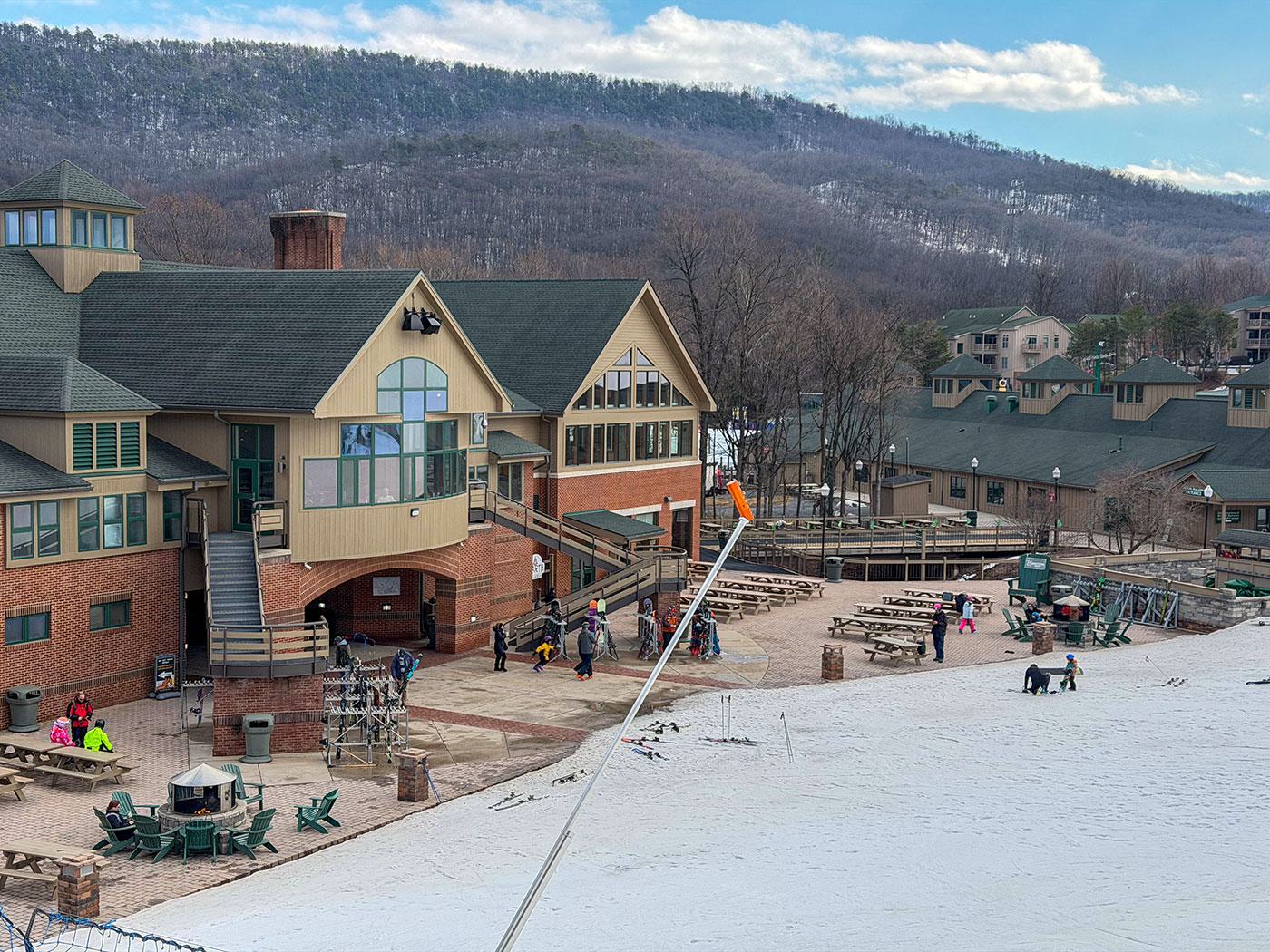
Whitetail used to have an advantage over Liberty: it felt more upscale, with personal touches like a free ski check. When it first opened in the 1990s, its original developers looked towards the design and customer service experience of Utah’s Deer Valley as inspiration. It also was in competition with neighbors such as Liberty and Roundtop.
With many Pennsylvania ski areas merging into consolidated ownership since the 1990s, there is less local competition, and some of the “personal” touches that made individual resorts distinctive are gone. Whitetail feels a bit different than it did a decade or so ago. But this is something long-time skiers are more likely to notice than new visitors to the resort.
If you’re simply arriving, skiing and heading home, Whitetail’s setup works extremely well.
If you want the mountain to feel a little more like a resort property, Liberty has more going on around the slopes, although it’s still not as well-rounded of a resort as Mid-Atlantic properties such as Seven Springs or Snowshoe Mountain.
Getting There
Obviously, this one depends heavily on where you live.
From much of the Washington region, the two resorts are close enough in driving time that skiers have spent decades choosing between them based on conditions and preference.
From Baltimore and points northeast, Liberty can be appreciably closer. DCSki estimates approximately 63 miles from Baltimore to Liberty versus about 92 miles to Whitetail. From Washington, the difference is smaller: roughly 78 miles to Liberty and 89 to Whitetail.
So Which One?
In this matchup, you’ve seen that both ski areas offer their own strengths. So there’s no clear winner. The answer really does depend on what you value, and perhaps simply what you’re in the mood for on any given day.
Whitetail offers substantially more vertical, longer intermediate runs and a high-speed quad capable of delivering a lot of skiing in a short period of time. Its mountain has a clean, logical layout and works particularly well for skiers who enjoy making repeated laps.
Liberty is smaller, but its terrain has more twists and turns. The backside gives stronger skiers a cluster of short steeps, its beginner terrain is approachable, and the whole place has a slightly different personality from Whitetail.
Many visitors to these mountains are going to have an Epic Pass in their pocket, which means they don’t have to stress too much about the decision: both resorts are covered.
If you live close enough to either mountain, perhaps the right strategy is the one DCSki skiers have been following for years: check the snow report, look at the weather, consider the traffic, and point the car toward whichever one sounds better that morning.
Or simply flip a coin and mix things up.
The other mountain will still be there next time.


Reader Comments