
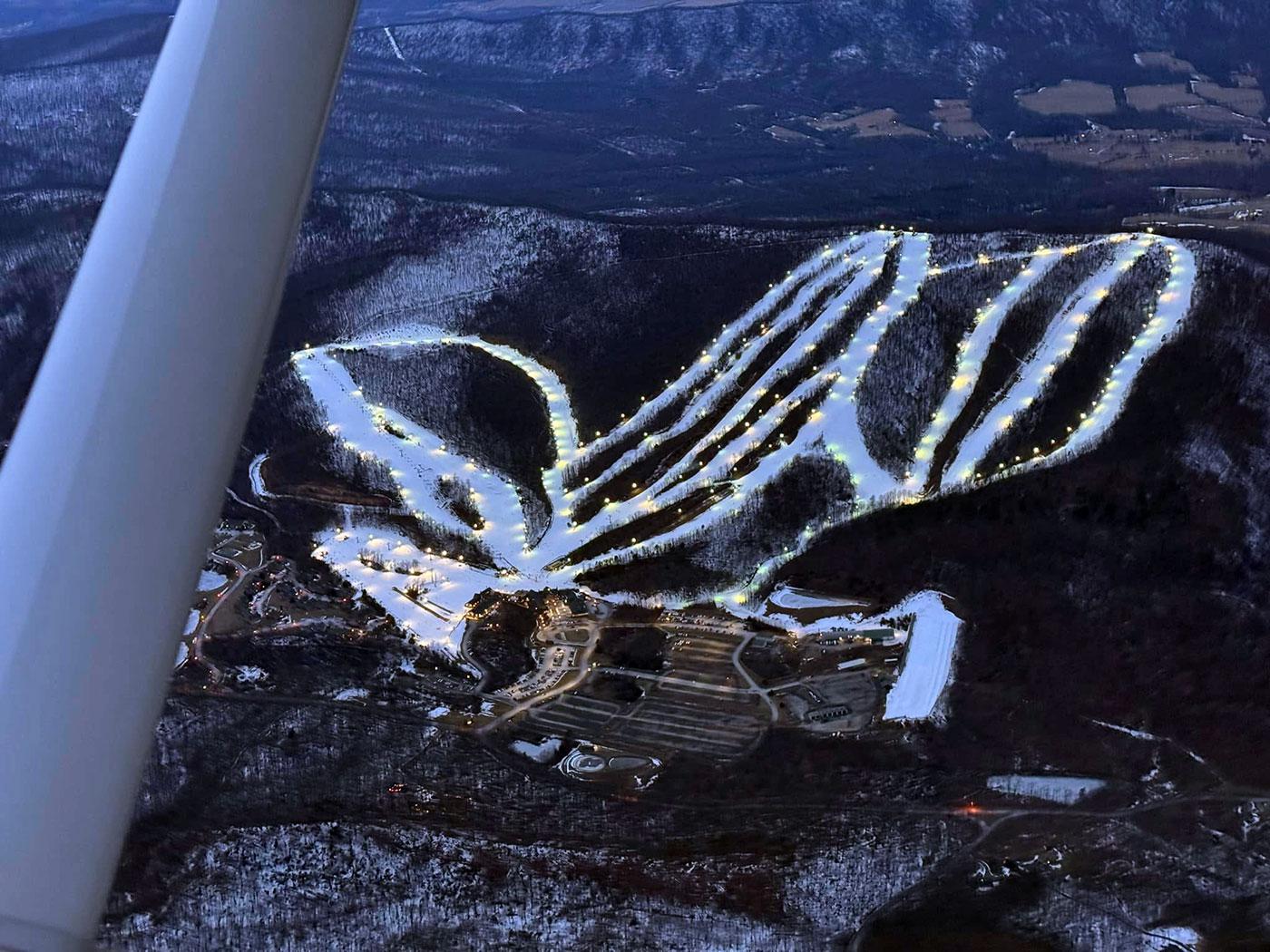
For many years, night skiing has simply been part of the routine. Ski areas near Washington, Baltimore, Philadelphia, Pittsburgh, and other population centers commonly kept their lifts running until 10 p.m. School ski clubs filled buses in the afternoon. Adults could leave work, change into ski clothes, and get in several hours on the slopes. A night ticket was cheaper than a full-day ticket, and as the daytime crowd headed home, parking spaces and empty chairlifts became plentiful.
That kind of access has helped distinguish Mid-Atlantic skiing from the destination-oriented resorts of the West. For example, there are currently at least 18 ski resorts in Pennsylvania that offer night skiing. Colorado, which has some of the largest and best-known ski resorts in the country, only has 5 areas that offer night skiing. Night skiing has always been woven into the fabric of Mid-Atlantic skiing.
But anyone who has tried to plan an evening ski trip the past few years may have noticed a change. Ten o’clock closings have frequently become nine o’clock closings. Some resorts no longer offer night skiing every day of the week. Evening operations may start later in the season and wrap up earlier in the spring. Night skiing hasn’t disappeared, but there is less of it.
When skiing had a second shift
A look through DCSki’s archives shows how normal it once was to squeeze skiing into the end of an ordinary day. A 2002 DCSki trip report from Whitetail described one of the advantages of living near Washington as being able to “swing by a ski resort on the way home from work.” There was nothing particularly unusual about the idea. Whitetail was open, a night ticket was available, and several hours of crowd-free skiing could be tacked onto the evening, even if you couldn’t arrive until 7 p.m.
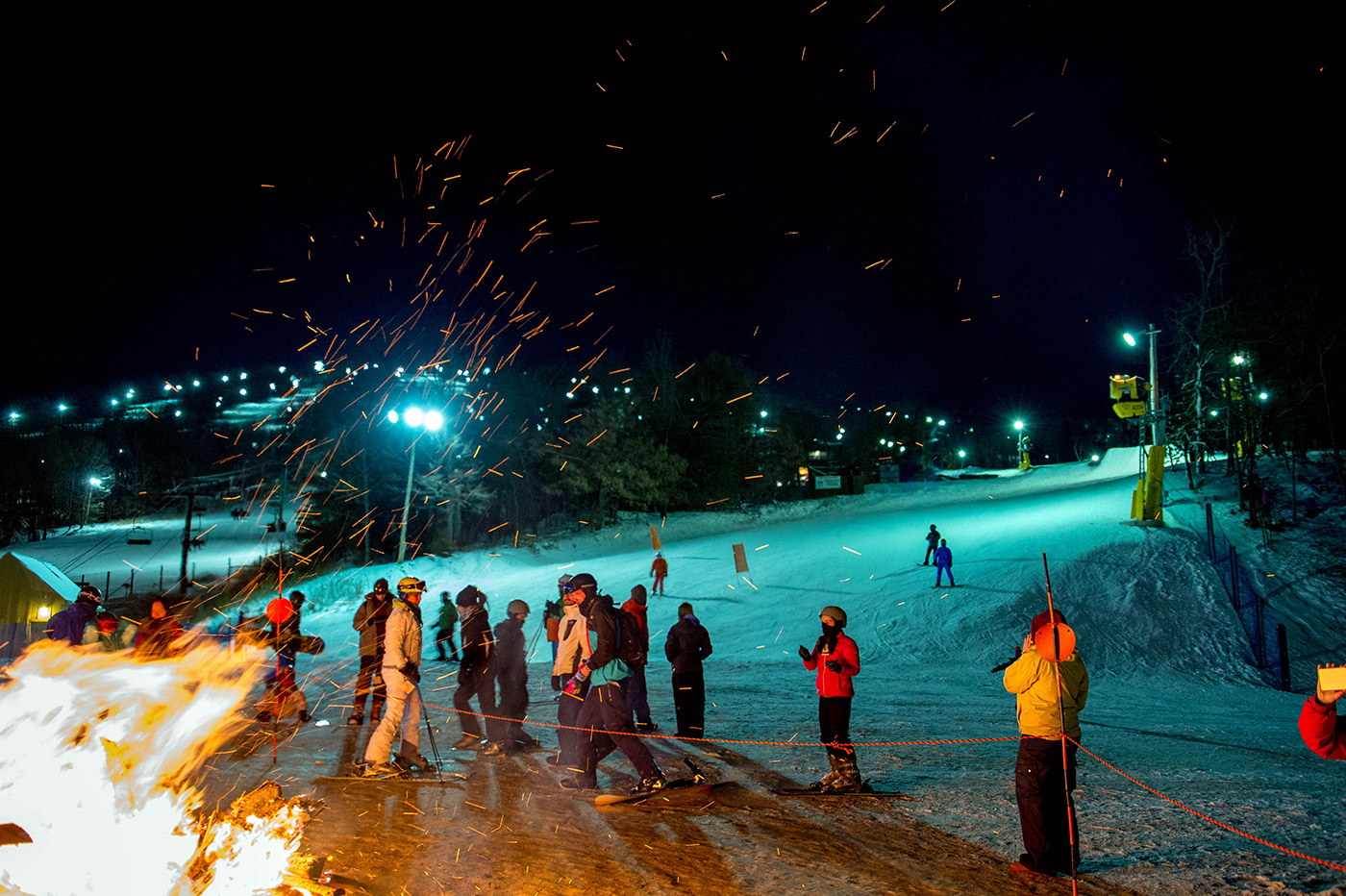
That pattern continued for years. A 2019 visit to Whitetail found a 5-to-10 p.m. night ticket selling for $29.40. The busy Sunday crowd was already streaming out of the parking lot, leaving short lift lines and plenty of room on the slopes. Whitetail occasionally stretched the concept even further: for a New Year’s Eve celebration, lifts kept spinning until 1 a.m., accompanied by a bonfire, live music, fireworks, and even a disco ball lowered from a snowmaking tower.
The tradition goes back much farther. DCSki’s Lost Ski Areas archive includes plenty of small community hills where lights were almost as important as snowmaking. Pennsylvania’s Apple Hill had only about 250 feet of vertical, but it offered lessons, snowmaking, and night skiing before closing in 1978, nearly 50 years ago. For a small hill serving nearby families and schools, being open after dark greatly expanded its usefulness.
The geography of the Mid-Atlantic encouraged that model. Most local ski areas are within day-trip range of large populations, and the mountains themselves are relatively compact. A skier doesn’t necessarily need eight hours to explore hundreds of trails. Three or four hours can make a satisfying outing, particularly when the daytime crowd has left. For the resort, lights effectively stretched the operating day and created another window for lift tickets, rentals, lessons, and food sales. The economics made sense.
So why are the lights going out earlier?
The pullback became especially noticeable during the pandemic. Whitetail, for example, dropped night skiing Monday through Wednesday during the 2020-2021 season. Capacity restrictions and staffing problems made unusual operating schedules understandable that winter, but the old seven-day pattern never completely returned at many resorts.
Recent schedules illustrate the change. Roundtop offered night skiing from 3 to 9 p.m. Wednesday through Sunday during the 2024-2025 season. Massanutten’s most recent schedule included 4-to-9 p.m. night sessions on selected days, while Bryce continued to offer evening tickets with hours varying by day. Liberty and Whitetail have also concentrated their longest operating hours later in the week. Most 2026-2027 schedules have yet to be published, so it’s unclear if this trend will continue, but nine o’clock seems to increasingly be the new ten o’clock.
There is no great mystery behind the economics. Turning on the lights is only the beginning, although resorts have upgraded to LED lights that significantly reduce electricity costs in recent years. Lifts need operators. Trails need patrollers. Rental shops, food service, ticket windows, security, and other facilities need employees. Even if only a few dozen people remain on the mountain, a resort still needs enough staff to operate safely.
That can be a tough equation on a cold Tuesday night. Many of the skiers who do show up now carry season or multi-resort passes, so keeping the lifts running doesn’t necessarily generate another lift-ticket sale. Seasonal employees may have school or another job the following morning, and an earlier closing gives grooming, maintenance, snowmaking, and other overnight crews more time to work before the next day’s opening.
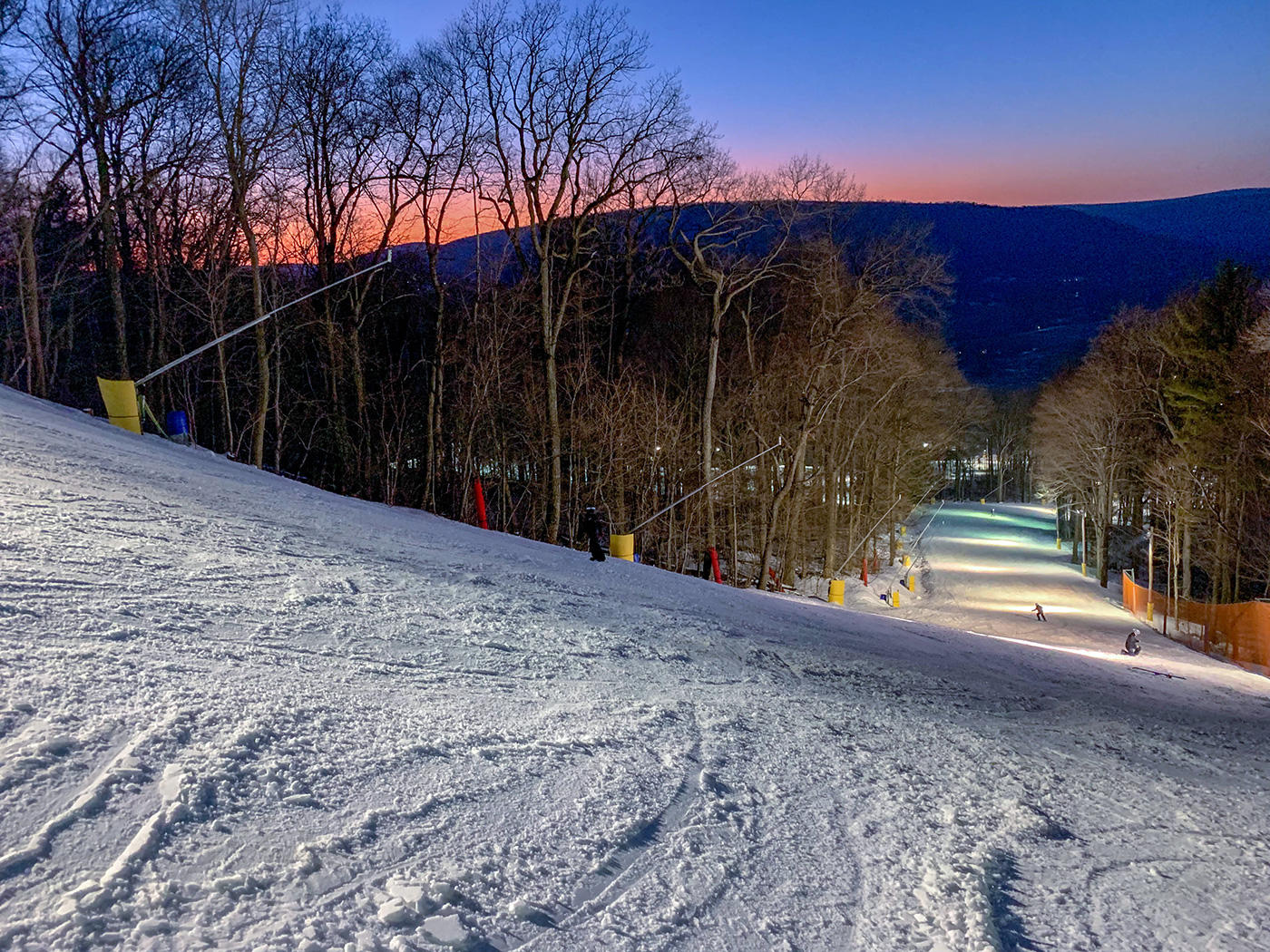
There is another complication familiar to anyone who has skied under the lights: conditions can get interesting. A trail that was soft in the afternoon can become considerably less forgiving once the temperature drops. After a full day of traffic, loose snow may have migrated to the edges, leaving a firm center that reflects the lights beautifully while providing a little less traction than one might prefer. Of course, that’s nothing new to Mid-Atlantic skiers, who know the unmistakable screeeech of an edge trying to bite into some “generously” packed powder glistening under the lights.
Night skiing isn’t dead
There are still places where darkness barely interrupts the ski day. North Carolina’s Appalachian Ski Mountain has published a 2026-2027 schedule with skiing until 10 p.m. on regular weekdays and until midnight on Fridays, Saturdays, and selected holidays. Pennsylvania’s Bear Creek operated from 9 a.m. to 9 p.m. every day during the 2025-2026 season, with all of its trails illuminated. Blue Mountain, Montage, Camelback, Shawnee, and other Pennsylvania resorts also continue to make evening skiing part of their schedules.
Snowshoe has long taken another approach. The Basin and Western Territory areas shut down in the afternoon, while Silver Creek carries skiing into the evening. During the 2025-2026 season, night tickets there ran from 4:30 to 9 p.m. Concentrating night skiing in one section allows Snowshoe to offer the experience without lighting and staffing the entire resort.
Massanutten, Bryce, Liberty, Roundtop, Whitetail, Seven Springs, Winterplace, and other Mid-Atlantic resorts also continue to turn on the lights. The difference is that skiers increasingly need to pay attention to which nights they are on, and how late they will stay that way.
There is good reason to hope resorts keep finding ways to make the numbers work. Night skiing has traditionally provided an inexpensive gateway into the sport. School clubs could introduce teenagers to skiing without taking them out of class. Beginners could try an evening lesson without buying a full weekend ticket. Working adults could fit skiing into a weekday instead of waiting for Saturday.
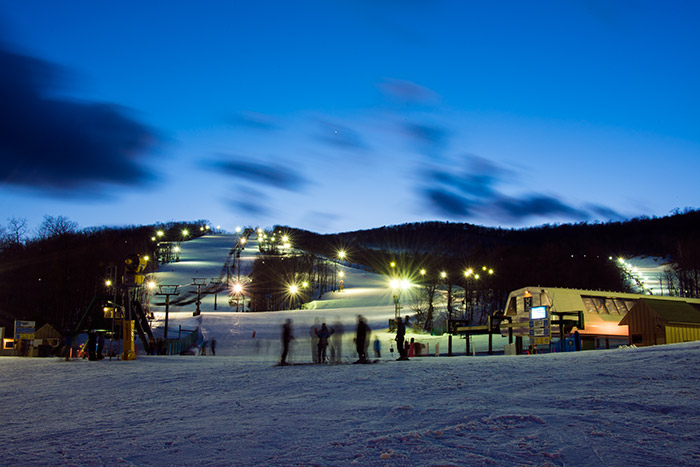
It also remains one of the more distinctive pleasures of skiing close to home. There is something satisfying about arriving just as the daytime crowd is packing up, parking close to the lodge, and heading onto nearly empty slopes while the lights flicker on across the mountain and stars twinkle above.
The snow might be a little firm. The thermometer might be dropping. But it’s a classic Mid-Atlantic experience and one that thankfully persists, even as some of those after-dark hours have disappeared from many resorts.
For the 2026-2027 winter season, DCSki recommends checking the current operating hours of any resort before making a visit, as hours can change throughout the season.



Reader Comments