
Which means it’s a good time to start arguing about ski areas.
Welcome to Mountain Matchup, a new DCSki series that will put ski areas, destinations, and occasionally some bigger skiing questions head-to-head.
Sometimes the competitors will be obvious rivals. Other times we’ll match up two very different ways of spending your time on snow.
Don’t expect us to declare a winner every time, or even any time. Ski areas aren’t football teams, and the mountain that’s perfect for one skier might be completely wrong for another.
Instead, we’ll compare the strengths and weaknesses of each contender and look at which kinds of skiers are likely to be happiest with each choice. You might not agree with all of our conclusions, so feel free to chime in with your own thoughts in the comments section below.
For our first matchup, we’re moving directly into the heavyweight division.
Seven Springs vs. Snowshoe.
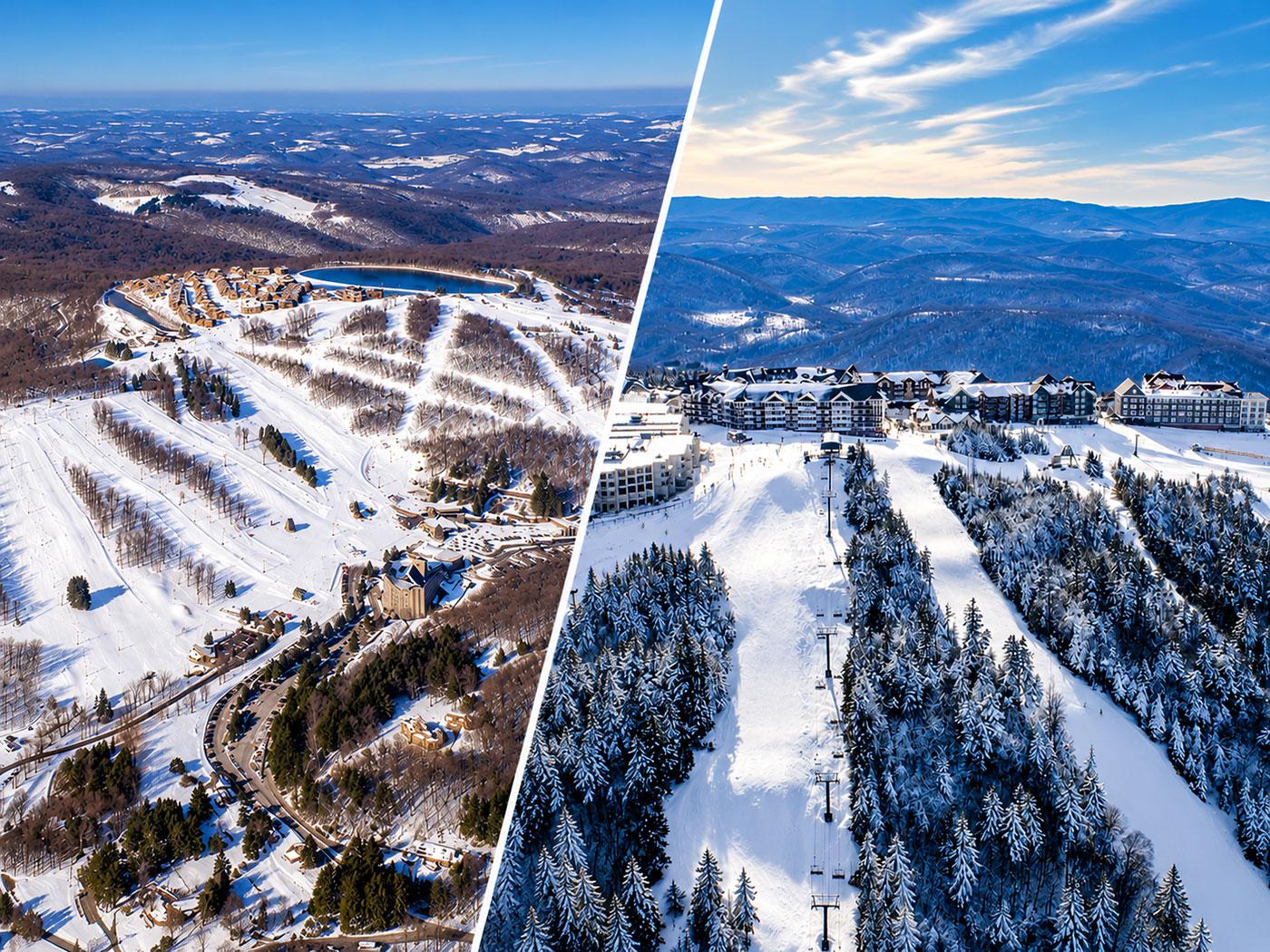
Seven Springs Mountain Resort and Snowshoe Mountain Resort are two of the largest and most complete ski destinations in the Mid-Atlantic. Both have enough terrain to occupy skiers for several days. Both combine skiing with extensive lodging, restaurants, and off-slope activities. And both attract visitors from well beyond their immediate regions.
They’re also surprisingly different.
Seven Springs spreads 285 skiable acres across a broad Pennsylvania mountaintop, giving it the largest skiable footprint currently listed in DCSki’s Resort Guide.
Snowshoe has slightly fewer acres — 270 — but spreads 60 trails among three distinct ski areas and reaches the Mid-Atlantic’s largest vertical drop at 1,500 feet.
One is on Epic. The other is on Ikon. One is relatively easy to reach from major population centers. The other makes you drive deep into the West Virginia mountains before revealing a ski village perched nearly 4,850 feet above sea level — higher, in fact, than any New England ski area.
Let’s ring the bell.
The Mountains
Let’s start with a statistical oddity.
Seven Springs has more skiable acreage than Snowshoe.
That’s probably not what many skiers would guess. Seven Springs lists 285 skiable acres compared with Snowshoe’s 270. The difference comes partly from how the mountains are laid out: Seven Springs has plenty of broad, open slopes, while Snowshoe’s trails are frequently separated by wooded areas. DCSki Forum members were discussing this exact peculiarity years ago.
Snowshoe feels bigger because its terrain is divided among three separate areas.
The main Snowshoe basin contains 41 trails and about 800 feet of vertical. Silver Creek adds another 17 trails and 660 feet of vertical. Across the road, the Western Territory drops the full 1,500 vertical feet on Cupp Run and Shay’s Revenge. See DCSki’s Snowshoe Resort Profile.
Seven Springs has 750 feet of vertical, but makes extensive use of the mountain’s width. Its 33 trails fan across the front side and North Face areas, served by a large lift network that includes two high-speed six-packs. See DCSki’s Seven Springs Resort Profile.
So we get our first split decision.
For sheer vertical and the feeling of exploring a large mountain: Snowshoe.
For spreading out across a broad collection of terrain: Seven Springs.
Intermediate Skiing
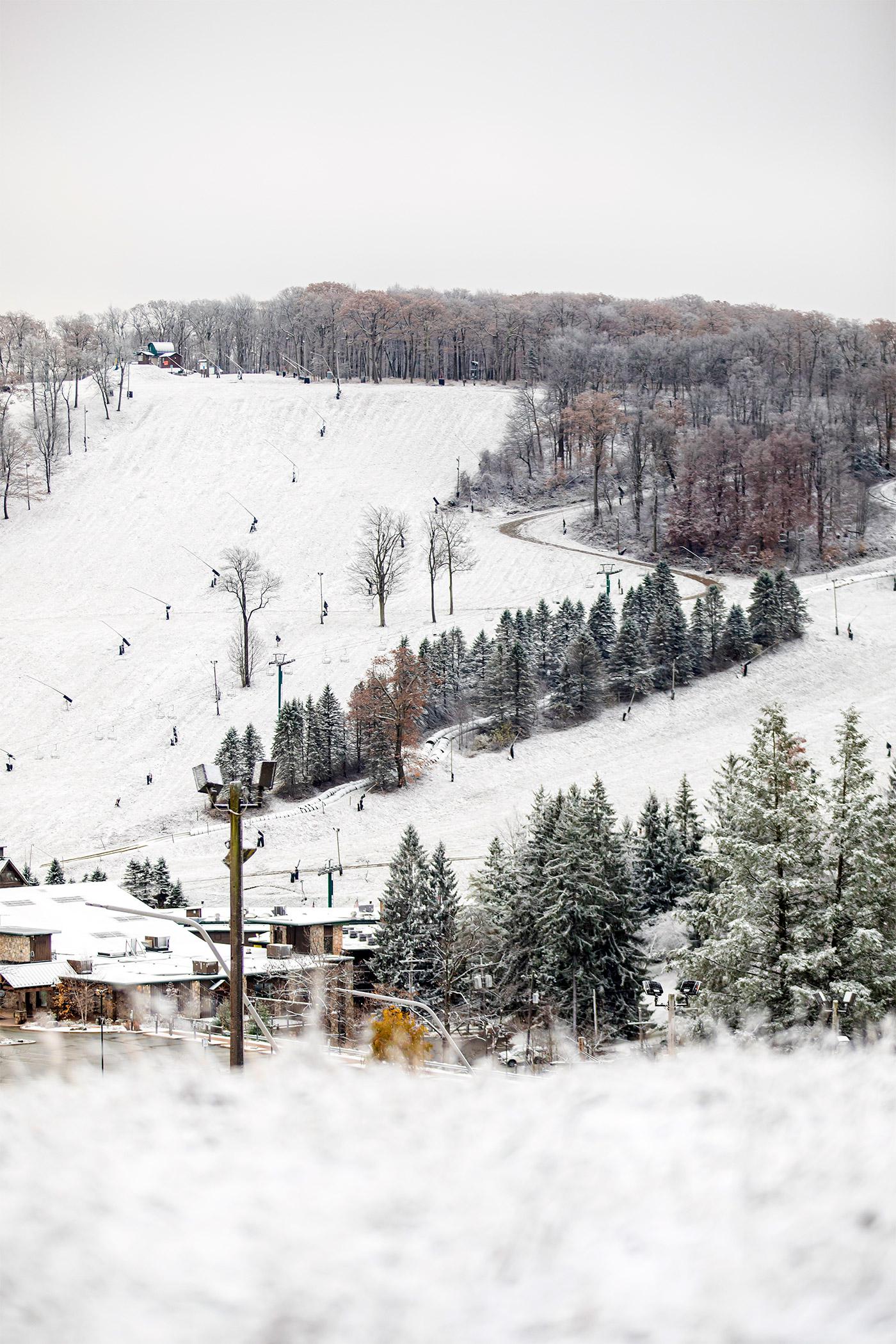
Intermediate skiers will find plenty to work with at Seven Springs.
Forty percent of its terrain is classified as intermediate, and much of the mountain consists of broad cruising slopes that are easy to lap. The Gunnar area, North Face and main face provide multiple ways to move around the mountain without requiring expert-level skills.
Snowshoe gives intermediates considerably more territory to explore, but also requires more navigation.
The main basin contains plenty of blue terrain, and Silver Creek adds another entire pod of generally approachable trails. A skier staying several days can bounce between areas and keep finding different routes.
The tradeoff is that Snowshoe doesn’t function as one seamless ski mountain. Silver Creek requires a shuttle ride, while the Western Territory sits across the road from the main village.
Seven Springs is easier to roam.
Snowshoe gives you more places to roam to.
Advanced Skiers
Snowshoe brings out its biggest weapons here: Cupp Run and Shay’s Revenge.
The two Western Territory trails plunge 1,500 vertical feet and stretch roughly 1.5 miles, served by their own high-speed lift. For a skier accustomed to 500-, 600- and 700-foot regional mountains, reaching the bottom of Cupp can feel like somebody temporarily moved West Virginia several states north. And the lower half of Shay’s is genuinely, “pause-at-the-top-and-reconsider” steep.
There is an important qualification to Snowshoe’s 1,500-foot vertical, however. Cupp and Shay’s are the only trails that descend the full distance, and the Western Territory sits across the road from Snowshoe’s main basin, making it a bit of a chore to get to. The main basin, where most of Snowshoe’s trails are located, has about 800 feet of vertical, while Silver Creek has about 660 feet.
In other words, Snowshoe offers a 1,500-vertical-foot skiing experience, but that doesn’t describe most of the mountain. Take away those two Western Territory runs and the vertical on Snowshoe’s remaining terrain is much closer to what skiers encounter elsewhere in the Mid-Atlantic — including Seven Springs, which has 750 feet of vertical.
Snowshoe classifies 46 percent of its terrain as expert, although that statistic spans all three ski areas and encompasses terrain with very different personalities.
Seven Springs counters with the North Face, where advanced skiers will find steep pitches, trail favorites such as Gunnar, and glades and other advanced options when conditions cooperate. After a good natural snowfall, there can be plenty to explore.
But Cupp and Shay’s give Snowshoe something Seven Springs — and every other Mid-Atlantic resort — simply can’t duplicate. They’re only two trails, but they’re two very long ones.
Snow
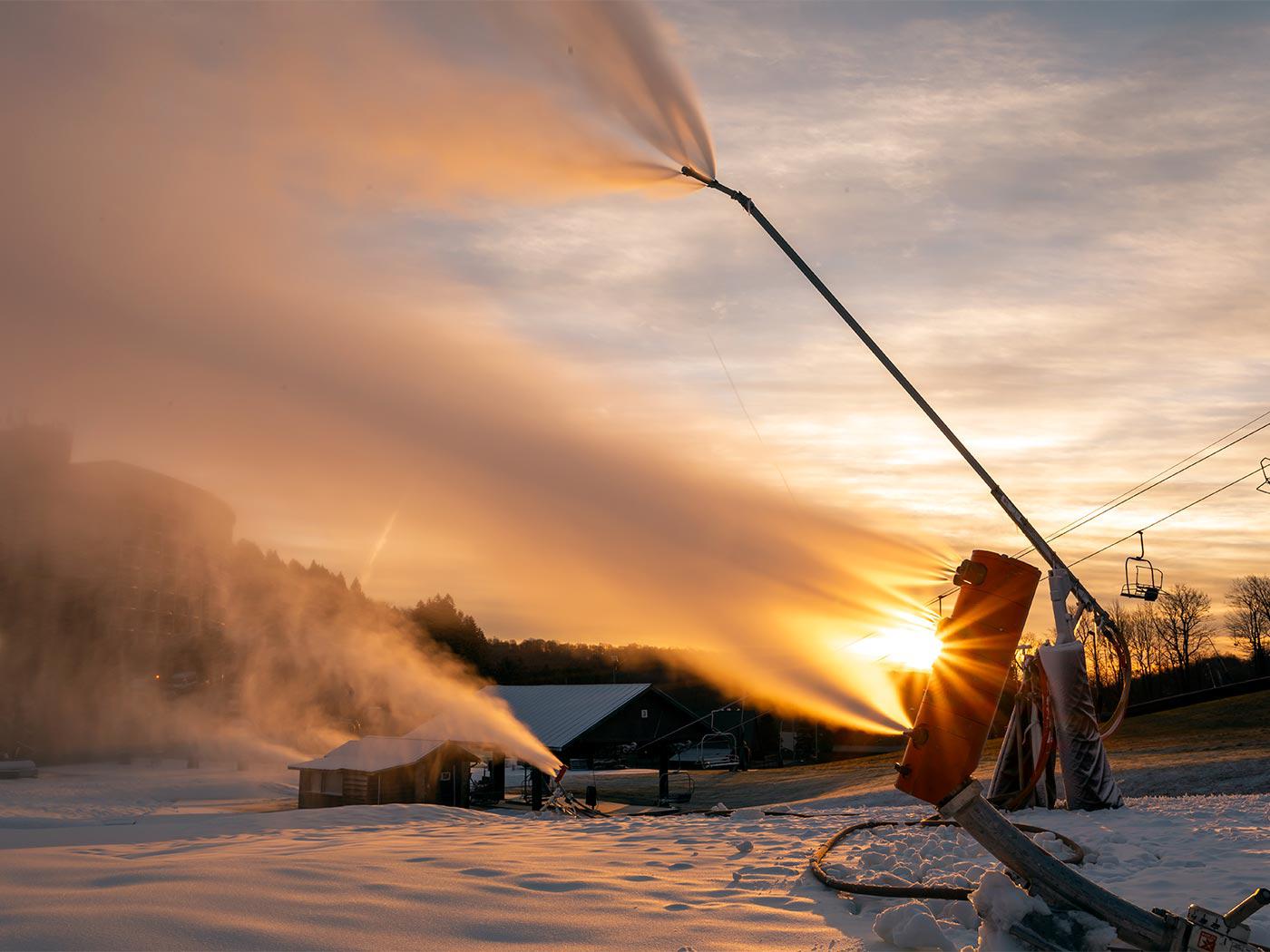
Seven Springs knows a few things about making snow.
Snowmaking has been part of the resort’s identity since the Dupré family began developing systems there in the 1960s. Herman Dupré went on to become one of the important innovators in the snowmaking industry, and that legacy remains visible today. Seven Springs won Ski Area Management’s 2026 “I AM a Snowmaker” competition, taking the title after nearly 7,500 votes were cast for six competing snowmaking teams. DCSki covered the competition earlier in the season.
Snowshoe has an advantage that can’t be engineered quite so easily: elevation and geography.
Its summit village sits at 4,848 feet, and receives an average annual snowfall around 180 inches. Seven Springs reaches 2,994 feet and averages around 135 inches.
Snowshoe has also invested heavily in snowmaking, including a major modernization of its system.
The result is one of the reasons skiers make the long drive into Pocahontas County. When rain is falling at lower elevations around the Mid-Atlantic, Snowshoe can sometimes be getting snow.
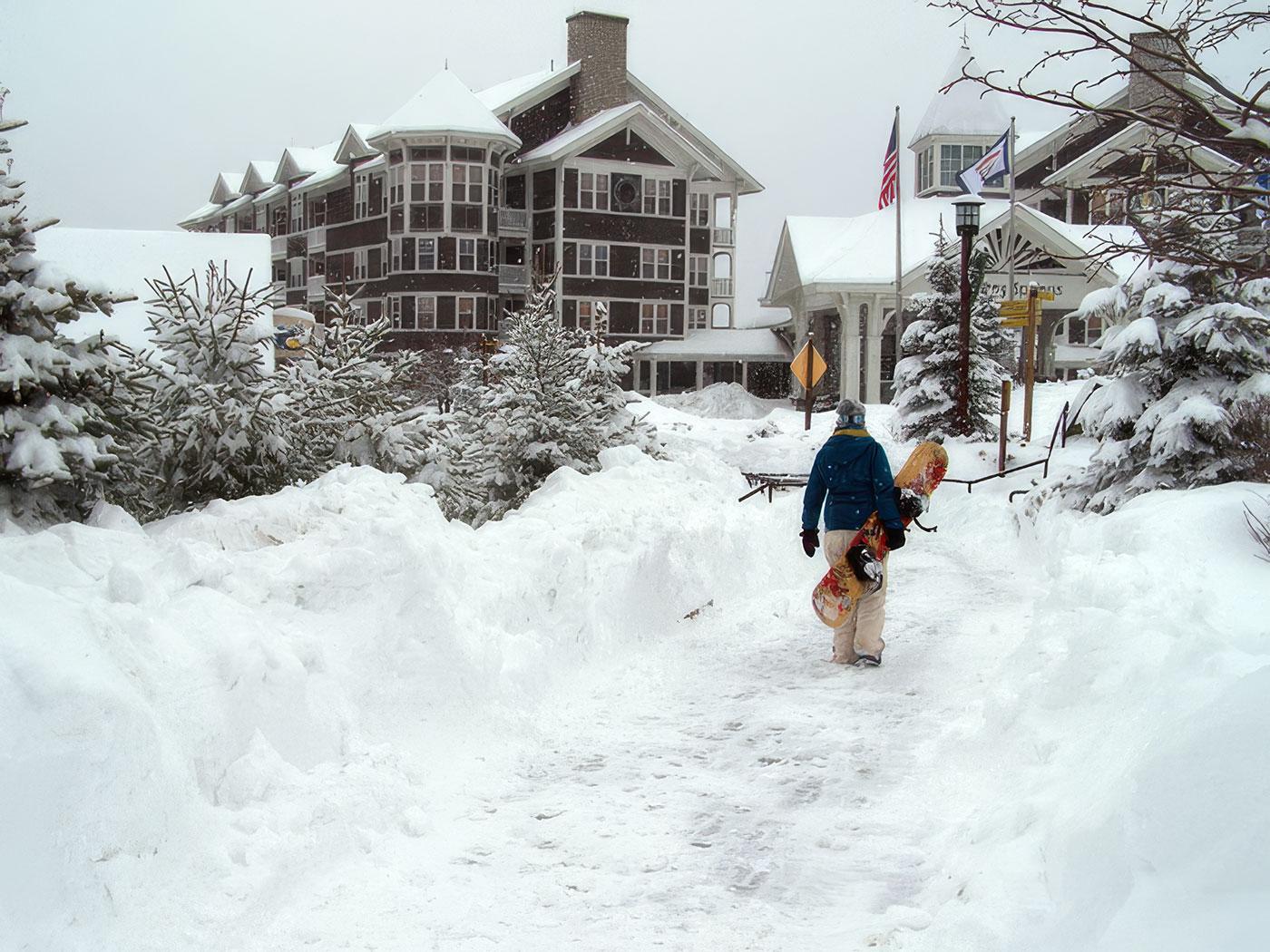
For snowmaking heritage and capability: Seven Springs has an extraordinary résumé, and it’s often one of the first resorts in the region to begin making snow.
For the combination of snowmaking, elevation and natural snowfall: Snowshoe has the geographic advantage.
Lifts
Seven Springs has an unusual strength for a mountain with 750 feet of vertical: uphill capacity.
Its lift network includes two high-speed six-packs along with quads, triples and surface lifts. For the 2026-2027 season, Seven Springs is also replacing the old Blitzen triple with a new Doppelmayr fixed-grip quad, increasing capacity on that part of the mountain by about 33 percent.
Snowshoe has 14 lifts across its three ski areas, including three high-speed quads.
But Snowshoe’s layout creates a notorious trouble spot: Ballhooter.
The Ballhooter Express serves a huge amount of popular terrain in the main basin, and on crowded weekends its lift line can become one of the less enjoyable attractions at the resort. Skiers naturally funnel into this chokepoint.
Experienced Snowshoe skiers learn to move around the mountain strategically. Western Territory and Silver Creek can provide an escape when the main basin becomes crowded, and the steepness of the Western Territory helps reduce crowds there further by filtering out beginners and hesitant intermediates.
Seven Springs can certainly develop substantial lift lines of its own, especially on weekends, but its broad layout and multiple major lifts provide several alternatives when one part of the mountain backs up.
Terrain Parks
Seven Springs has long made freestyle terrain a significant part of its identity.
The resort currently advertises six terrain parks, with features ranging from beginner progression areas to larger jumps and rails. Seven Springs also lists the Little North Face Half Pipe separately.
Snowshoe also maintains terrain parks, including parks at Silver Creek that can be ridden after dark. For skiers and riders who care about freestyle terrain, Seven Springs still makes parks a more visible part of its identity.
Night Skiing
Seven Springs also has the broader night-skiing footprint. The Pennsylvania Ski Areas Association says nearly all of the resort’s terrain is lit at night, allowing skiers to keep moving around much of the mountain after sunset.
At Snowshoe, night skiing is concentrated at Silver Creek. That gives Silver Creek its own evening personality, with illuminated skiing, terrain parks, tubing, lodging and dining after the main Snowshoe Basin and Western Territory have shut down for the day. But if your lodging is located at the main mountaintop village, you have to trek over to Silver Creek to night ski, which might be less appealing than simply cuddling up next to the fire with hot cocoa.
If squeezing the maximum number of ski hours out of a trip is important, Seven Springs offers the more extensive day-to-night experience. Snowshoe’s approach is more self-contained: when night falls, Silver Creek becomes the place to be.
The Resort Experience
Both mountains qualify as genuine destination resorts, but the layout of the experience is different.
At Seven Springs, many of the major amenities are concentrated around the Main Lodge and slopeside hotel. The resort advertises numerous restaurants and bars, spa services, pools, bowling, a game room and other activities within easy reach of the central base area. That concentration makes it possible to park, settle in and move among skiing, dining and indoor activities without feeling as though you’re navigating an entire mountain community.
Snowshoe is more distributed. The mountaintop Village contains the largest concentration of restaurants, shops and lodging, but other neighborhoods have their own facilities. Silver Creek, for example, has its own lodge, shops, restaurants, night skiing and tubing, while other lodging stretches across the mountaintop and down toward the base.
That difference is partly a product of Snowshoe’s geography. Its three ski areas and multiple lodging neighborhoods make the resort feel larger and more spread out, with shuttles playing an important role in getting between some destinations.
Seven Springs feels more like a large resort complex gathered around a central hub. Snowshoe feels more like a mountain community with several distinct neighborhoods.
Getting There
Seven Springs lands a heavy punch here.
From Washington, DCSki estimates roughly a three-hour drive to Seven Springs. Pittsburgh skiers can reach it in about an hour, and the Pennsylvania Turnpike provides relatively straightforward access.
Snowshoe makes you work for it.
DCSki estimates about 4 hours, 25 minutes from Washington and nearly 5 hours from Baltimore. The final portion of the trip follows increasingly rural West Virginia roads into Pocahontas County, and those roads can become a little harrowing during a snowstorm.
That isolation is part of Snowshoe’s appeal once you arrive.
It is less appealing when you’ve been driving for four hours and somebody in the car asks, “Are we there yet?”
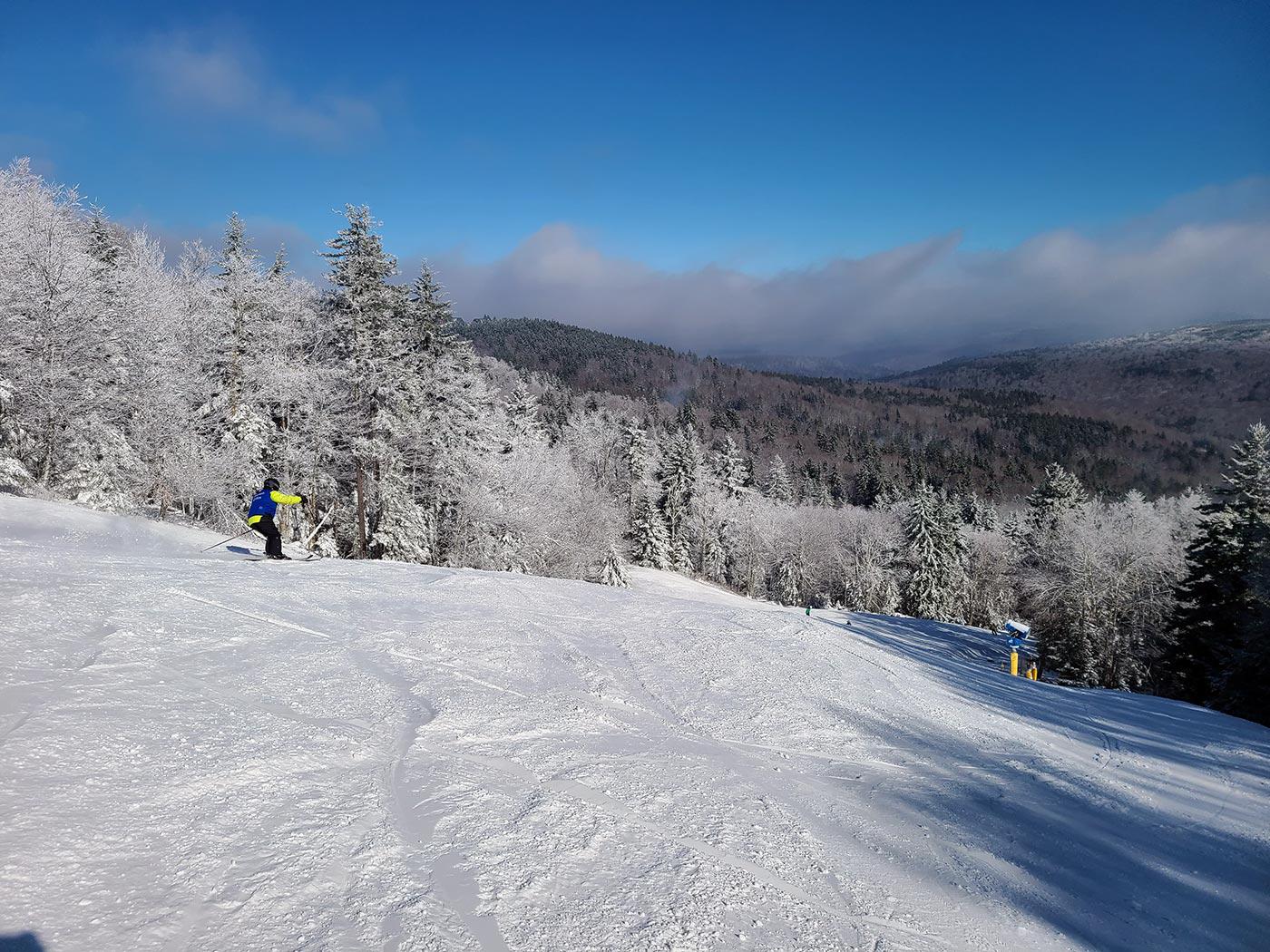
For a quick weekend from much of Pennsylvania, Maryland or the Washington region, Seven Springs is considerably easier.
Snowshoe makes more sense when you’re prepared to stay awhile.
The Pass Question
For many skiers, this matchup may have been partly decided months before the first snowflakes fall, when they clicked a button and committed to a multi-resort pass for the coming winter.
Seven Springs is part of the Epic Pass network, while Snowshoe is on Ikon. But the regional footprints of those passes are very different.
Epic currently lists eight Mid-Atlantic ski areas in Pennsylvania: Seven Springs, Hidden Valley, Laurel Mountain, Liberty, Roundtop, Whitetail, Jack Frost and Big Boulder. For a skier based around Washington, Baltimore, Philadelphia or much of Pennsylvania, that creates a large regional network under the same pass umbrella. And if you’ve already paid for an Epic Pass, you might not have any budget remaining to make a weekend trip to Snowshoe.
Snowshoe, by contrast, is the primary Mid-Atlantic ski destination on Ikon. Ikon gives its holders access to a huge collection of destination mountains elsewhere, but in DCSki’s home region it does not offer anything resembling Epic’s density of local choices.
That can give Seven Springs an important practical edge for someone choosing a pass around Mid-Atlantic skiing. An Epic holder can spend the winter moving among several nearby mountains and still use the same pass for a Seven Springs weekend; an Ikon holder looking for local turns is much more likely to have Snowshoe doing the heavy lifting.
So Which One?
These two mountains demonstrate particularly well why Mountain Matchup doesn’t need an overall champion.
They’re both winners, just in different ways.
Snowshoe has the Mid-Atlantic’s biggest vertical, substantially higher elevation, more natural snowfall and the unique Western Territory. It feels like a destination in the fullest sense: a place worth settling into for several days, exploring different sections of the mountain and accepting that the drive is part of the bargain.
Seven Springs is easier to reach for a huge portion of DCSki’s readership. It offers broad terrain, tremendous uphill capacity, a strong freestyle program, extensive night skiing and a large collection of amenities concentrated around its central resort complex. Epic Pass holders also gain access to a much deeper bench of Mid-Atlantic ski areas nearby.
If the priority is long vertical, natural snow and the biggest mountain experience available in the Mid-Atlantic, Snowshoe makes a compelling case. If accessibility, regional pass flexibility, night skiing, freestyle terrain and a full-service resort closer to major population centers carry more weight, Seven Springs has plenty of arguments of its own.
Which is exactly the point of Mountain Matchup: the better mountain depends on what you’re looking for.




Reader Comments