
His answer drew on health, fitness, money, geography, equipment, and good fortune. He recommended shorter days, sunny weather, organized gear, realistic expectations, and the wisdom to choose a groomer when the body says it is a groomer day. Yet Jim kept returning to two factors above all others: fitness and friends.
That conclusion in “Aging Into Skiing” did not arrive suddenly. It grew from themes Jim has explored throughout more than a quarter century of writing for DCSki. Across 138 stories since 2000, he has documented local ski days, family vacations, cross-country drives, historic snowstorms, unfamiliar mountains, retirement, the pandemic, and the gradual adjustments required by age.
Every few years, Jim pauses to take stock. Those reflective pieces form a story within the stories: the evolving outlook of a Mid-Atlantic skier who began on Blue Knob’s ice in 1967, raised four children in the sport, found a community through DCSki, became a winter resident of Utah, and entered his seventies still eager to see what the next season might bring.
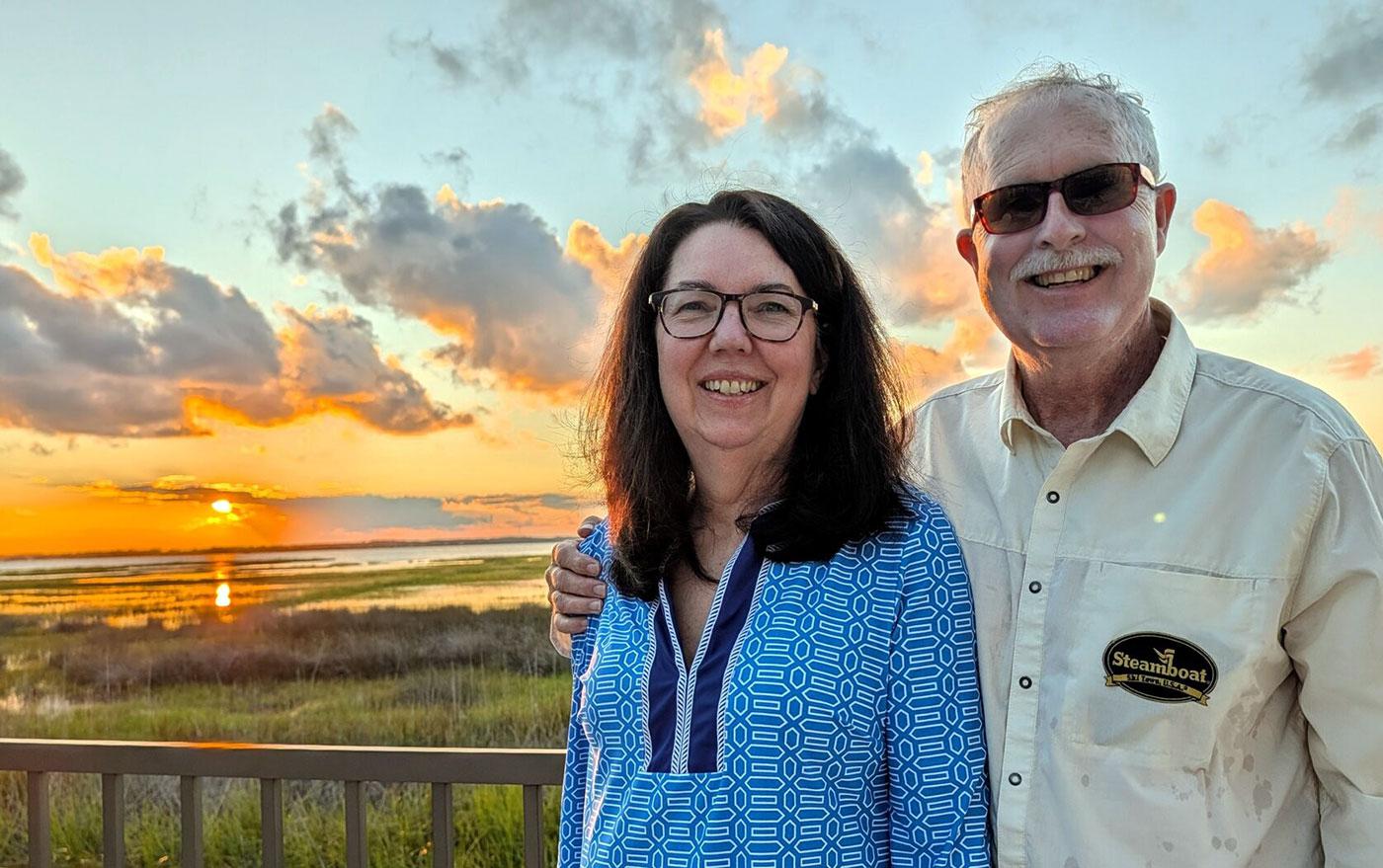
A D.C. skier from the beginning
Jim’s first extended contribution to DCSki was the three-part “Ruminations of a Long-Time D.C. Area Skier,” published in December 2000. He was already looking backward, recalling his first ski trip to Blue Knob during the Christmas holidays of 1967.
He was 14. The beginner slope was covered by hard, blue-tinted manmade ice and served by a Poma lift whose frozen spring could deliver an unpleasant jolt. His family stayed in old barracks left from the mountain’s former Air Force radar station. It was an unlikely beginning for a passion that would organize much of his life.
Jim’s parents had encouraged skiing as something their children could do together. They eventually took up the sport themselves in their late forties, and the family built a small vacation home near Blue Knob in 1972. Jim held a season pass there for a dozen years.
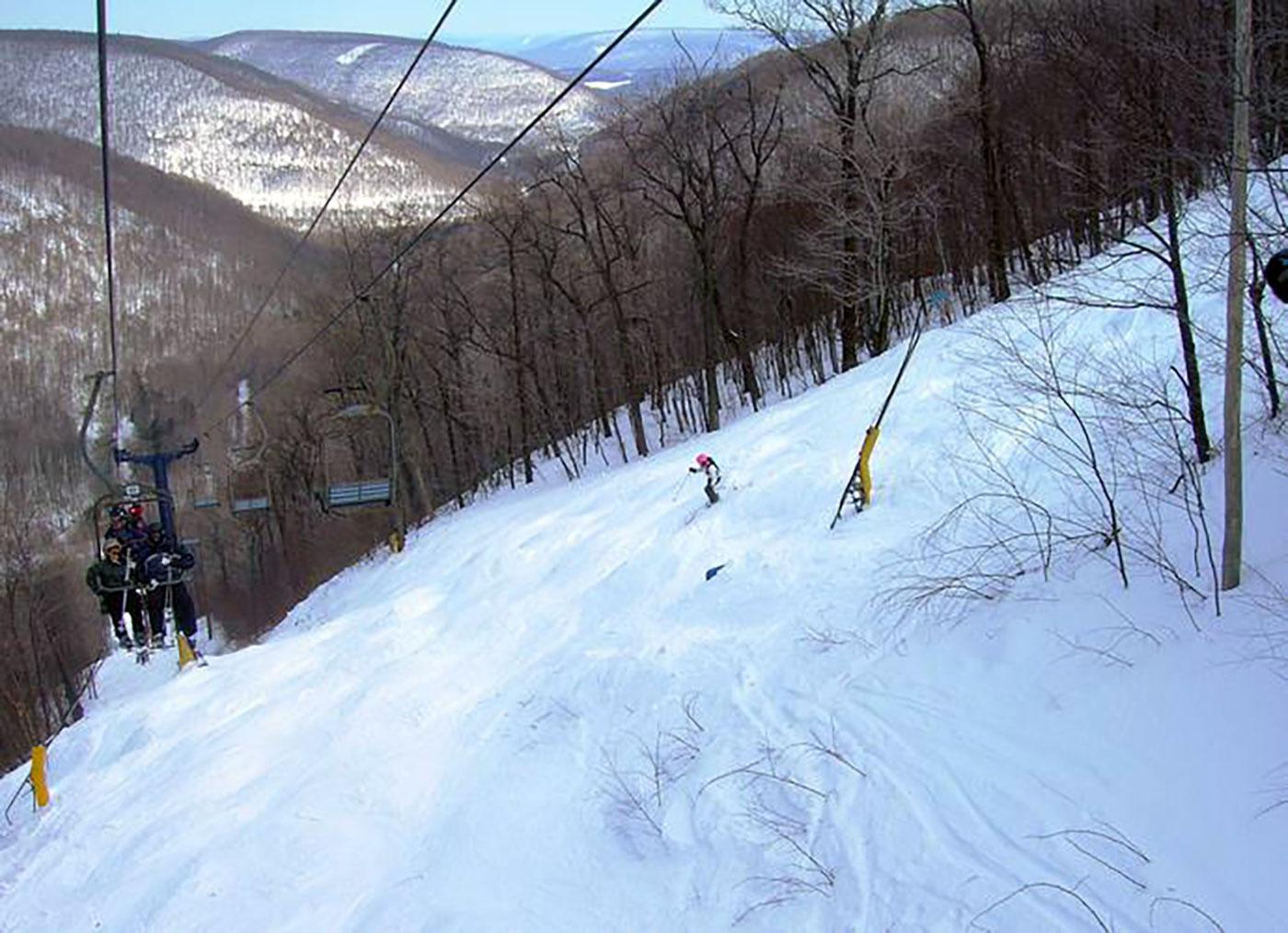
Blue Knob became more than his home mountain. It established his measuring stick. Its steep terrain could be remarkable after natural snow, but lift failures, limited snowmaking, severe weather, and uneven management taught skiers to take what the mountain offered. Decades later, after visiting many of North America’s most celebrated resorts, Jim still measured difficult terrain, cold weather, and operating adversity against Blue Knob.
This Mid-Atlantic grounding remained important in his later writing. Jim could appreciate Colorado powder without becoming dismissive of a 600-foot local hill. He knew the work required to produce skiing through rain, thaws, marginal temperatures, and short winters. His stories repeatedly argued that Mid-Atlantic areas made every larger adventure possible by giving local skiers somewhere to learn, practice, and remain connected to the sport.
Why ski?
One month after publishing his early ruminations, Jim produced a more playful manifesto: “Top Ten Reasons to Ski.” Written in January 2001, the list already contained most of the ideas he would revisit for the next 25 years.
Skiing offered winter at its most intense, from squeaking snow to bitter cold. It provided mountain scenery, travel, adventure, romance, physical exhilaration, and a way to test personal limits. It created pride when his children advanced and continuity when his father skied with his grandchildren before arthritis finally ended his skiing at age 75.
Jim also recognized a limitation of the solitary adventure. Recalling a solo trip to Colorado as a young man, he borrowed a thought from Mark Twain: “To get the full value of a joy, you must have somebody to divide it with.”
The observation became a durable lesson across his writings. A powder run could be thrilling on its own. Shared with a spouse, child, or longtime ski buddy, it became part of a family history. Skiing gave Jim a reason to travel, but its deeper value came from whom he met or brought along.
His final reason for skiing was optimism. He declined to identify one definitive best day. As long as he could buckle his boots, he wrote, “the best is yet to come.”
The ski-vacation dad
Much of Jim’s early DCSki contributions coincided with what he later called his “ski vacation dad” years. He and his wife, Kathy, shepherded four children to Mid-Atlantic mountains and on increasingly ambitious trips to New England, Quebec, Colorado, Utah, California, Oregon, and elsewhere.
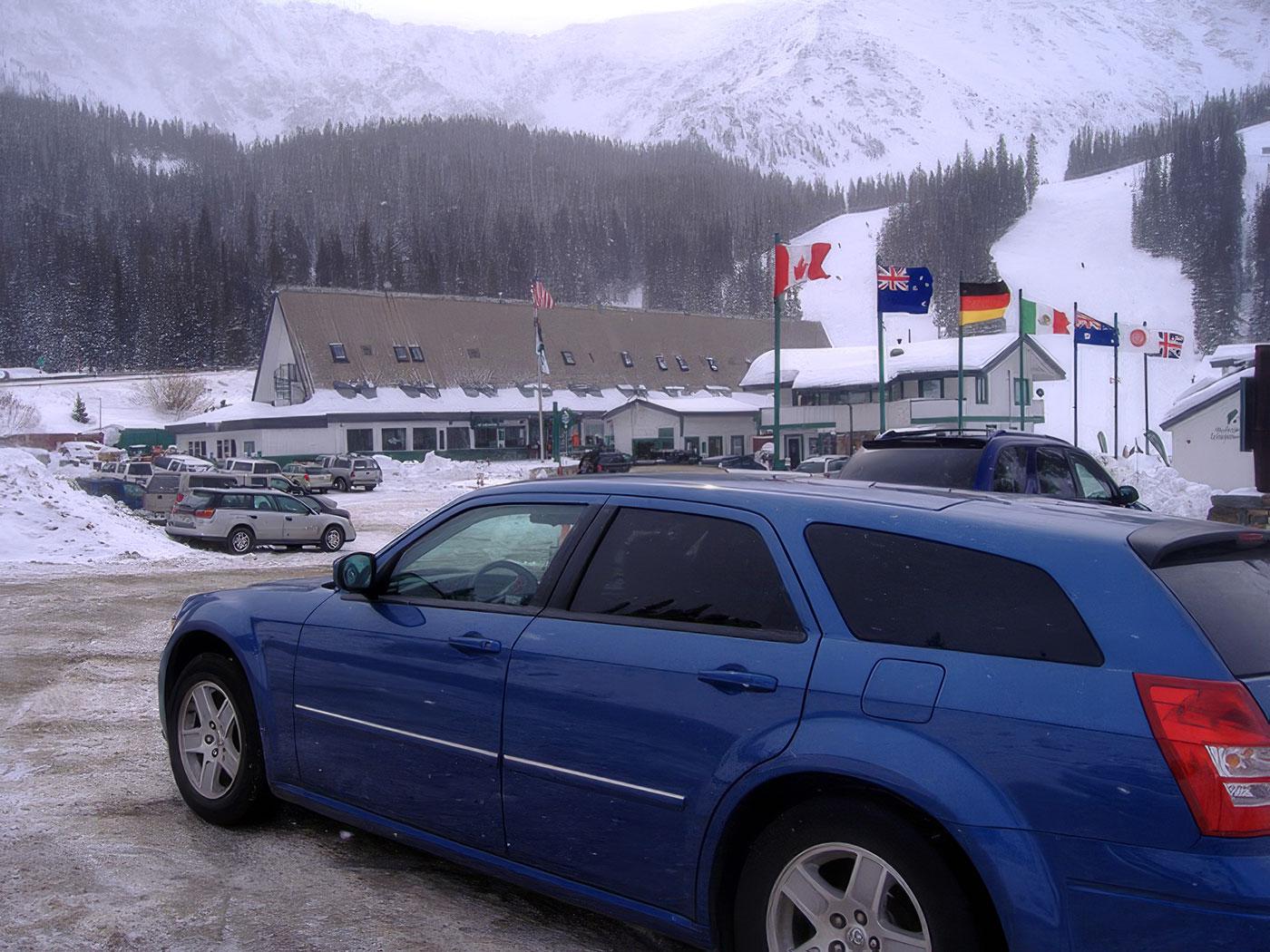
The family trips were never presented as frictionless. Equipment had to be found, packed, rented, carried, dried, and packed again. Children advanced at different rates. Lodging and lift tickets strained the budget. Weather and long drives tested careful planning.
Jim’s “Family Ski Road Trip Primer” distilled that experience into practical guidance, but the family stories also documented the rewards. During a Christmas 2003 drive to Colorado, six members of the Kenney family spent a week and a half confined to a minivan. Jim’s lasting memory was skiing a Loveland groomer on Christmas Eve, wearing an elf hat while his family made turns around him. Kathy, he acknowledged later, might have remembered the ordeal differently.
The same trip produced “Holiday Fun on Colorado’s Front Range,” a story about Eldora, Loveland, and Winter Park. The three destinations offers a variety of terrain that tested his family. Loveland made high-alpine skiing accessible to intermediates. Winter Park gave the teenagers what Jim called a final exam in Colorado skiing. Exploring a large mountain together could, he wrote, “bond even teenagers to their elders.”
His children grew up in public view through DCSki stories. Son Vince appeared first as a young skier, then as a strong partner on father-and-son road trips, a ski instructor, and eventually Jim’s guide to the steep terrain of Alta and Snowbird. Daughters who once crowded the family vehicle later joined him during his retirement travels.
Kathy’s role has been indispensable. Jim has repeatedly called her the family’s great “ski enabler.” She helped introduce four children to the sport, skied for roughly 40 years, endured long drives, and continued traveling with Jim after retiring from downhill skiing herself. In his reflections, the skiing life is never presented as a solo accomplishment. It rests on the patience and support of family members whose own priorities sometimes differ.
From online names to chairlift companions
When Jim discovered DCSki in 1999, he saw a polished source of local information that could use more reports from experienced recreational skiers. He began posting reviews and observations. The relationship deepened from there.
In “15 Years on DCSki,” published in 2014, Jim described how online exchanges eventually became real-world friendships. He began meeting people he knew by forum names at Wisp, Blue Knob, Timberline, Laurel Mountain, and other ski areas. A virtual winter water cooler developed into an in-person, on-snow community.
The transition changed his view of online conversation. Once people might meet on a chairlift, posts acquired greater depth and accountability. More importantly, the internet was no longer isolating. It had become a tool for bringing people together.
Those friendships appear throughout Jim’s stories. Some companions guided him around unfamiliar western mountains. Others gathered for Mid-Atlantic weekends. Friends shared transportation, lodging, advice, photographs, powder, and long lift rides. Jim’s writing helped create those relationships, and the relationships gave him more to write about.
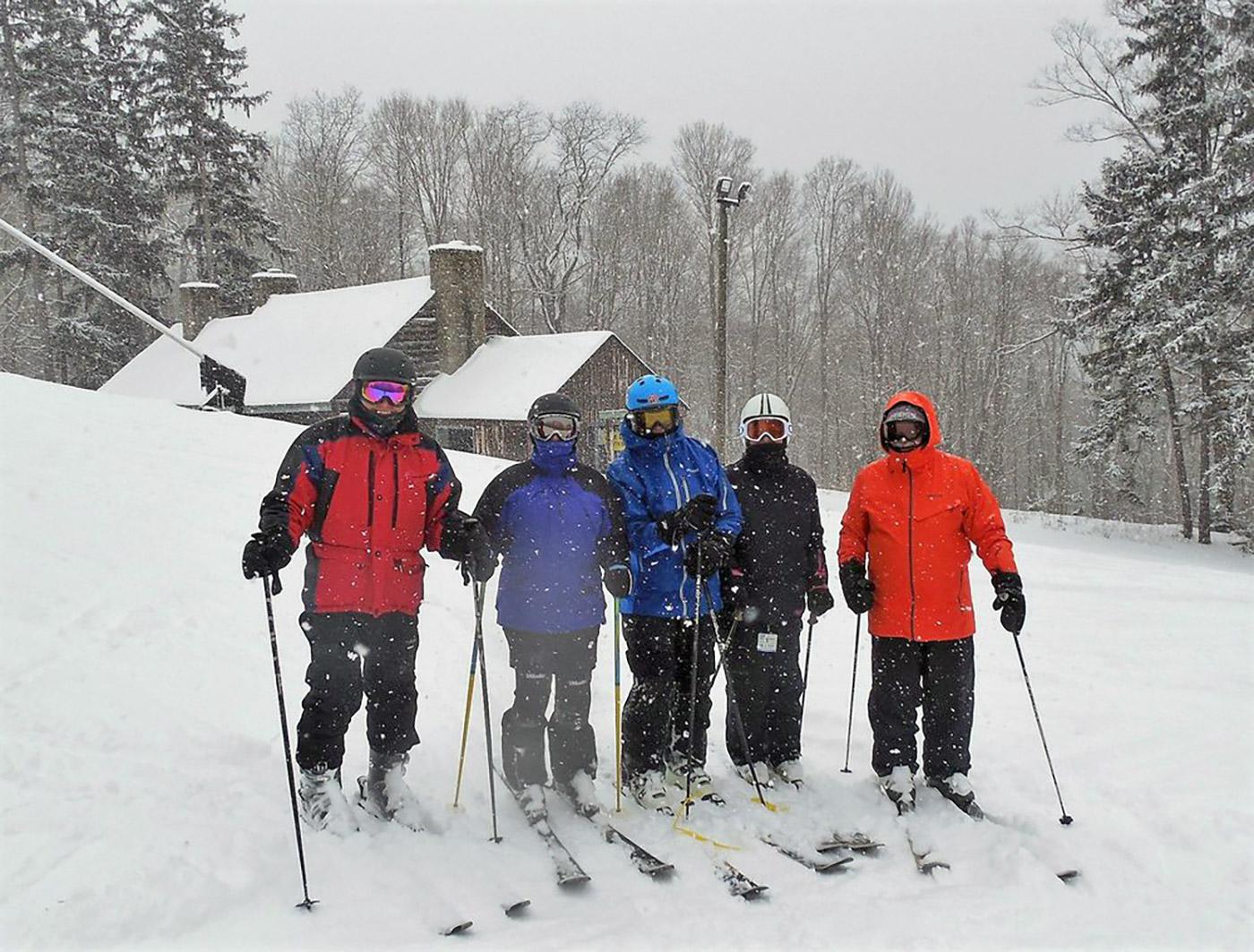
His 2019 report from Laurel Mountain called the ski area “the country club of Pennsylvania skiing.” The phrase captured both its uncrowded terrain and the recurring group of friends who gathered there. The club did not require a formal membership. Showing up, making turns, and sharing the day were enough.
Milestones measured in snow
Jim often uses anniversaries as trail markers. They allow him to look backward while leaving room for the next chapter.
His 50th season brought an extraordinary gift. In January 2017, roughly 70 inches of snow fell at Snowbird during a storm cycle that closed roads, delayed lifts, buried terrain, and exhausted even experienced powder skiers. Jim documented the week in “My Snowiest Week.”
The account is celebratory but characteristically candid. Deep snow was demanding. Visibility was poor. Jim flailed on borrowed wide skis, needed rest, took pain relievers, and once dreamed he had fallen headfirst and could not dig himself out. He also understood the safety value of companionship on a serious storm day.
Each day he became more comfortable. Terrain gradually opened, the sun finally emerged, and Vince showed him parts of Snowbird he could not have found alone. Jim viewed the storm as “white gold” delivered for a half-century of persistence.
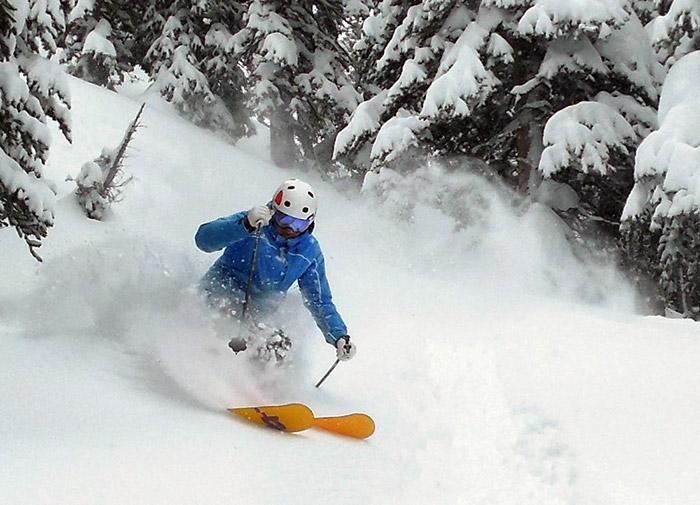
His 70th year produced another numerical coincidence: 70 ski days at age 70. He had not begun the season determined to reach the number. It came into focus only after day 60, enabled by retirement, good health, a Utah base, and the shorter sessions that had become his normal routine. He was grateful o ski about 45 percent of the days between early December and mid-May without an ailment ending his season.
Retirement as another beginning
In 2015, after retiring from full-time federal employment, Jim launched what he called the “Geezer Ski Bum Tour.” Over nine weeks he traveled from the East Coast to Colorado, Utah, Wyoming, California, and back, using an Epic Pass to sample a long list of mountains.
The trip marked a change in the balance of his skiing. For years, employment calendars and school schedules had constrained family vacations. Retirement provided the luxury of time. The children were adults. Mega-passes made repeated resort visits economical. Jim could wander alone for part of a trip, then meet Kathy, his children, or friends along the way.
After fully retiring in 2019, Jim and Kathy began spending substantial parts of winter at Vince’s home in Utah. Jim’s ski days climbed from 50 to more than 60 in several seasons. The longtime D.C. skier had become a migratory westerner, although he continued returning to Mid-Atlantic mountains.
His 2022 story “The Snowbound Snowbird” considered this inversion of the usual retirement. While many retirees sought warmth, Jim traveled west to seek snow. The arrangement placed him close enough to several ski areas that a morning on the mountain could function like a visit to the gym rather than an all-day expedition.
Retirement did not remove every constraint; it changed them. Age made convenience more important. A short drive, an organized equipment routine, and three or four hours of skiing could produce more sustainable enjoyment than repeatedly pushing from first chair to closing bell.
Freedom during an unfree time
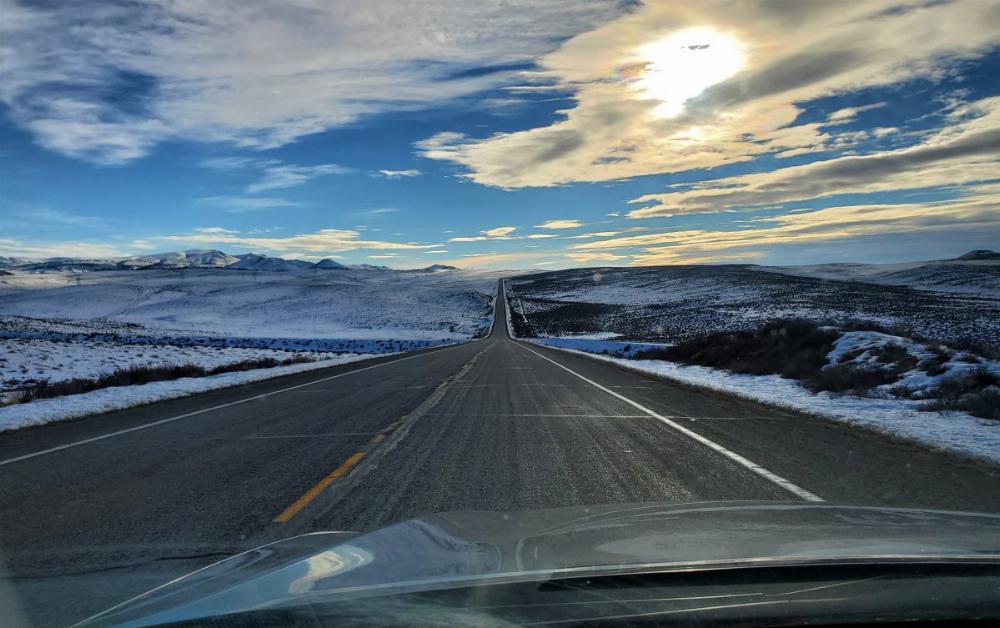
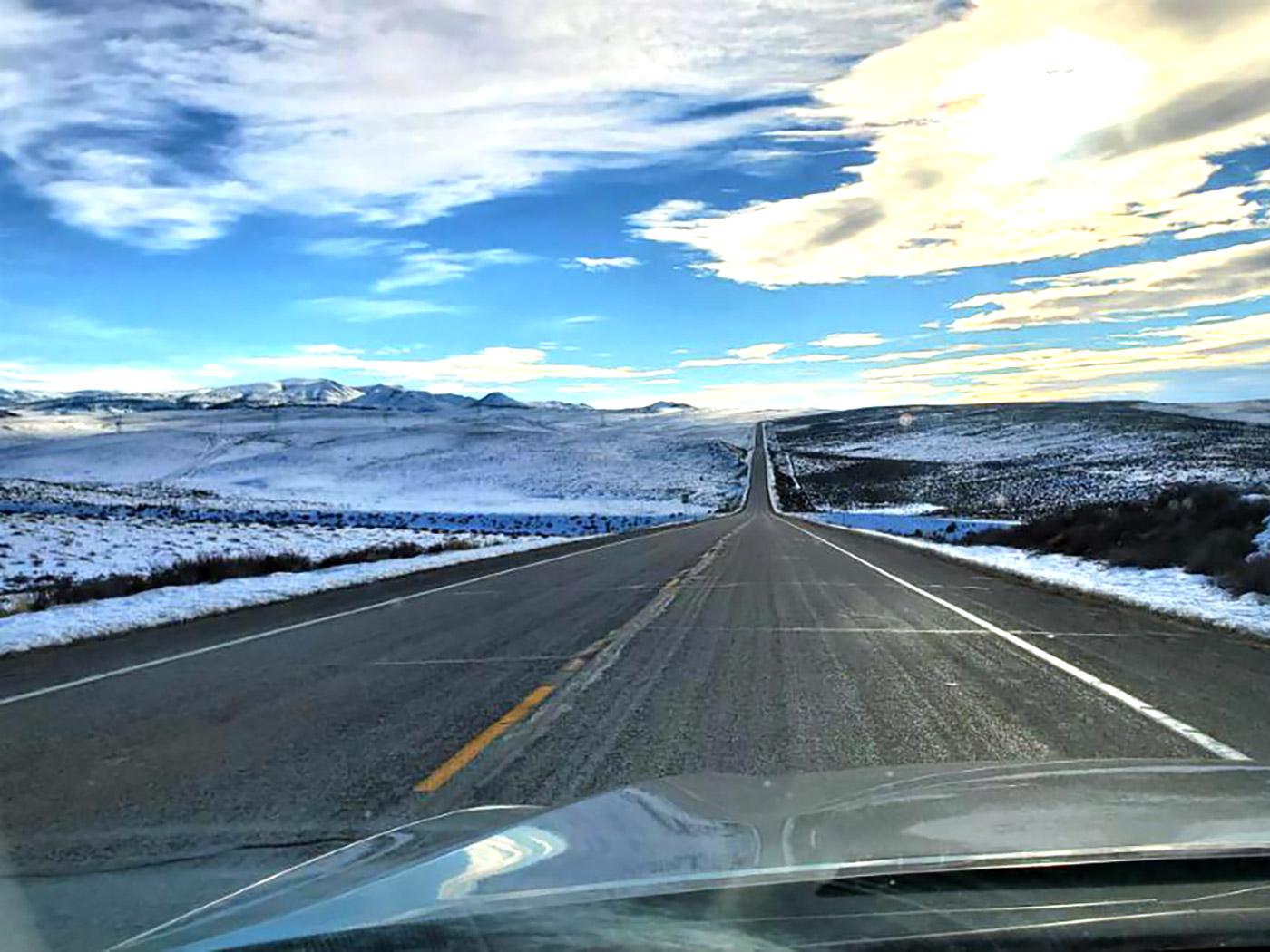
The COVID-19 pandemic interrupted Jim’s 2020 ski season and altered the next one. Lifts stopped in March 2020. Jim and Kathy remained in Utah with Vince for several months before making a carefully planned drive east, camping and carrying their own food to minimize contact.
That experience prompted “Reflections on the Freedom of Skiing.” Jim looked beyond freedom as an abstract civic concept and considered its physical sensation: gravity, speed, open terrain, cold air, and the ability to choose a line down a mountain.
During the masked winter of 2021, skiing also supplied rare social contact. Chairlift conversations became one of Jim’s few opportunities to meet people beyond his household. The outdoor setting offered exercise and relief during a period defined by restrictions and uncertainty.
This sharpened an idea present in his earliest work. Skiing is recreation, and Jim never inflates it into something morally grander. Yet recreation can support mental health, sustain friendships, impose structure on a winter, and provide an experience of movement and possibility when ordinary life feels narrow.
A favorite is personal
After skiing for more than half a century, Jim assembled his 20 favorite ski areas in 2021. The exercise could have become a statistical ranking, but Jim framed it around personal resonance.
Terrain and snow were important, of course, but so was scenery, history, companions, timing, and memory. Blue Knob could coexist with Alta. A mountain associated with family history could outrank a technically superior resort. Places visited during a perfect storm or a memorable family trip gained meaning that acreage figures could not express.
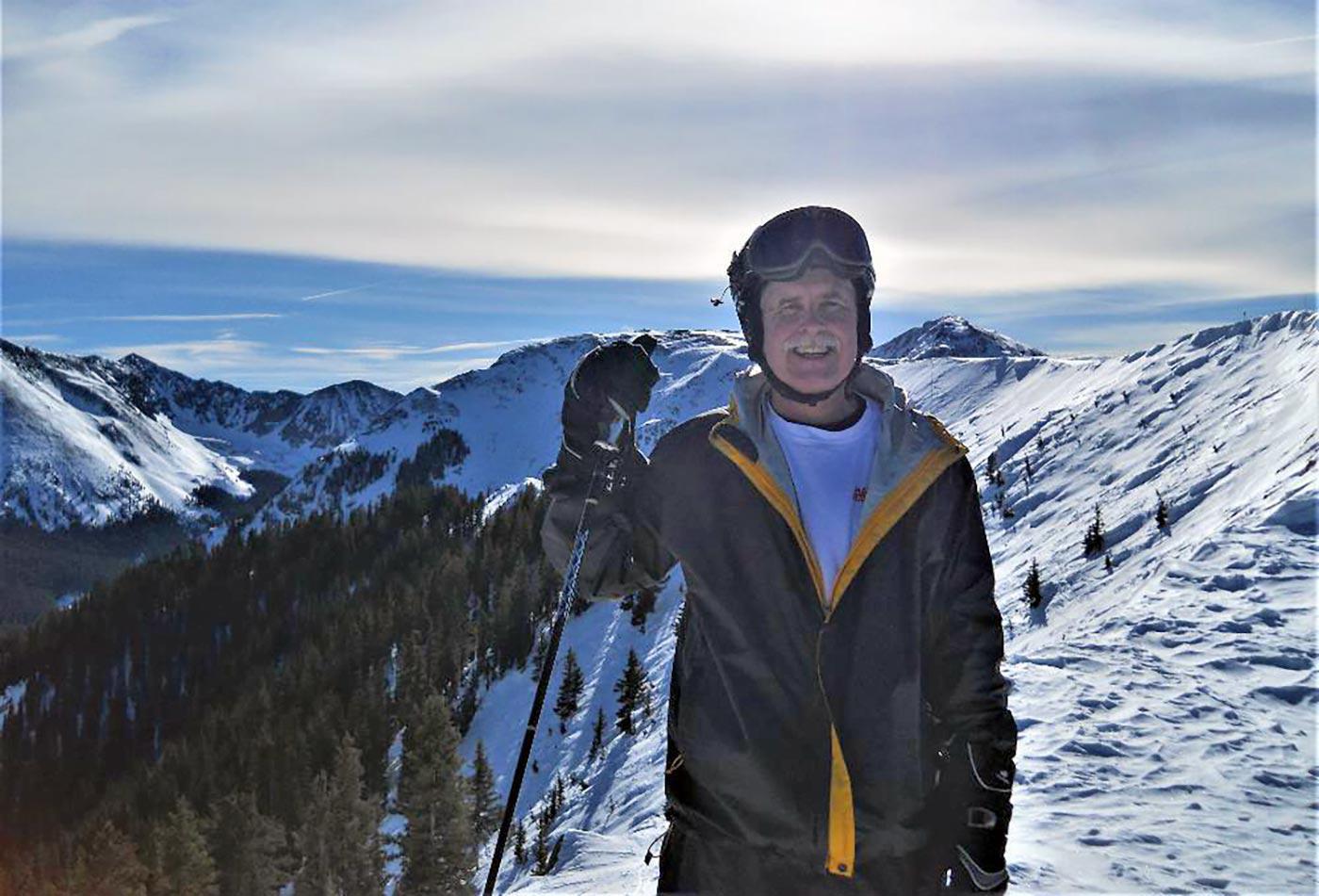
The list revealed another theme in Jim’s writing: expertise need not harden into snobbery. He has skied the Alps, Canadian Rockies, New England, and much of the American West, yet continues to enjoy Canaan Valley, Massanutten, Laurel Mountain, Bryce, and other regional hills. He describes himself as a regular recreational skier and writes from that perspective.
This approach makes his stories useful to DCSki readers. Jim does not assess a mountain solely for elite athletes or luxury travelers. He asks what a capable, enthusiastic skier can reasonably experience, how the place might suit a family or group of friends, and whether its character compensates for its limitations.
Learning to adapt
In his earliest DCSki essay, Jim was already contemplating age. A slopeside hotel seemed increasingly appealing. In 2014, he and Kathy had crossed 60, and she was stepping away from downhill skiing because of injury concerns. By 2025, Jim wrote candidaly about declining vision in flat light, foot pain, fatigue, and the possibility that the next accident or illness could end his ski career.
He knew continuing in the sport would require adaptation.
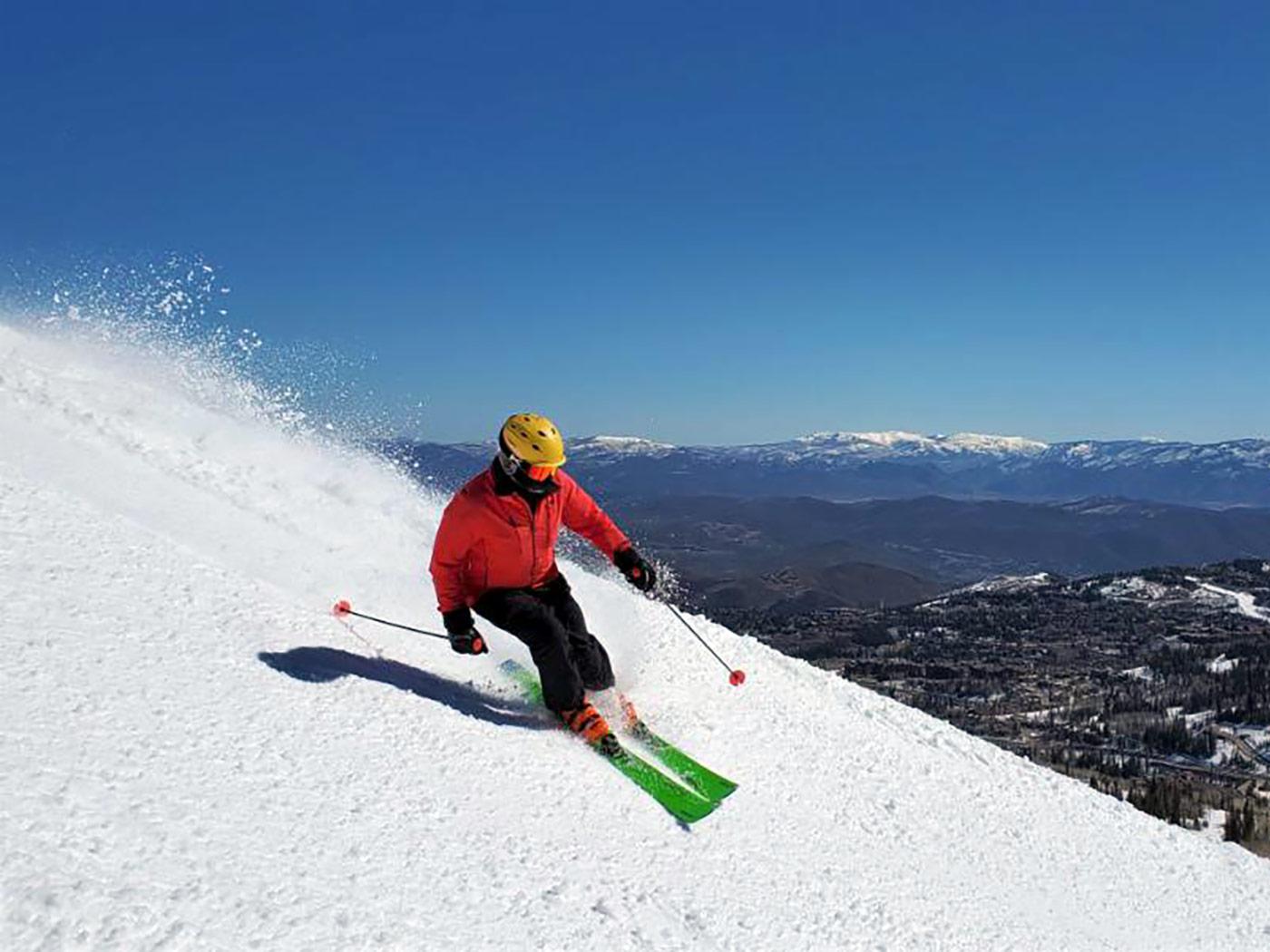
He recommended pacing, selecting favorable days, keeping gear organized, maintaining strength, controlling weight, sleeping well, receiving routine medical care, and accepting shorter sessions. Sunny spring skiing had become especially attractive: better visibility, clear roads, lighter clothing, fewer crowds, and softening snow.
He also rejected the idea that skiing only counts when it is difficult. “All skiing is good skiing,” he wrote in “Aging Into Skiing.” A skier who abandons groomers because only powder or steeps feel worthwhile may unnecessarily shorten a life in the sport. Adjusting the objective can preserve the pleasure.
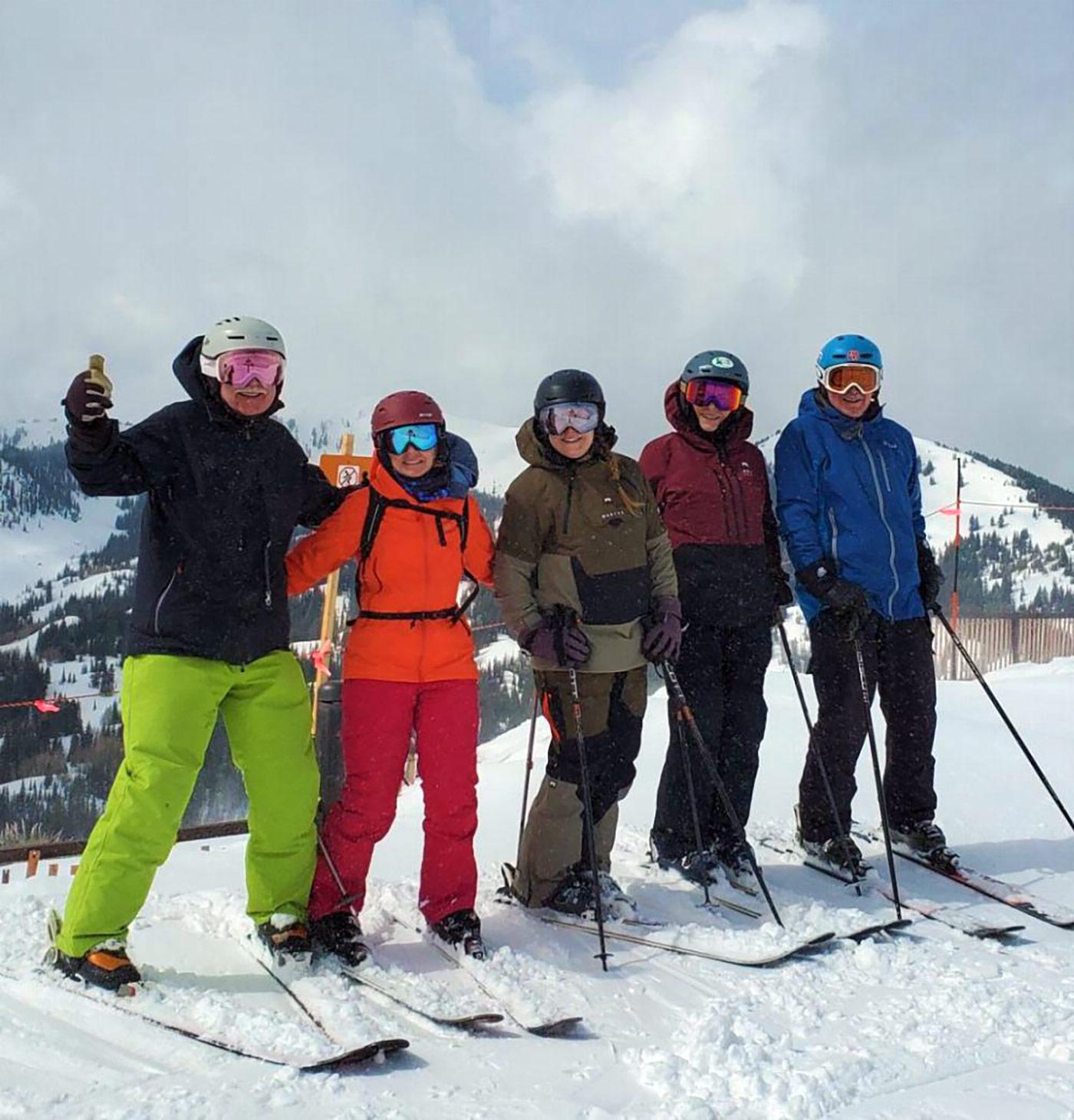
Friends become more important with age as well. They provide motivation and companionship, but also safety. Someone who falls hard at 72 may need more than the reassurance that worked at 27. Ski partners watch for one another, share driving, and recognize when it is time to stop.
The lessons between the runs
Across Jim Kenney’s reflective stories, several lessons remain remarkably consistent.
Skiing is most meaningful when it connects people. The family trip, the father-and-son powder day, the spouse who supports the obsession, and the online acquaintance who becomes a real ski buddy all matter more than a lifetime total of vertical feet.
Local mountains deserve respect. They create skiers, preserve memories, and provide the ordinary days that sustain a passion between major trips. Their modest statistics say little about their place in a community or a family.
Longevity requires adjustment. Fitness and preparation create possibilities, while humility helps a skier recognize changing limits. Fewer hours, easier terrain, or carefully selected days do not diminish the experience if the fun remains.
Gratitude deepens with time. Jim’s stories increasingly acknowledge the health, money, family support, retirement freedom, friendships, and luck that allowed his skiing life to continue. The accomplishments belong partly to him and partly to the people who made them possible.
Finally, anticipation has value of its own. A Mid-Atlantic skier spends far more time thinking about snow than sliding on it. The next cold front, trip, reunion, or unexplored mountain gives winter a sense of possibility.
Jim now recognizes that the end of his skiing life is closer than its beginning. He has considered what winter might look like without it and concluded that love, faith, and family will remain when the lifts no longer do.
For now, however, the boots still buckle.
And the best run may still be ahead.


Reader Comments