
Give a Mid-Atlantic skier a thermometer, a trail webcam, and a ten-day forecast, and before long you have a ski area operations manager.
We are a confident group. We know when the snowguns should be running, which trail should open next, and precisely how a resort squandered last Tuesday night’s cold temperatures. ($#@&%!) If the guns remain silent while the thermometer outside our house reads 29 degrees, we pull up another webcam for comparison. “Timberline is making snow, why isn’t everybody else?”

The discussion becomes particularly lively in November and December. Some skiers believe that large resort companies — Vail Resorts is often named in the Mid-Atlantic — have become too committed to predetermined opening calendars and too reluctant to chase early cold snaps. Timberline Mountain in West Virginia, meanwhile, has earned a following for tenaciously attacking snowmaking opportunities and opening as much terrain as quickly as it can.
Those comparisons are not entirely unfair. Resorts differ in their appetite for risk, their business models, their staffing plans, and the priority they place on an early opening. Customers are entitled to notice those differences, and resorts should expect questions when their snowguns are quiet while a competitor’s are roaring.
But the view from a webcam is incomplete. Running a ski area in the Mid-Atlantic requires a long sequence of judgment calls involving weather, water, electricity, equipment, labor, terrain, safety, and money. A decision that looks baffling from a living room can make more sense from the snowmaking control room — even if reasonable people might still make a different call.
The thermometer tells only part of the story
The first mistake an armchair snowmaker makes is looking only at air temperature. Snowmaking is governed more directly by the wet-bulb temperature, which reflects both temperature and humidity. Cold, dry air can permit productive snowmaking when the ordinary thermometer is above freezing. Damp air can make a seemingly cold night far less useful.
In a 2024 DCSki interview, Roundtop Mountain Resort General Manager Ted McDowell explained the distinction.
“Ideal snowmaking is during cold and dry conditions,” he said, noting that natural snowfall in this region can arrive with enough humidity to interfere with snowmaking. That is why flakes may be falling while nearby snowguns sit idle.
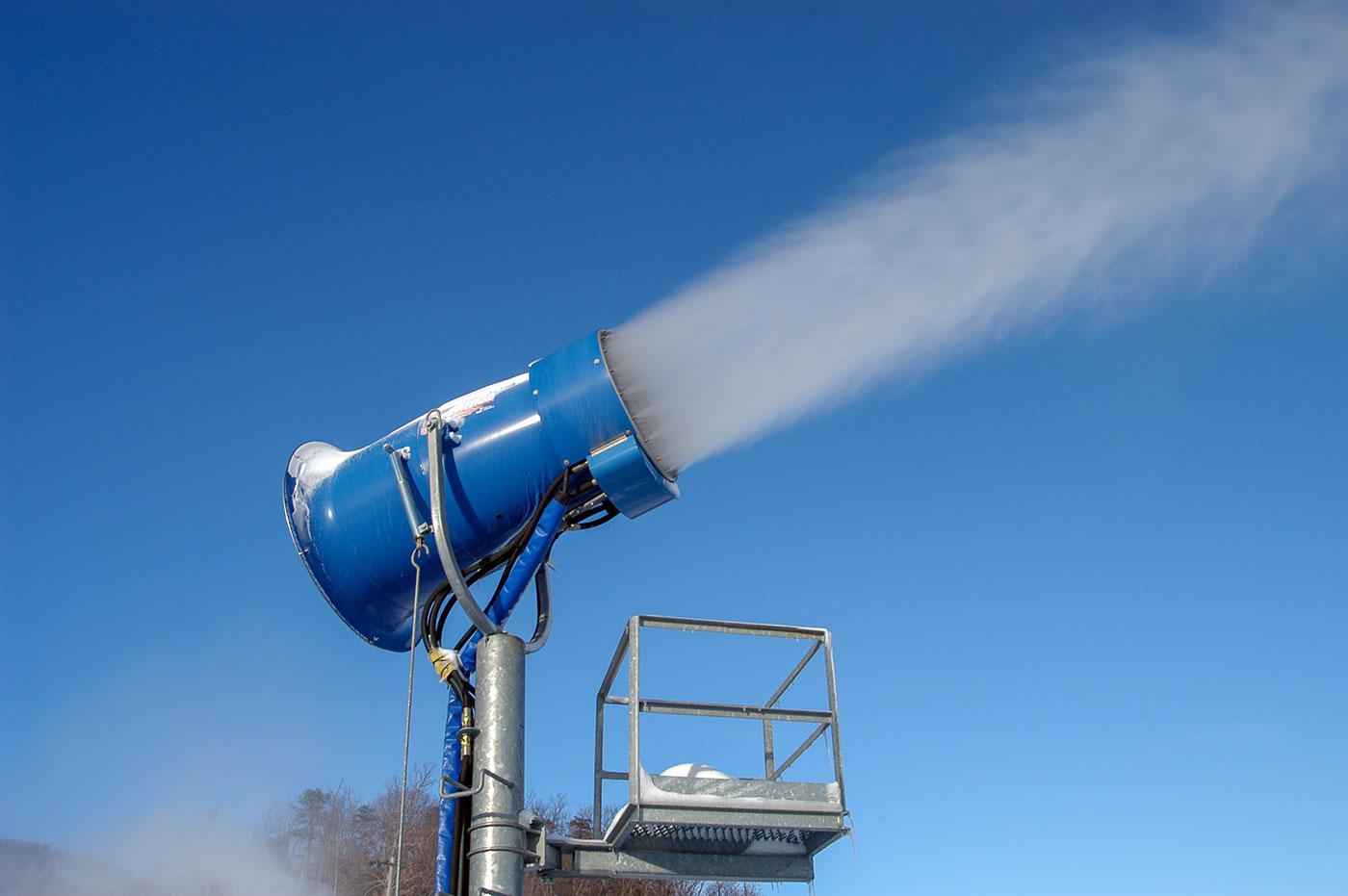
Conditions also vary across a mountain. Wind can change direction along a trail, humidity can settle into one pocket, and temperature can differ substantially from the base to the summit. A temperature inversion can even leave the bottom of a slope colder than the top. The reading at a nearby airport, or on a skier’s back porch 40 miles away, might bear little resemblance to conditions at a particular snowgun.
Wind presents another problem. A snowgun can produce perfectly good snow and deposit much of it in the woods. Operators can redirect some equipment and adjust water flow, but strong or poorly aligned wind reduces production and can turn an expensive snowmaking shift into a losing proposition.
This is one reason automation has become so valuable. Modern systems can monitor conditions at individual guns and adjust water flow as temperature and humidity change. In a 2020 DCSki interview, Jamie Storrs, who was then a Senior Communications Manager for Vail Resorts, described how onboard sensors allowed Whitetail’s automated guns to respond to the microclimate at each location. A gun producing overly wet snow could be adjusted or shut down remotely rather than waiting for a snowmaker to reach it.
Automation also allows a resort to capture a short window that might once have been lost. Before retiring from Massanutten, longtime resort official Kenny Hess told DCSki that crews without automation could spend much of a brief window starting the system, only to shut it down again soon afterward. New equipment cannot create cold air, but it can make better use of the cold air that arrives.
Not all mountains receive the same cold snap
Then there is elevation, the variable that makes many resort comparisons misleading.
Snowshoe Mountain Resort reaches 4,848 feet above sea level. Timberline Mountain tops out at 4,268 feet, with its base still at 3,268 feet. By contrast, Whitetail Resort rises from 865 feet to 1,800 feet.
That difference is not academic. On a marginal November night, Snowshoe or Timberline can be comfortably below freezing while lower-elevation areas in Pennsylvania and Virginia remain too warm or too humid. The West Virginia mountains may also stay cold through the day, turning a short overnight opportunity elsewhere into a much longer production run.
That pattern was visible during an early cold snap in November 2025. Timberline described its operation as running at full tilt, while some Pennsylvania resorts used the weather to briefly test equipment and train crews because the cold was not expected to last long enough to build an opening base. From a distance, that looked like a difference in ambition. But really, it was a difference in weather.
Making snow is not the same as opening a trail
A webcam can show white ground after a night of snowmaking. It cannot show whether there is enough snow to open safely.
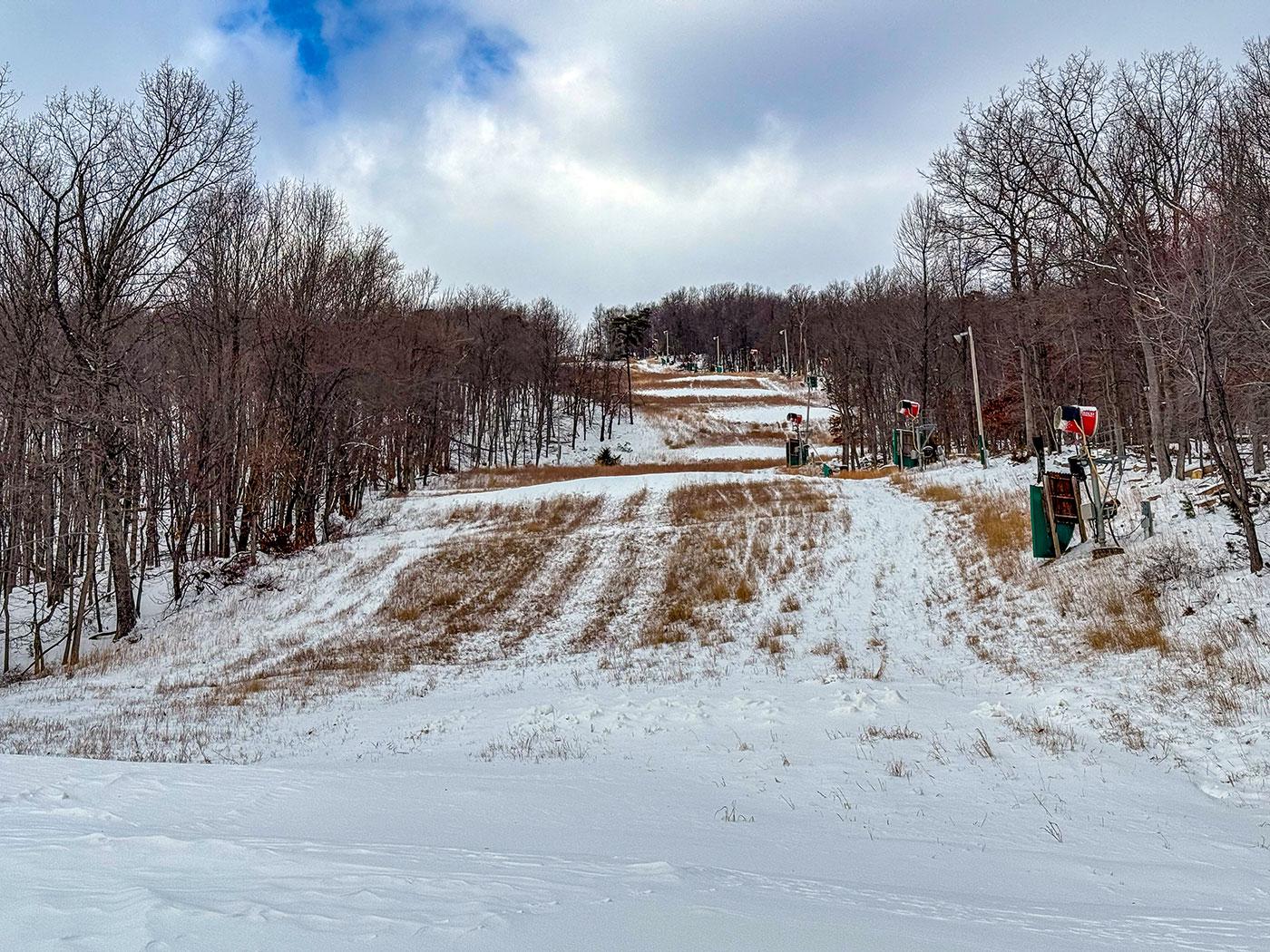
At the beginning of the season, a resort is building a trail from bare earth. Snow must cover grass, rocks, drainage structures, hydrants, and changes in terrain. It needs sufficient depth to survive grooming, skier traffic, sunshine, and the next warm spell. Snowguns frequently create large piles — the familiar “whales” — that must drain, be pushed across the trail by grooming machines, and be worked into a consistent surface.
Opening one isolated strip of white is rarely enough. The trail must connect to an operating lift and return guests safely to the base. Loading and unloading areas require snow. Intersections and runouts need coverage. Ski patrol must inspect and mark the terrain. Groomers, lift mechanics, electricians, and snowmakers all have work to finish before the first guest boards a chair.
Once a durable base exists, the equation changes. A few hours of snowmaking can refresh a worn surface or repair a thin section. Building the first base of the season requires far more water, time, and cold. McDowell described Roundtop’s strategy as concentrating first on main routes and building enough depth to withstand warm weather before expanding across the mountain.
This can be frustrating when a favorite trail remains closed beneath piles of snow. But trail count is not simply a measure of how many guns ran the night before. Operations teams must decide whether to deepen the terrain already open, create a new route, reinforce a vulnerable connection, or prepare beginner and lesson areas that may be less exciting to experienced skiers but essential to the resort.
A cold night must be considered with the warm days that follow
Mid-Atlantic snowmaking decisions are rarely based on tonight alone. An operations team is looking at the hours of productive wet-bulb temperatures, the wind, the forecast for the next several days, and how much of the new snow is likely to remain. They might also be looking at expected crowd levels in the coming days, as thin bases can be quickly damaged by heavy traffic.
If a 12-hour cold window will be followed by two days of warm rain, making snow may accomplish little beyond consuming electricity and drawing down a reservoir. If the same cold night begins a five-day stretch of favorable weather, running the system can be an easy decision. Forecasts are imperfect, of course, which means resorts sometimes make the wrong call in hindsight. So do the rest of us.
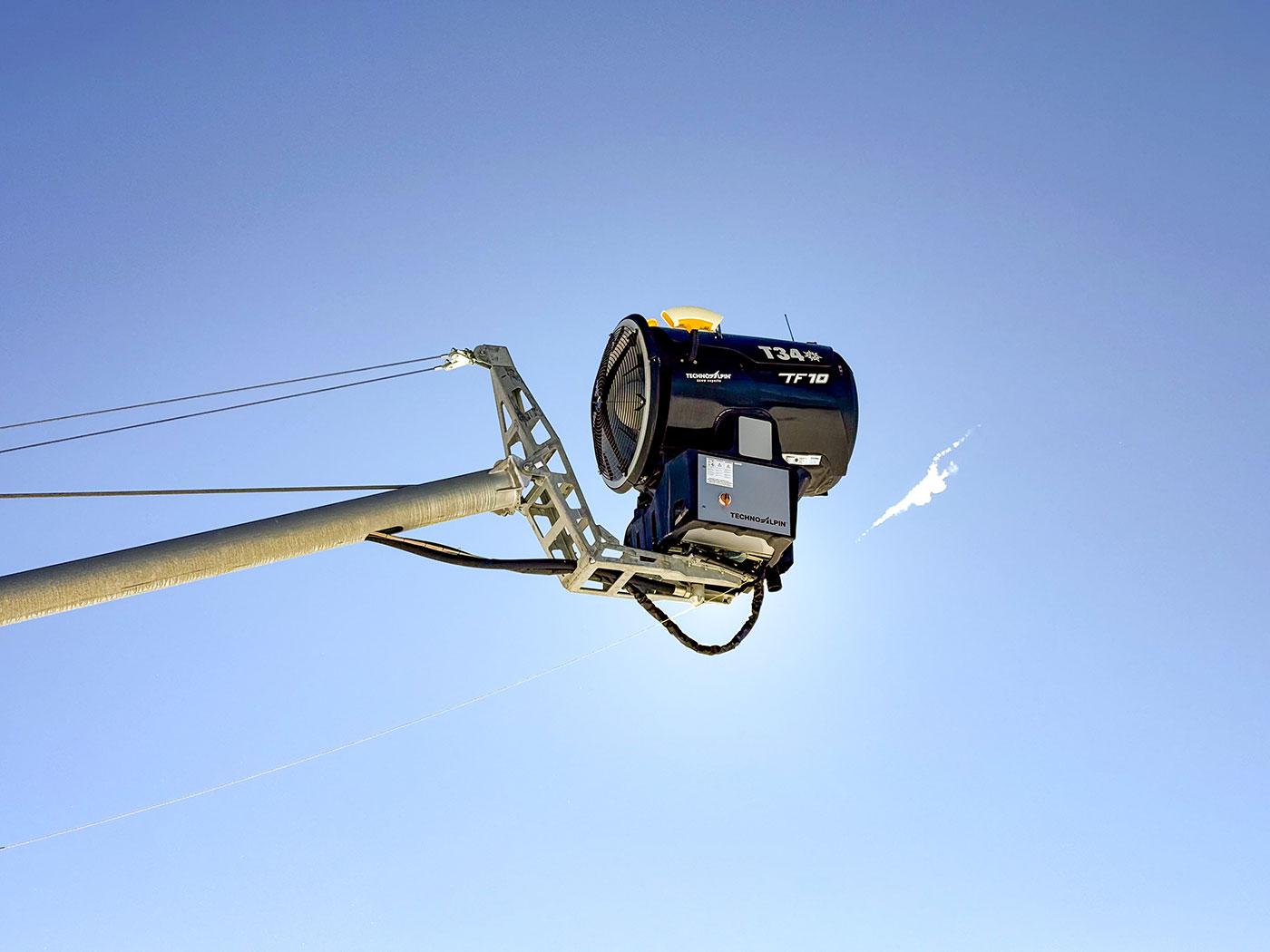
Snowmaking requires large pumps, compressors, miles of pipe, specialized guns, grooming equipment, and trained employees working through the night. The National Ski Areas Association describes snowmaking as an operational tool that helps ski areas open on schedule and maintain a durable surface, while newer equipment and automation can reduce the human and energy resources required. More efficient does not mean inexpensive.
Electricity arrangements can also influence the decision. In a 2022 DCSki interview, Hess explained that resorts have different agreements with their power providers, which become part of the go-or-no-go calculation. Massanutten’s arrangement made it easier to justify running its system during marginal periods in November and March than it might be for some competitors.
Water adds another limit. A resort may have tremendous pumping capacity but only a finite pond or reservoir. Available water once constrained expansion at Massanutten until the resort constructed a 2.5-mile pipeline and added storage. The concern has become more visible after the widespread Mid-Atlantic drought of 2024 and 2025, which in some locations was the worst in more than two decades. A ski area must decide not only whether it can make snow tonight, but where a limited supply will do the most good.
Most snowmaking water eventually returns to the watershed as the snow melts, but that does not make the supply unlimited at the moment it is needed. Stream-flow requirements, withdrawal permits, reservoir levels, pumping capacity, and competition among trails can all shape what appears on a webcam.
Opening means starting an entire business
Skiers tend to picture opening day as a lift and a ribbon of snow. A resort sees the start of a complicated seasonal business.
Lift attendants are the most visible employees, but they are only part of the operation. A resort needs patrollers, snowmakers, groomers, mechanics, instructors, rental technicians, ticket and guest-service employees, food-service workers, housekeepers, parking attendants, shuttle drivers, and supervisors. Some roles require certifications or specialized training. Many employees are seasonal, and some are balancing school, another job, or housing and transportation challenges.
Hiring begins well before winter, but a resort cannot simply summon every worker for one promising weekend and send everyone home again on Monday. Departments need training, schedules, supplies, and managers. Restaurants must order food. Rental shops need inventory prepared. Lifts must be staffed, inspected, and ready. Lessons and reservations create commitments to guests.
McDowell told DCSki that Roundtop spends considerable time training its entire staff and developing operating plans. Hess offered a broader view: “There are so many moving parts to operating a ski area.” A change in one department can have consequences upstream and downstream across the resort.
This is why a sustained opening is important. After all those gears begin turning, temporarily closing is disruptive and costly. Employees lose shifts, guests must change plans, perishable inventory can go to waste, and the resort must repeat parts of the startup process. A small area may choose to open for a bonus weekend and close again; another may wait until it believes daily operation is realistic. Neither approach is inherently wrong, but they serve different goals.
The calendar and the customer matter, too
Forecasts and snow conditions are only part of the calculation. Resorts also consider how many skiers are likely to show up and whether opening makes financial sense.
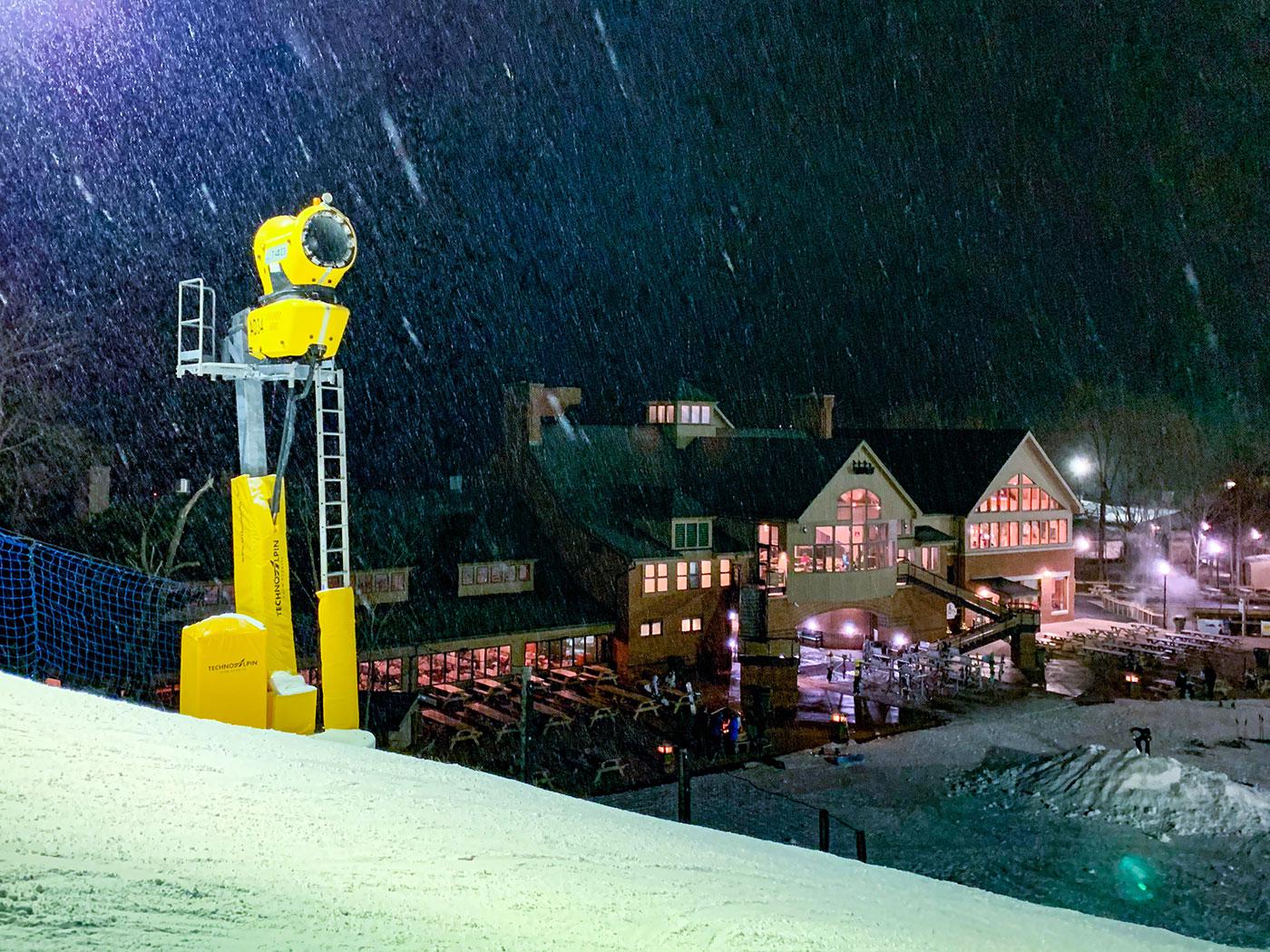
An early December weekday opening with one trail may delight passholders while generating little ticket, rental, lesson, or food revenue. The same snowmaking investment directed toward a larger opening before Christmas could serve many more guests. Conversely, an early opening can build enthusiasm, reward loyal customers, provide valuable training under real operating conditions, and establish a resort as the place that is willing to go first, and that can have real marketing value.
This is where business strategy enters the debate. An independent mountain with concentrated management may be able to make a decision quickly and accept the possibility of an interrupted schedule. A large company can bring capital, purchasing power, and technical expertise, but its staffing systems, financial targets, and regional operating plans may encourage more standardized decisions. Pass products also change the incentives: many visits have been paid for months before the first snowgun starts.
Those are fair subjects for scrutiny. Skiers do not owe any operator unquestioning loyalty, and a resort that repeatedly misses usable snowmaking opportunities should expect customers to notice (and to express their frustration on social media and the DCSki Forums). Clear communication helps. Explaining that a cold snap is being used for testing, that water is being preserved for a longer window, or that an opening base cannot survive the forecasted rain will not satisfy everyone, but it gives guests more than a silent webcam to interpret.
At the same time, claims that resorts simply do not want to open make little sense. Ski areas earn their winter revenue when lifts turn, lessons begin, beds fill, and guests buy meals and rentals. In a region where the season can be measured in weeks rather than months, operators understand the value of every skiable day.
The view from the armchair
None of this will end the debate. It should not. Comparing resorts is part of being an engaged customer, and the Mid-Atlantic has benefited from operators pushing one another to improve snowmaking, open terrain faster, and communicate more clearly.
Timberline’s aggressive approach has raised expectations. Snowshoe’s elevation demonstrates what sustained cold can accomplish. Massanutten has shown how automation, water infrastructure, and a willingness to use marginal-season windows can extend opportunity. Whitetail’s sophisticated system can transform its slopes rapidly when the weather cooperates. Seven Springs and other western Pennsylvania areas operate in a different climate from resorts closer to Baltimore and Washington, even when the same company owns them.
The people making these decisions are not anonymous figures plotting to keep skiers off the snow. They are operations managers watching forecasts at 2 a.m., snowmakers working in wind and freezing spray, mechanics keeping pumps and lifts alive, and local employees hoping for enough winter to fill their schedules and put bread on the table. Many are skiers and snowboarders themselves. They would generally prefer to see a mountain covered in snow and filled with guests.
They will still make debatable calls. Forecasts will fail. A resort will conserve water before a cold stretch that lasts longer than expected, or make snow before rain washes part of it away. Corporate priorities will sometimes differ from those of the most devoted local passholder. There is room to question those choices.
And, of course, when the first cold night arrives this fall, we will do exactly that. We can’t help ourselves! We will open the webcams, compare the plumes, check the thermometer, and begin pretend-managing every ski area in the Mid-Atlantic from the comfort of our homes.


Reader Comments