
For skiers and snowboarders, the results of grooming are apparent each morning: smooth trails with freshly pressed corduroy. But where did PistenBully groomers come from, and how did they become such an important part of ski area operations?
Before the PistenBully
Before mechanical grooming, skiers sometimes packed snow by repeatedly skiing over it. As ski areas grew, operators began experimenting with rollers and other equipment to prepare their slopes.
In 1940, Cranmore Mountain in New Hampshire developed an early mechanical grooming program using agricultural tractors to pull rollers and mat drags. After World War II, tracked Tucker Sno-Cats provided a more practical way to haul grooming implements over snow. Ski areas continued experimenting with equipment designed to pack snow, smooth ruts, and break up crust.
In 1968, Otto Wallingford of Lost Valley in Maine developed the Powdermaker, an attachment with steel-mesh rollers that helped turn hard snow into a more skiable surface. The following year, Wallingford and Don Waterman established Valley Engineering to manufacture and market grooming equipment.
A New Machine from Germany
Meanwhile, German commercial vehicle manufacturer Kässbohrer was developing a machine designed specifically for ski slope maintenance. Engineer Walter Haug’s PistenBully featured hydrostatic drive and steering-wheel controls, giving operators a different way to maneuver over steep, snowy terrain. Its name combined Piste, the German term for a ski slope, with Bully, suggesting a powerful, hard-working vehicle.
On December 19, 1969, Haug delivered the first PistenBully to the Winklmoos-Alm ski area near Reit im Winkl, Germany. The original PB 120 B models used gasoline engines; diesel power arrived with subsequent models.
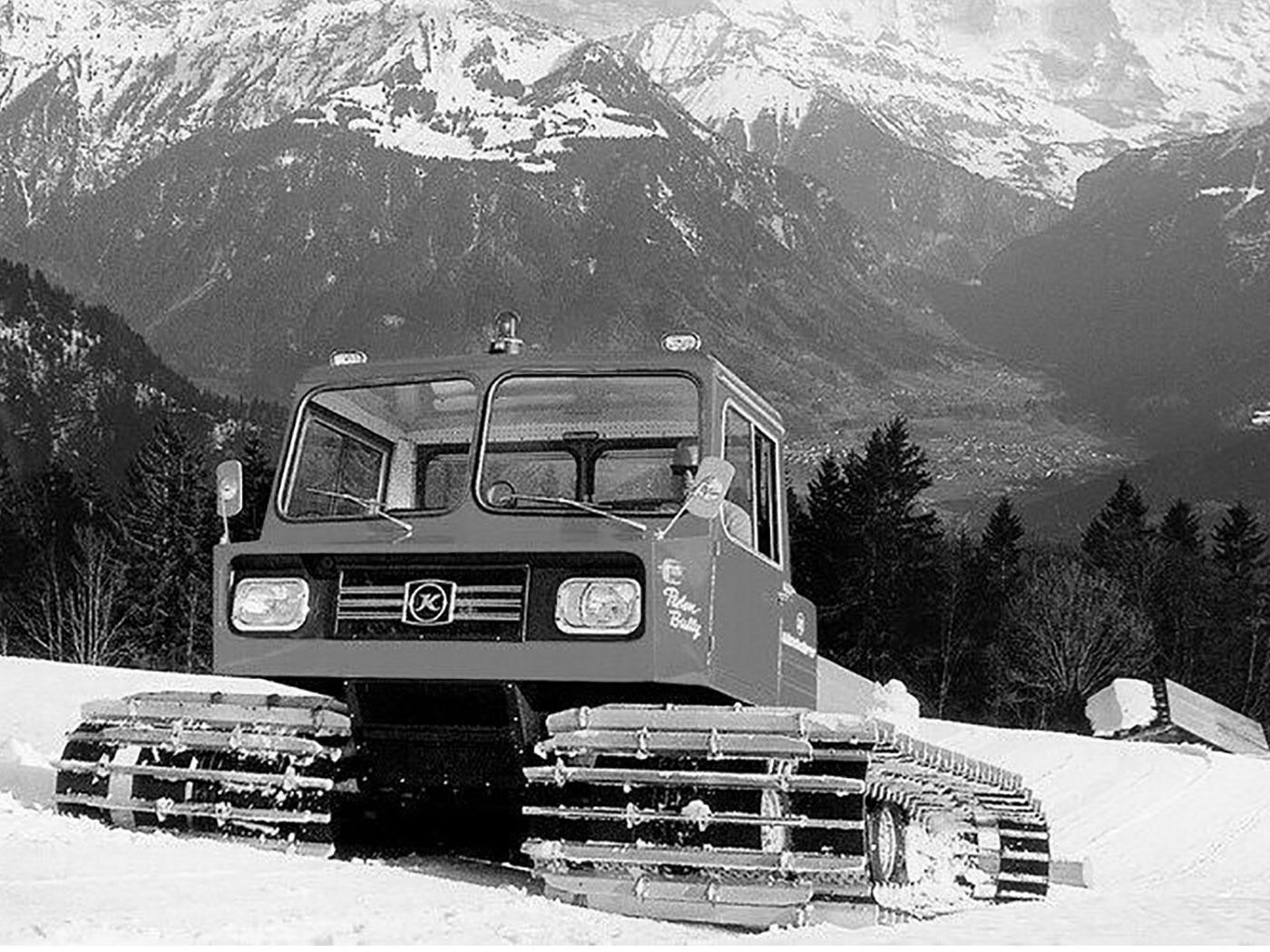
In 1971, the diesel-powered PB 145 D earned awards at an international grooming-machine competition in Flaine, France. The following winter, six PB 145 D machines were sent to Japan for the 1972 Winter Olympics in Sapporo. The Olympic assignment helped introduce the German manufacturer to a wider international audience.
Changing the Snow Beneath Our Skis
Grooming machinery continued to improve through the 1970s and beyond. Front-mounted blades gave operators a way to push snow into thin spots and level moguls, while rear attachments smoothed the surface. Powered tillers brought another improvement: rotating teeth could break up compacted snow and ice before a finishing attachment left behind the familiar corduroy pattern.
PistenBully was one of several companies advancing grooming technology. Manufacturers including Bombardier and makers of specialized grooming attachments also contributed to the machines and techniques used at ski areas.
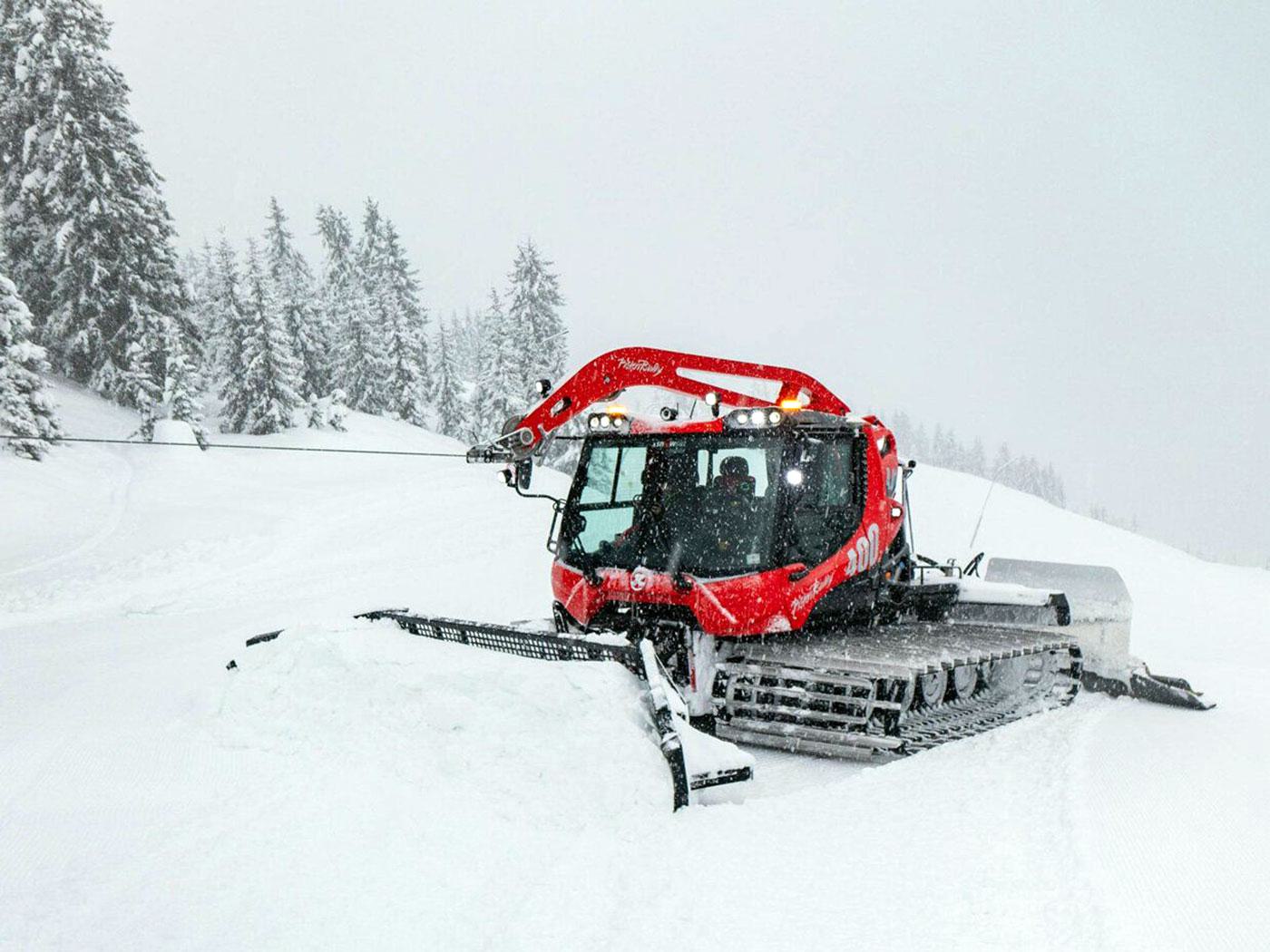
Modern PistenBully groomers combine adjustable blades, rear tillers, and sophisticated drive systems. Some have winches for steep slopes, while satellite-based snow-depth systems help operators locate thin spots and areas with snow to spare.


Reader Comments