
But a new class of equipment is built around a different idea: producing snow without waiting for ideal conditions.
One of the most talked-about examples is from the Canadian-based company Latitude 90 (formerly known as SNÖFLAKE), which makes “all-weather” snowmaking systems that are now starting to appear in the region. Virginia’s Massanutten Resort has installed one on its tubing hill to test the technology, and Spring Mountain in Pennsylvania has already installed two — a sign that weather-independent “snowmaking in a box” is no longer just a trade-show concept.
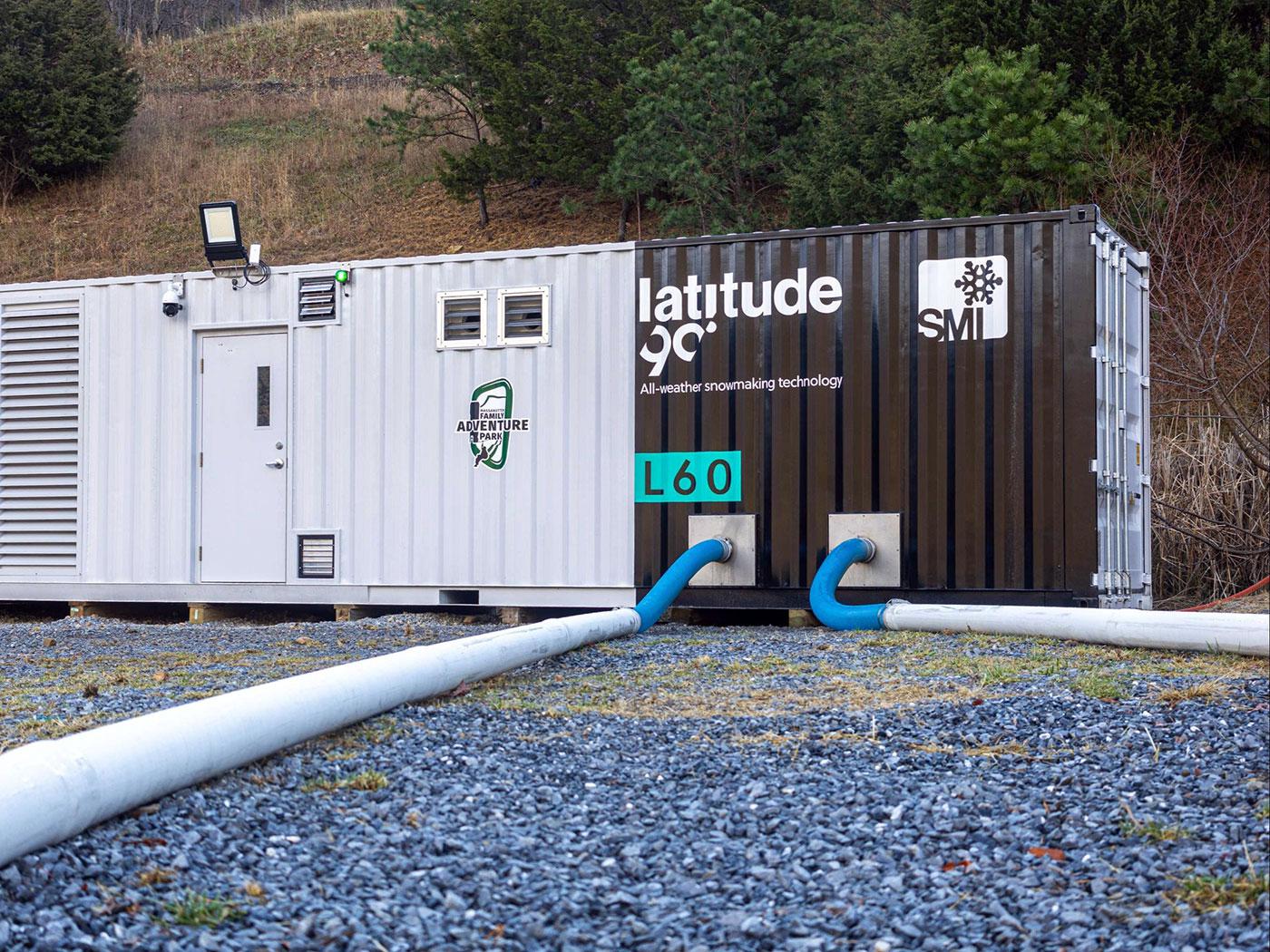
The basic concept is straightforward. Traditional snowmaking relies on cold, dry enough air so that atomized water droplets can freeze as they travel through the air.
By contrast, the Latitude 90 systems are an enclosed, containerized unit that produces snow inside a controlled environment, then pushes that snow out onto the slope. Because the snow is created within a refrigerated chamber, it’s marketed as being less dependent on outside temperature and humidity than conventional snowmaking.
In fact, the Latitude 90 is even promoted as having an operating range extending well above freezing - from -4 to 77 degrees Fahrenheit. That is certainly eye-opening for a region where early-season plans can be derailed by a 55-degree rainstorm.
In practice, humidity and precipitation still matter, and “making snow” isn’t always the same as building a durable base. While you might be able to make snow in 70-degree temperatures, the snow will quickly melt once it hits the warm ground. But the appeal is obvious: these systems are designed for the Mid-Atlantic’s most frustrating weather, the “almost cold enough” windows when resorts are typically forced to stand down and wait.
That’s also why early deployments are often aimed at compact, high-value terrain. A snowmaking box isn’t designed to blanket an entire mountain. It’s designed to generate a steady stream of snow for a relatively small footprint — exactly the kind of need you see in tubing parks, beginner slopes, learning areas, and other zones where consistency matters more than acreage. A tubing hill, in particular, is a natural proving ground: it’s high-demand and sensitive to bare spots.
Snow quality is another key question, especially for the Mid-Atlantic, where snow frequently has to survive warm afternoons, overnight refreezes, rain events, and heavy grooming.
Latitude 90 emphasizes that it produces dry, groomable snow without chemical additives, and distributor material highlights a patented rotor system that can adjust flake size — a feature intended to help operators tailor output depending on whether they’re building a base or finishing a surface.
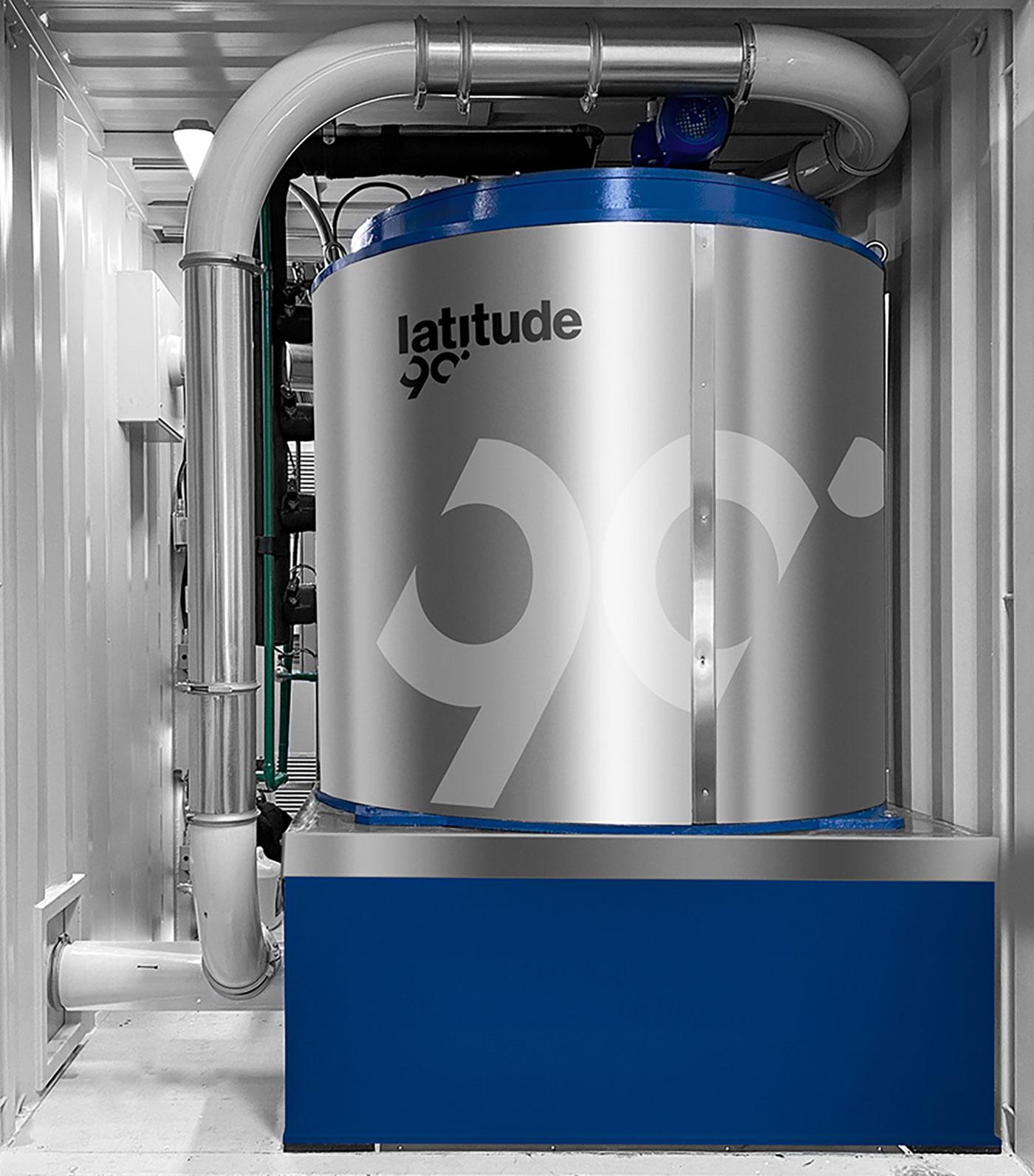
The economics, however, are where this technology is likely to be decided.
These systems are not meant to replace conventional snowmaking, which remains the most efficient way to put down large volumes when wet-bulb conditions are favorable. Published specifications for some Latitude 90 models show meaningful output but also substantial energy demand; for example, model sheets list power draw on the order of roughly 67-139 kW depending on the model.
That suggests the Mid-Atlantic business case is less about producing the cheapest snow and more about producing snow that enables predictable operations — avoiding closures, protecting holiday revenue, and keeping key terrain open when traditional snowmaking can’t run.
That idea — paying for certainty — is what makes “snowmaking in a box” particularly relevant to the Mid-Atlantic. In many winters, resorts don’t lose their season because it never gets cold; they lose it because cold arrives in short bursts and gets interrupted by thaws that reset progress. A technology that can stabilize a resort’s most important terrain during marginal stretches may not need to cover the entire mountain to be valuable.
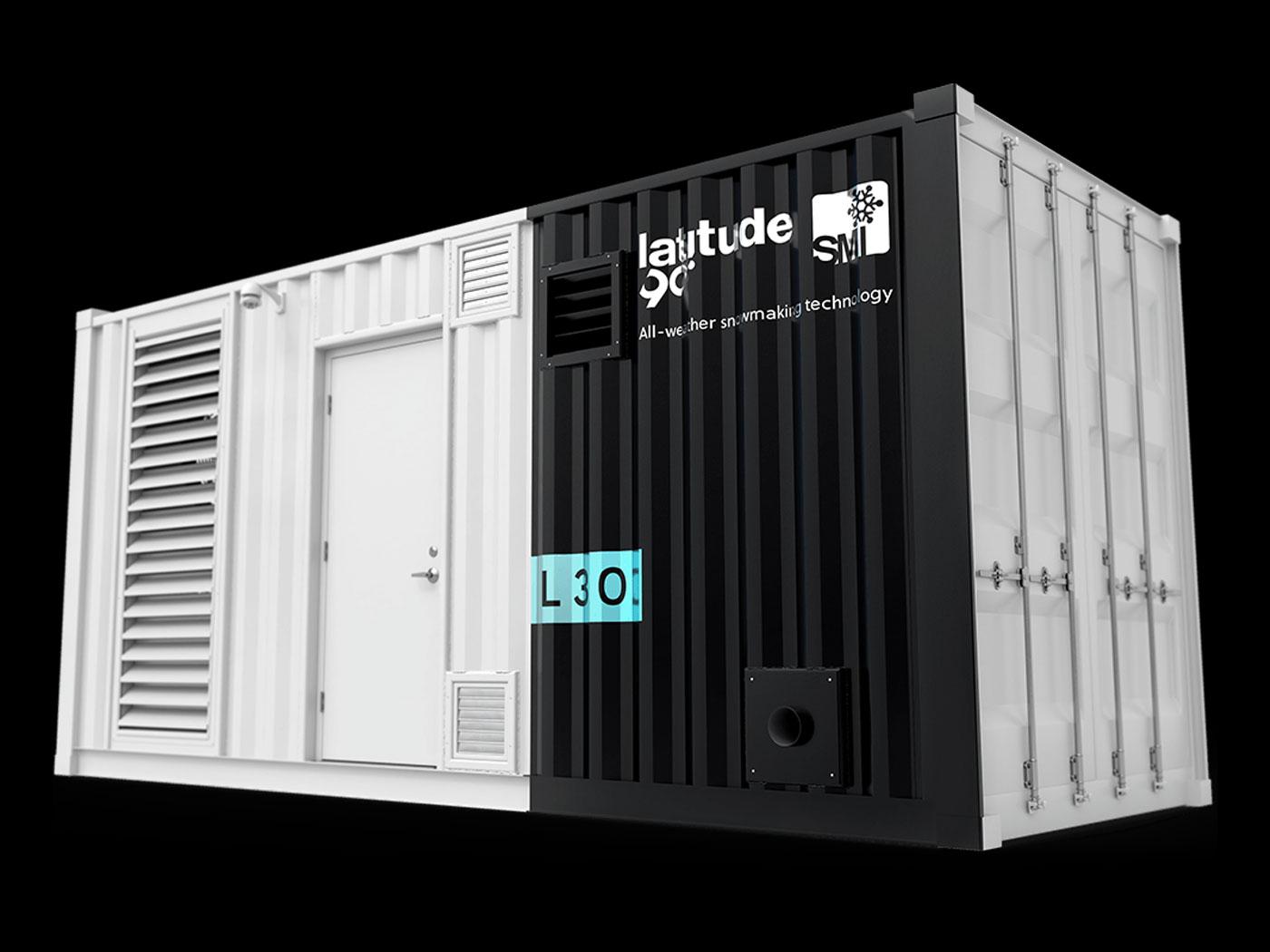
For now, Latitude 90-style systems remain rare in the Mid-Atlantic, but the fact that they’re being deployed at all is notable. With Massanutten and Spring Mountain deploying the technology, it’s likely that other resorts in the region are at least paying attention.
Whether the concept grows beyond a handful of installations will come down to real-world performance and costs — not just the ability to make snow in warm weather, but the ability to make snow that holds up, skis well, and justifies its energy demands.
If it does, weather-independent snowmaking could become another tool in the Mid-Atlantic’s playbook: not a replacement for traditional snowmaking, but a targeted way to keep the most important parts of a resort operating when winter refuses to behave.






Reader Comments