
Baltimore isn’t a place most people associate with breakthroughs in skiing technology. But in the late 1940s, an aircraft engineer named Howard Head began experimenting with a new kind of ski in the Baltimore area. His work would help transform how skis were designed and manufactured, eventually producing one of the most recognizable brands in the sport.
Head was a relative newcomer to skiing, and he wasn’t particularly impressed with the equipment. Most skis were made primarily from hickory, which could be heavy, difficult to turn, and prone to warping. Having worked with lightweight metals, plastics, and adhesives in the aircraft industry, Head wondered whether those materials could produce a better ski.
He wasn’t the first person to experiment with metal skis. Earlier designs had already appeared, including some that reached the market. But Head believed he could overcome the problems that had prevented metal skis from gaining widespread acceptance.
His first attempts were hardly encouraging.
A Rocky Start
In 1947, Head brought experimental skis to Stowe, Vermont, where instructors tested his designs. The prototypes repeatedly broke, sometimes before the skiers could get very far.
Undeterred, Head returned to Maryland and continued experimenting. His early designs borrowed heavily from aircraft construction, using aluminum sheets bonded around a lightweight honeycomb core. But the materials that worked well in airplanes didn’t necessarily behave as intended on snow.
Early prototypes broke under stress. Snow stuck to aluminum running surfaces, and aluminum edges struggled to grip hard snow. Head gradually addressed these problems, replacing his original honeycomb core with plywood, adding a plastic base, and eventually incorporating hardened steel edges.
Professional skier Neil Robinson was among those who tested Head’s prototypes, providing feedback as the designs evolved. The process involved repeated trips to the mountains, with each failure giving Head another problem to solve.
By 1950, he had developed a ski ready for commercial production.
The Head Standard
The Head Standard combined a plywood core with aluminum layers and plastic surfaces. The components were bonded together under heat and pressure, creating a ski that was more consistent and easier to turn than many traditional wooden designs. Subsequent refinements included tempered steel edges for improved durability and grip.
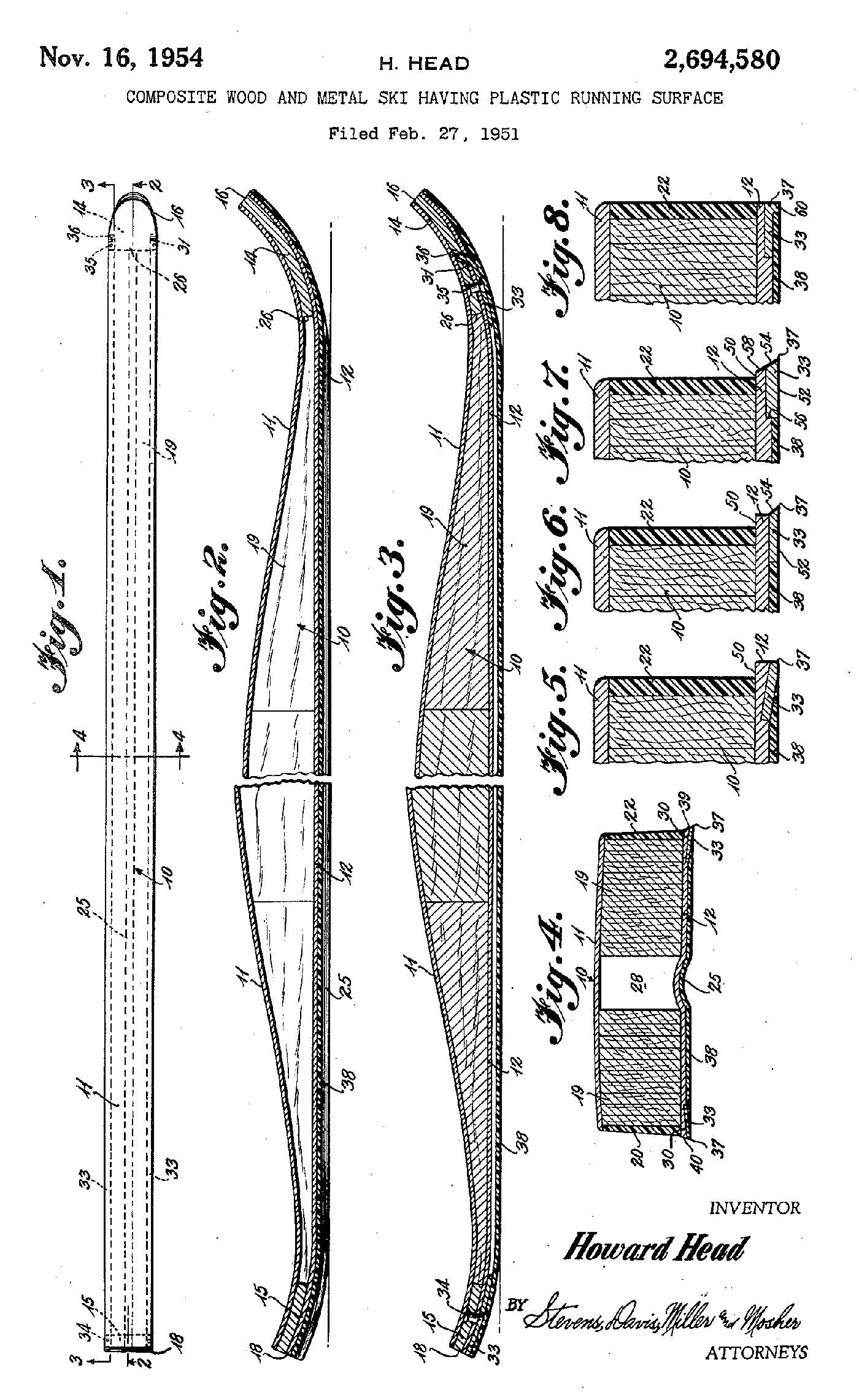
The new skis were expensive, and convincing customers to abandon familiar wooden equipment took some effort. Head worked closely with ski instructors, who could demonstrate the advantages to their students.
The Standard eventually earned the nickname “the Cheater” because it made turning easier. What had begun as one beginner’s frustration with his equipment was becoming a successful business.
Head received a patent for his composite ski design in November 1954. According to the company’s historical records, HEAD had become the leading ski brand in the United States and Europe by 1955.
Changing the Sport
Although recreational skiers embraced the new technology, competitive racers were initially more cautious. Early metal skis could suffer from vibration and edge-performance problems, making them less appealing to athletes demanding precise control at high speeds.
Head continued refining its designs, and the company’s skis eventually found success in international competition. American racer Jean Saubert won two medals on Head skis at the 1964 Winter Olympics in Innsbruck, Austria: silver in giant slalom and bronze in slalom.
By then, the ski industry was undergoing a broader transformation. Manufacturers increasingly treated skis as engineered structures, combining different materials to achieve specific performance characteristics. Fiberglass and other composites would eventually become commonplace, but Head’s commercially successful laminated design helped establish the direction of modern ski construction.
Head’s contribution wasn’t the invention of the first metal ski. It was developing a commercially successful design that demonstrated the advantages of combining materials, and finding a way to manufacture it consistently.
And it all began in the Baltimore area, where an aircraft engineer who had only recently learned to ski decided that the equipment needed some improvement.




Reader Comments