For years, halfpipes were a familiar sight at Mid-Atlantic ski resorts. They became increasingly popular as snowboarding grew during the 1990s, and resorts invested in specialized terrain designed to accommodate the sport. Some built elaborate facilities, purchased specialized grooming equipment, and hosted competitions that attracted talented riders.
Today, halfpipes are considerably harder to find. Many resorts that once maintained them have removed them or converted the space to other uses.
A Halfpipe at Whitetail
Whitetail opened in December 1991, just as snowboarding was beginning to gain widespread acceptance at ski resorts. At some point during its early years, Whitetail constructed an in-ground halfpipe alongside its Snow Park beginner trail, near the upper portion of the Easy Rider Quad.
By 1998, Whitetail was expanding the facility substantially. The enlarged halfpipe measured 475 feet long and 50 feet wide, making it one of the largest in the region. On January 10, 1999, Whitetail celebrated its opening with a competition for professional and amateur snowboarders. The Washington Post reported that the resort was promoting the facility as the largest halfpipe in the East.
The timing coincided with an important milestone for snowboarding. Halfpipe competition made its Olympic debut at the 1998 Winter Games in Nagano, Japan, introducing television audiences around the world to a sport that was rapidly gaining popularity.
Whitetail’s investment reflected the enthusiasm surrounding snowboarding at the time. Halfpipes gave riders a place to practice the aerial maneuvers they were seeing in competitions, and they provided plenty of entertainment for spectators riding nearby chairlifts.
But maintaining a halfpipe in the Mid-Atlantic presented challenges.
Unlike a conventional ski slope, a halfpipe requires substantial amounts of snow to create its curved walls. Specialized grooming equipment is needed to shape and maintain those walls, and the facility can be difficult to keep in good condition through the region’s frequent freeze-thaw cycles.
DCSki’s historical reports provide examples of those difficulties. In December 2000, Whitetail’s terrain park was operating, but snowmaking had not yet begun on the halfpipe. In January 2005, all of Whitetail’s trails were open except the halfpipe. Later that season, I observed that the pipe’s walls had deteriorated to the point where snowboarders could no longer get much air, even though the facility technically remained open.
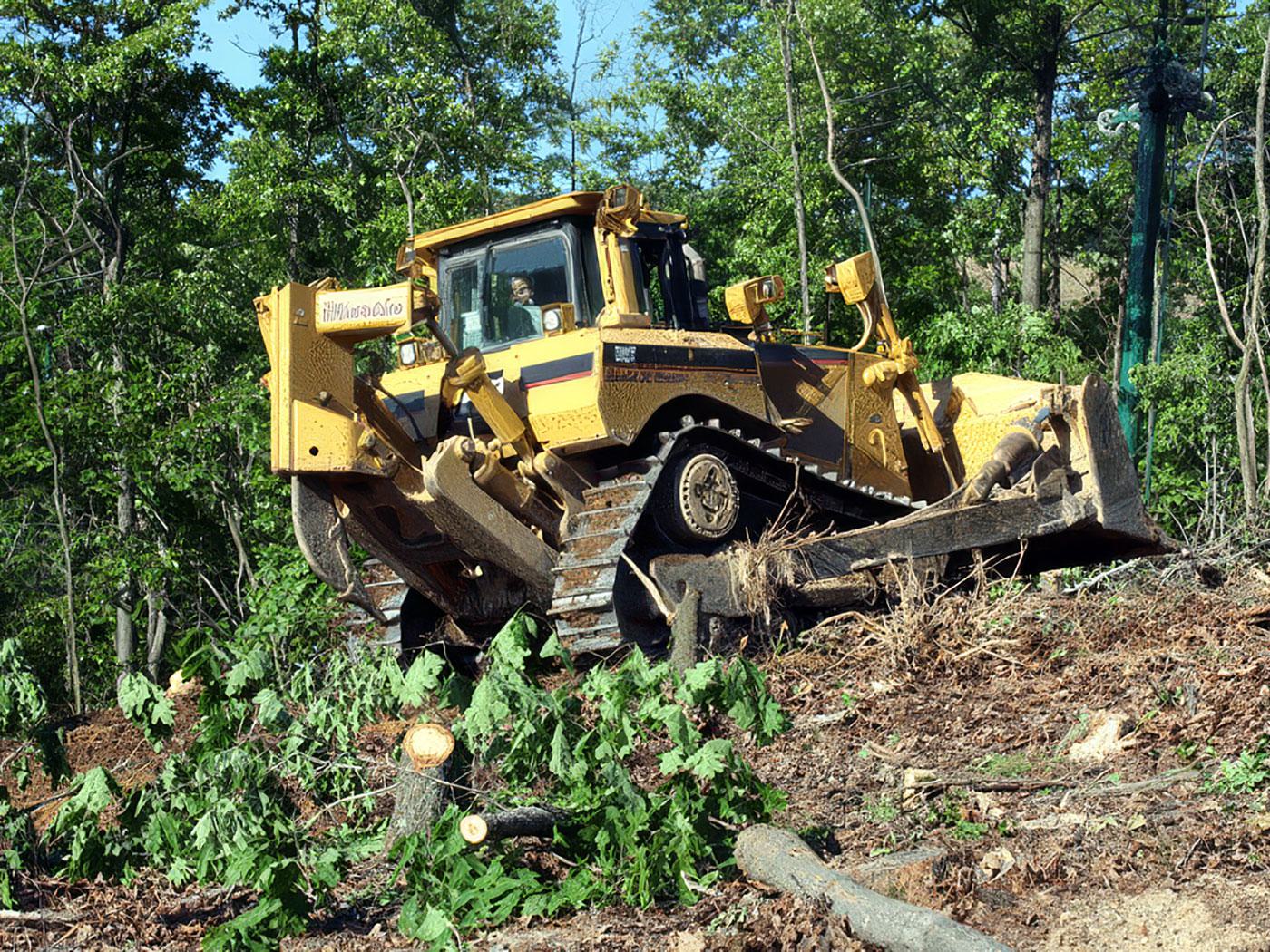
During the summer of 2009, the resort filled in its original halfpipe, converting the area into a beginner terrain park. A replacement halfpipe was constructed within the Jib Junction Terrain Park, along Angel Drop, where additional snowmaking equipment was installed to support the facility.
The project was part of $1.7 million in improvements for the 2009–2010 winter season. Whitetail hoped the new location and additional snowmaking capacity would make it easier to open and maintain the halfpipe.
Whitetail continued experimenting with freestyle terrain in subsequent years. In 2016, Ski Area Management magazine featured an unusual creation at the resort called Tunnel Vision, which combined a halfpipe with a bowl and a snow tunnel. The feature required specialized grooming equipment and several overnight construction shifts.
Whitetail no longer advertises a halfpipe among its freestyle offerings.
Halfpipes Across the Mid-Atlantic
Whitetail was far from alone in embracing halfpipes during the 1990s and 2000s.
At Wisp Resort in western Maryland, DCSki reported snowmaking on the halfpipe during February 1998. Snowshoe Mountain Resort in West Virginia operated a 450-foot halfpipe with 12-foot walls by December 2000, when the resort reported opening the facility earlier in the season than ever before.
Liberty Mountain Resort also invested in halfpipe infrastructure. For the 2002–2003 season, Liberty relocated its halfpipe to a more visible location above the Mountain Chalet and purchased specialized grooming equipment to improve its shape. By November 2004, Liberty was advertising three terrain parks in addition to its halfpipe.
At nearby Roundtop Mountain Resort, a halfpipe occupied a prominent location directly in front of the main lodge. A February 2002 DCSki report described snowboarders hiking up the pipe while waiting for its dedicated J-bar lift to begin operating for the evening.
Other resorts, including Camelback and Seven Springs, also incorporated halfpipes into their freestyle offerings.
Seven Springs eventually became particularly well known for its terrain parks and competition facilities. Its 22-foot superpipe was among the largest halfpipes in the region, accommodating advanced riders and the increasingly ambitious tricks that had become commonplace in competitive snowboarding.
Bigger Pipes, Bigger Challenges
As competitive snowboarding evolved, halfpipes grew larger. Early facilities often featured walls around 10 to 12 feet high, while 22-foot superpipes eventually became standard for major international competitions.
The larger pipes required more snow, more maintenance, and experienced grooming operators. They also demanded considerable skill from riders, making them less approachable for recreational skiers and snowboarders.
Terrain parks offered greater flexibility. Resorts could provide jumps, rails, boxes, and other features for different ability levels, adjusting the layouts throughout the season. Many gradually shifted their freestyle investments away from dedicated halfpipes.
The change was already apparent by 2016. In a February discussion on the DCSki forums that year, I noted that numerous Mid-Atlantic resorts had filled in or removed their halfpipes, frequently converting the space to other terrain park features. Other forum participants shared examples of resorts where halfpipes had disappeared or been substantially altered.
Seven Springs Brings Back the Halfpipe
Seven Springs operated a 22-foot superpipe through the 2020–2021 winter season. Measuring approximately 500 feet long and 60 feet wide, the facility required substantial snowmaking and specialized grooming.
The resort stopped building the superpipe after that season, citing weather conditions, construction demands, and the relatively limited number of visitors capable of using such a large facility.
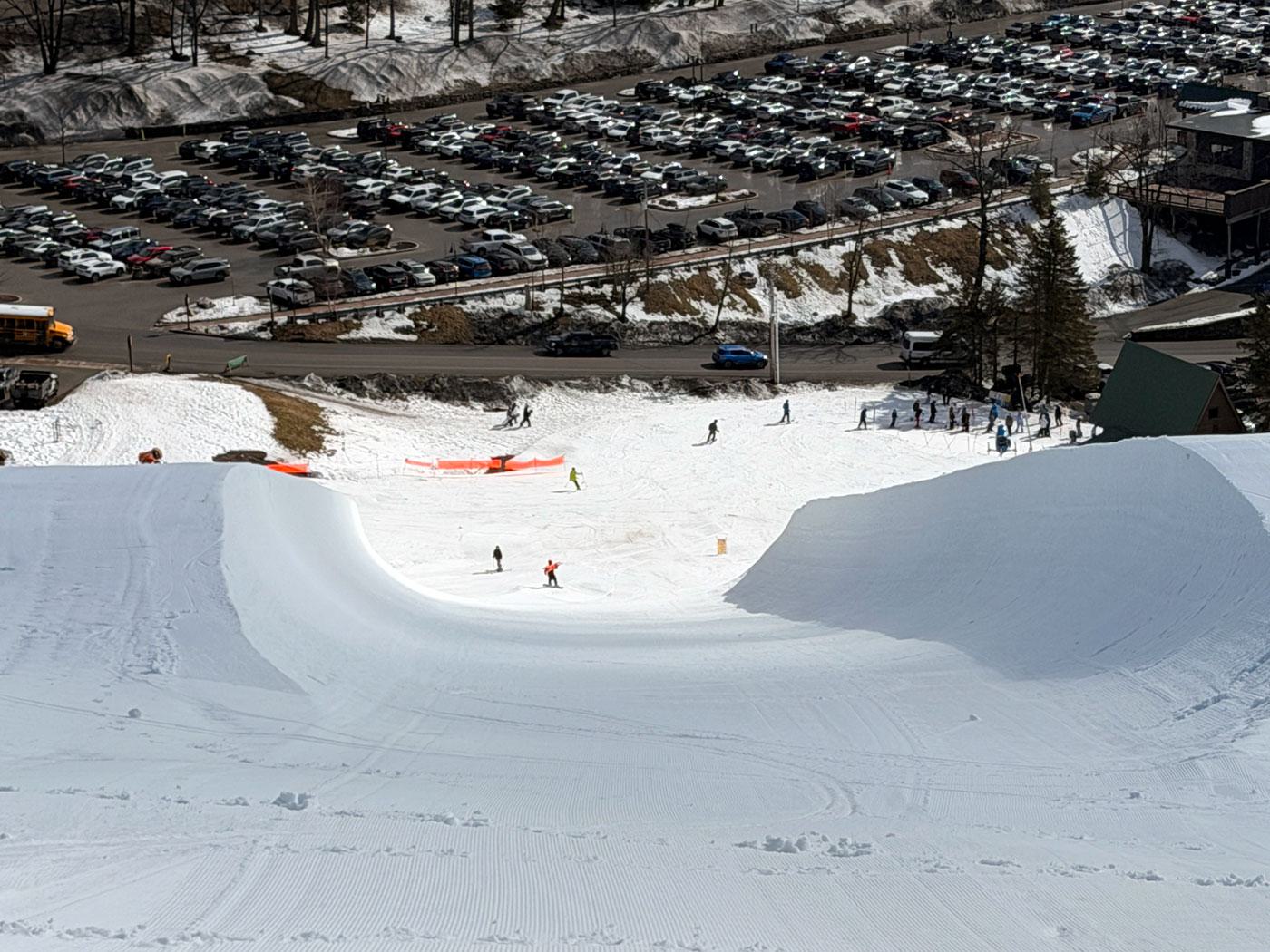
In February 2026, Seven Springs brought back a halfpipe for the first time in several winters. The new facility measured approximately 350 feet long and 55 feet wide, with 13-foot walls. It was designed to be more approachable for recreational skiers and snowboarders.
According to reporting by SnowBrains, construction required four snowcats working over approximately five or six days, following roughly two weeks of snowmaking in the terrain park.
The new halfpipe opened on February 16, 2026, during the Winter Olympics in Italy. Whether Seven Springs will rebuild it for future winters remains to be seen.
Remembering the Halfpipe
Looking back at DCSki’s reporting from the late 1990s and early 2000s, it’s striking how frequently halfpipes appeared in resort announcements and firsthand reports. They were a familiar part of the regional skiing and snowboarding landscape, and some resorts devoted substantial resources to building and improving them.
I still remember watching snowboarders launch above the walls at Whitetail. Seven Springs’ recent revival suggests that the halfpipe might not be entirely a thing of the past.


Reader Comments