
With approximately 660 feet of vertical drop, Poley Mountain is similar in size to many Mid-Atlantic ski areas. And despite its location hundreds of miles farther north, the Canadian resort faces some familiar challenges: unpredictable winter temperatures, rain that can interrupt an otherwise promising season, and the need to make as much snow as possible whenever conditions cooperate.
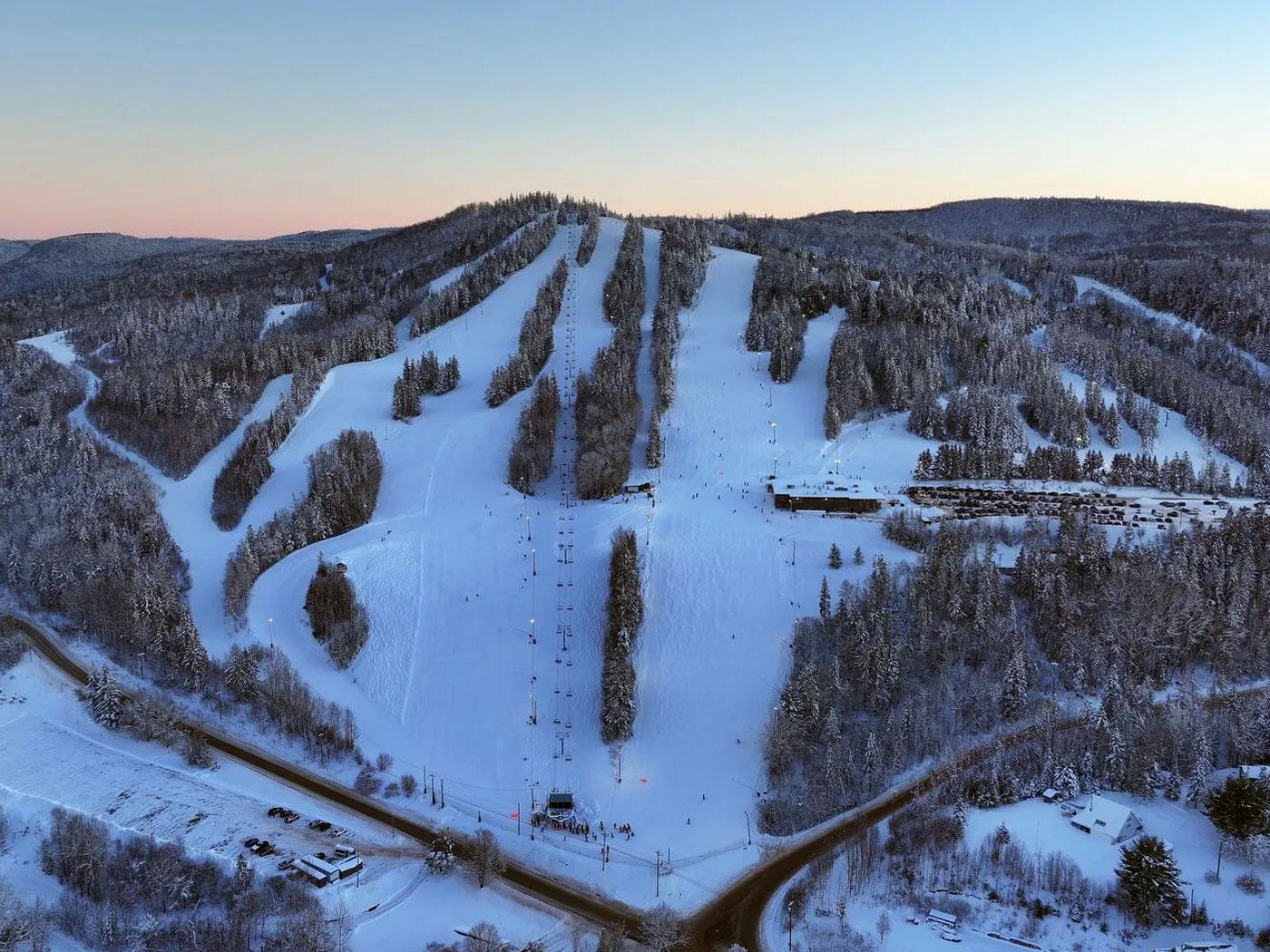
Poley also has a recent connection to Pennsylvania’s Seven Springs Mountain Resort: both were finalists in the 2026 I AM a Snowmaker competition, sponsored by HKD Snowmakers. Seven Springs ultimately won the competition, which DCSki covered earlier this year.
This fall, Poley Mountain announced a C$2.5 million investment in its snowmaking infrastructure, including a new pumphouse and three pumps supplied by HKD Snowmakers. The project will increase pumping capacity from approximately 1,000 to 2,500 gallons per minute, allowing the resort to make snow more rapidly when temperatures permit.
What makes Poley’s investment especially interesting is the financial reasoning behind it. In a 2025 interview with Ski Area Management, General Manager Jamie Hare revealed that the resort had spent approximately $150,000 over two years maintaining its aging snowmaking system without increasing its capacity.
Rather than continue spending money simply to maintain existing equipment, Poley began evaluating the costs and benefits of investing in new infrastructure. Its planning considered maintenance expenses, energy efficiency, reliability, and the experience of its customers.
The resulting project is a substantial commitment for a mountain that reported approximately 65,000 skier visits during a recent 93-day season. Poley hopes the improvements will help it recover more quickly from rain and achieve more consistent operating seasons. But how can a ski area determine whether an investment of this magnitude will pay off?
Economists have been examining the financial benefits of snowmaking for years, and their findings offer some differing perspectives.
What Does the Research Say?
In 2016, researchers Martin Falk and Laurent Vanat published a study in Ecological Economics examining snowmaking investments at 109 French ski resorts over eight winter seasons.
Their findings suggested that snowmaking investments could help attract visitors. Resorts with greater snowmaking investments generally recorded more skier visits, with the researchers estimating that a 10% increase in snowmaking capital was associated with approximately 8% more visits.
The benefits varied considerably, however. Higher-elevation resorts experienced stronger gains, while lower-elevation areas saw smaller benefits, primarily during winters with poor natural snowfall. The researchers also identified diminishing returns as resorts expanded their snowmaking investments.
Those findings are relevant to lower-elevation ski areas in the Mid-Atlantic, where snowmaking plays a central role in establishing and maintaining skiable terrain. The research suggests that the benefits of additional snowmaking capacity may depend heavily on local conditions.
A 2020 study examining more than 100 French Alpine ski resorts approached the question from another direction, looking at how snow conditions influenced investment decisions.
The researchers found that snowmaking accounted for approximately 20% of overall resort investment, regardless of resort size. Smaller and medium-sized ski areas were more likely to increase their snowmaking spending following winters with poor natural snowfall, while larger resorts followed less weather-dependent investment patterns.
The study also found that lower-elevation resorts devoted a greater proportion of their investments to snowmaking. For operators facing less reliable natural snowfall, snowmaking can command a substantial share of available capital.
A more recent study reached a less encouraging conclusion about the financial benefits of snowmaking.
Published in Current Issues in Tourism in 2025, the study examined 56 French Alpine ski lift operators over 15 winter seasons, from 2004–2005 through 2018–2019.
The researchers found that lift capacity was strongly associated with financial performance. However, they found no statistically detectable improvement in sales or profits associated with increased snowmaking investment, even during winters with poor natural snowfall.
The findings differ from the earlier research linking snowmaking investment to increased visitation, although the studies measured different outcomes. Attracting additional skiers doesn’t necessarily translate into higher profits when resorts must also pay for equipment, electricity, maintenance, and labor.
The studies examined different groups of resorts and time periods, and none establishes that snowmaking investments are universally profitable or unprofitable. They do suggest that the financial benefits depend on more than the amount of snow a resort can produce.
As is often the case with academic research, the studies leave us with more questions than definitive answers. Still, they provide plenty of food for thought, particularly for ski area operators weighing multimillion-dollar investments against the uncertainties of winter weather.
An Increasingly Expensive Necessity?
For ski areas that depend heavily on snowmaking, investing in new equipment may be as much about protecting existing business as attracting additional visitors. The ability to open on schedule or recover quickly from a rainstorm could save a lucrative holiday weekend, even if it doesn’t translate into a longer season.
Poley Mountain hopes its C$2.5 million investment will help it achieve more consistent 90-day seasons when the upgraded system begins operating in 2027–2028.
For Mid-Atlantic resorts facing similar weather challenges, the dilemma is familiar: How much can they afford to invest in snowmaking, and how much business might they lose if they don’t?



Reader Comments