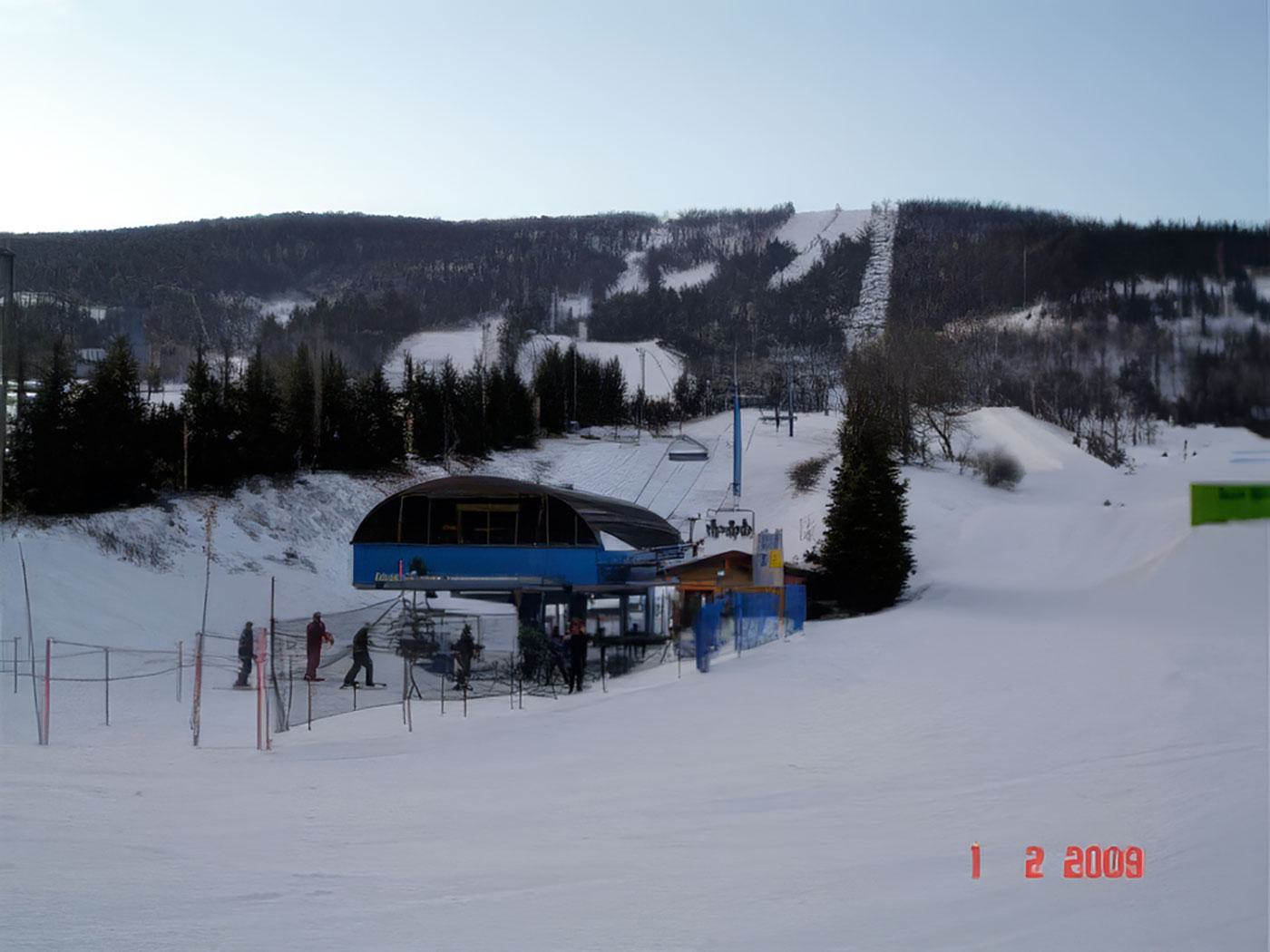
On a traditional fixed-grip lift, each chair stays attached to the cable as it travels around the mountain. A detachable chair releases from the cable inside the terminal, slows for loading or unloading, then accelerates and reconnects. That allows the cable to move at roughly twice the speed of a typical fixed-grip lift without making passengers board a chair traveling at full speed. Modern high-speed detachable chairlifts spread through North American ski areas during the 1980s.
The following timeline traces the history of high-speed lifts in DCSki’s Mid-Atlantic coverage area.
1987 — Beech Mountain, North Carolina: Lift 5
Beech Mountain installed a Doppelmayr detachable quad in 1987. The lift lasted until 2018, when Beech Mountain replaced it with a fixed-grip quad equipped with a loading conveyor, a rare example of a high-speed lift installation switching to a fixed-grip lift.
1991 — Whitetail, Pennsylvania: Whitetail Express
Whitetail arrived as a brand new resort on the Pennsylvania ski scene with a CTEC/Garaventa high-speed quad. The Whitetail Express was the first detachable chairlift in Pennsylvania, arriving with much fanfare.
More than three decades later, the original Express remains in operation.

1994 — Blue Mountain, Pennsylvania: Comet Express
Blue Mountain joined the detachable era with the Comet Express quad. It would be the first of three high-speed chairlifts installed at the Poconos resort over the next 28 years, as Blue Mountain developed lift access from different parts of the mountain.
1994 — Camelback, Pennsylvania: Stevenson Express
Camelback added the Stevenson Express the same year. Along with Blue Mountain’s Comet Express, it helped establish high-speed quads in the Poconos, where weekend crowds from major metropolitan areas place heavy demands on lift systems.
1995 — Camelback, Pennsylvania: Sullivan Express
Camelback installed a second detachable quad just a year later. The Sullivan Express operated for 27 years before being retired in 2022, making it one of the region’s first high-speed lifts to be replaced by a newer detachable.
1997 — Snowshoe, West Virginia: Ballhooter Express
Snowshoe brought detachable technology to its main mountain with the Garaventa-built Ballhooter Express. The quad serves one of the resort’s principal skiing areas and remains a key route back uphill.
1998 — Snowshoe, West Virginia: Western Express
Snowshoe followed with another Garaventa quad, this time in the Western Territory, home to experts Cupp Run and Shay’s Revenge. The long ride out of that area had been a drawback for skiers eager to repeat its demanding runs. The Western Express substantially shortened the trip and made laps on the Western Territory easier to fit into a ski day.
2001 — Seven Springs, Pennsylvania: Polar Bear Express
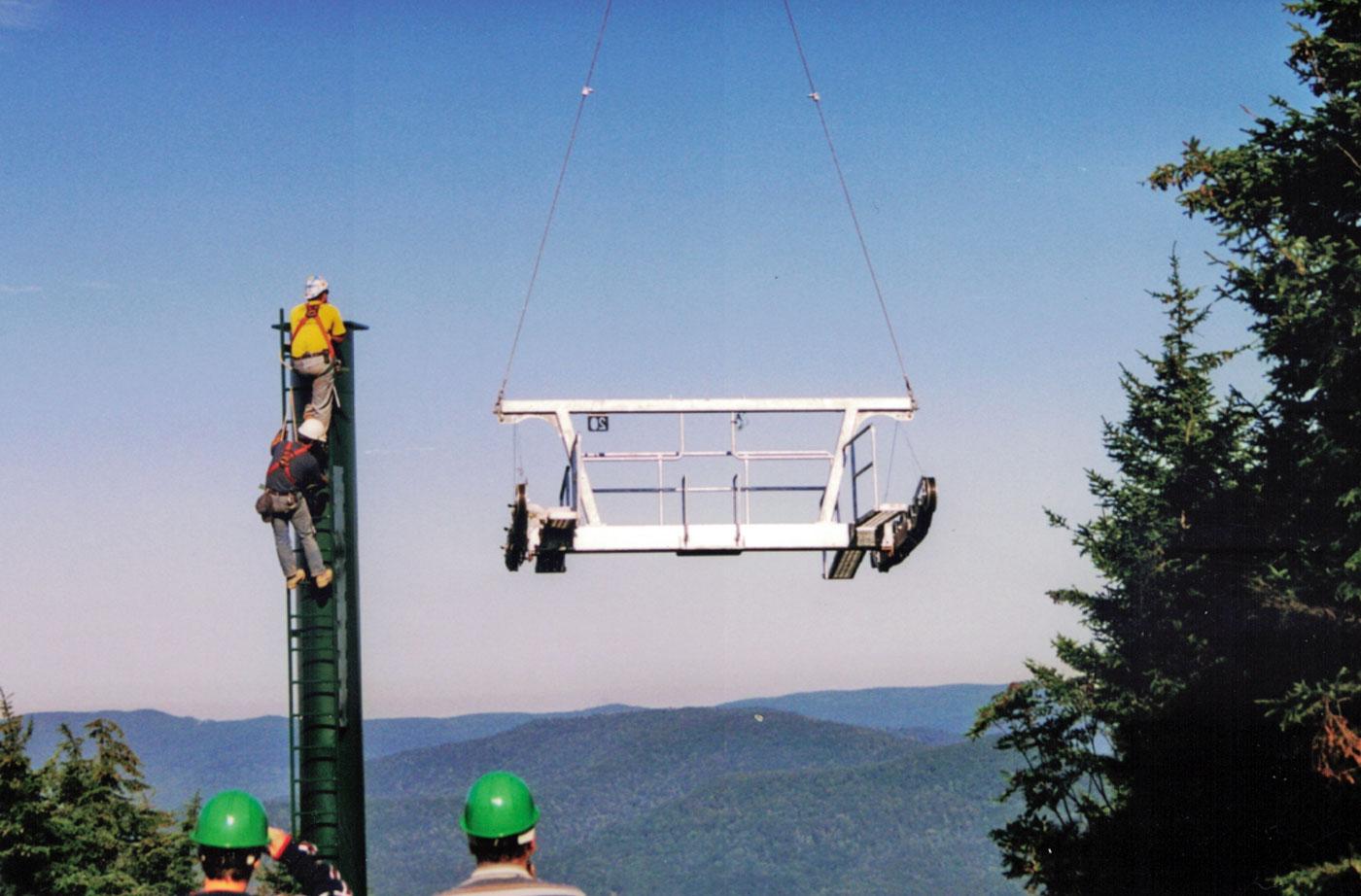
Seven Springs introduced Pennsylvania’s first high-speed six-passenger chairlift with the Polar Bear Express, which produces a notable increase in uphill capacity.
2001 — Wintergreen, Virginia: Blue Ridge Express
Wintergreen installed the Blue Ridge Express six-pack in the same year as Seven Springs’ Polar Bear Express. Virginia was part of the early wave of six-passenger detachable installations, and Wintergreen would soon double down on the technology.
2004 — Wintergreen, Virginia: Highlands Express
Three years later, Wintergreen added the Highlands Express, giving the resort two detachable six-packs. That was an unusually substantial high-speed fleet for a Mid-Atlantic mountain at the time.
2006 — Blue Mountain, Pennsylvania: Challenge Express
Blue Mountain added the Challenge Express six-pack, complementing its existing Comet Express quad. The two lifts served different parts of the resort and gave skiers another high-speed option for returning uphill.
2006 — Snowshoe, West Virginia: Soaring Eagle Express
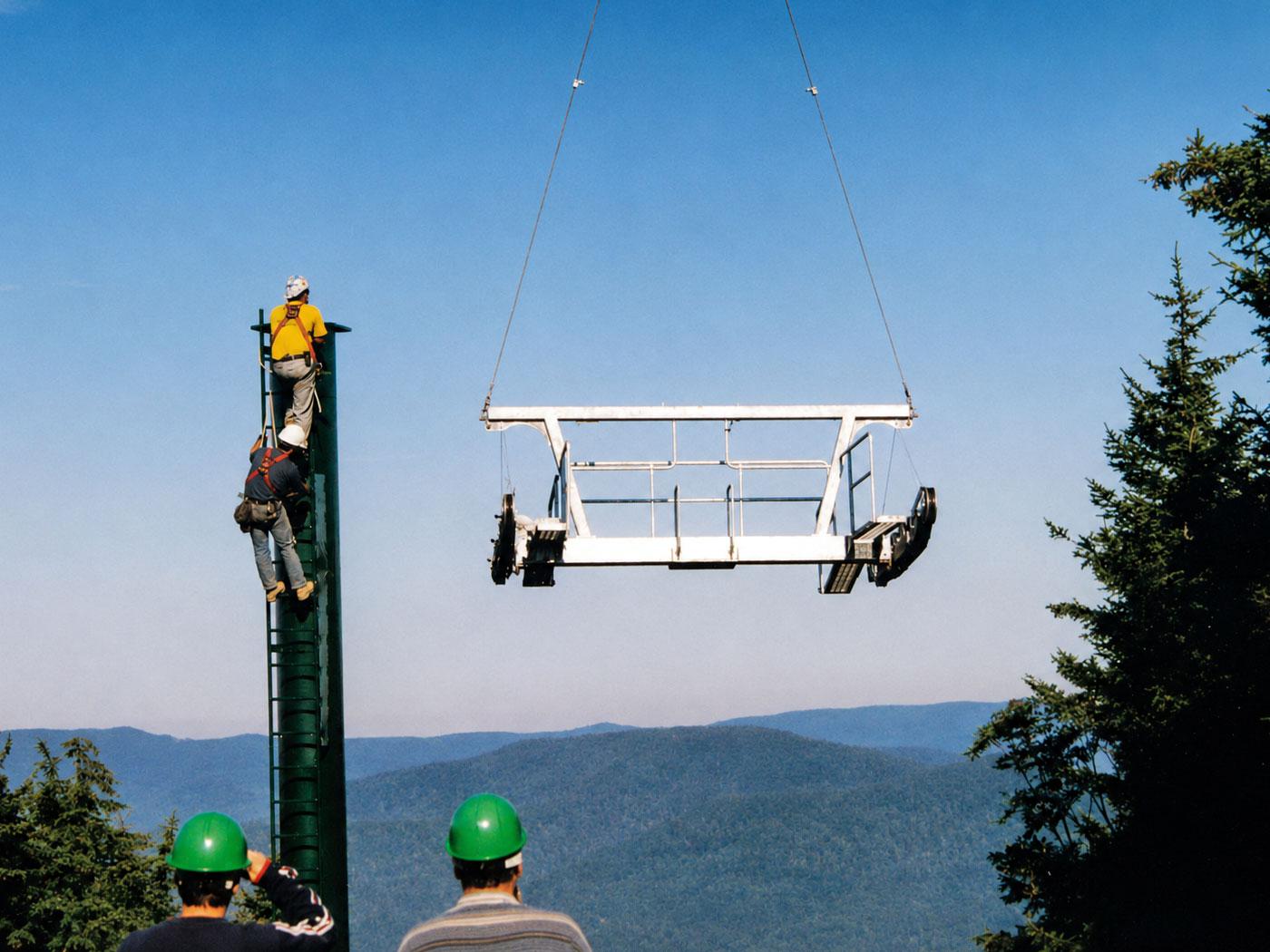
Snowshoe replaced the Widowmaker triple with the Soaring Eagle Express, a detachable quad. It became Snowshoe’s third high-speed chairlift, joining Ballhooter and Western Express. The resort’s investment shows that the arrival of six-packs elsewhere did not make high-speed quads obsolete.
2007 — Seven Springs, Pennsylvania: Gunnar Express
Seven Springs added its second six-pack on the North Face. Contemporary DCSki reporting put the project at approximately $3 million and described a reduction in ride time from about 12 minutes to three. For skiers making repeated runs on the North Face, that meant substantially less time suspended above the slopes.
2010 — Shawnee Mountain, Pennsylvania: Tomahawk Express
Shawnee’s Tomahawk Express replaced a fixed-grip quad for the 2010-2011 season. The detachable reduced the summit ride from approximately seven minutes to three, while the older quad was relocated elsewhere on the mountain. Reusing the previous lift allowed the resort to improve service in more than one area.
2015 — Sugar Mountain, North Carolina: Summit Express
Sugar Mountain installed a Doppelmayr detachable six-pack designed to accommodate gondola cabins (theoretically) as well as chairs. The Summit Express began a series of detachable projects at Sugar Mountain that would continue through 2022.
2019 — Sugar Mountain, North Carolina: Easy Street
The Easy Street detachable quad brought high-speed technology to beginner terrain. Detachable chairs slow down in the terminal, giving new skiers more time to board and unload. Faster travel on the line and slower loading can be useful at both ends of the ability spectrum.
2020 — Timberline Mountain, West Virginia: Lightning
Timberline’s reopening under new ownership included Lightning, a Doppelmayr detachable six-pack and the first of its kind in West Virginia. The lift carries skiers to the summit in roughly four and a half minutes. It arrived as part of a larger reconstruction that also brought a fixed-grip quad, snowmaking improvements and lodge work.

2022 — Sugar Mountain, North Carolina: Oma’s Express
Sugar Mountain replaced the double chair serving Oma’s Meadow with a detachable quad. With Summit Express and Easy Street already in service, the resort had installed three detachable lifts in seven years.
2022 — Camelback, Pennsylvania: Black Bear 6
Camelback retired the Sullivan Express and installed a Doppelmayr six-pack with protective bubbles. The Black Bear 6 brought a new level of weather protection to the resort’s chairlift fleet, with covers passengers can lower against wind and precipitation. Its arrival also marked the replacement of a 1990s high-speed quad.

2022 — Blue Mountain, Pennsylvania: Main Street Express
Blue Mountain added the Main Street Express six-pack, connecting the Valley Lodge area to the summit. Alongside Comet Express and Challenge Express, it gave the resort three detachable chairlifts and high-speed access from multiple parts of the mountain.

The Cost of Going Faster
Detachable lifts come with substantial trade-offs. Their terminals contain equipment to slow, move and accelerate chairs, and their grips repeatedly release and reconnect to the cable. All of that machinery requires inspection, testing and specialized maintenance. Installation and upkeep generally cost more than for a comparable fixed-grip lift.
For a long lift with heavy traffic, cutting several minutes from each ride may justify the expense. On shorter lifts, the savings can be modest. Fixed-grip chairs remain practical at many Mid-Atlantic mountains, including Liberty, Roundtop and Wisp. Among Mid-Atlantic ski areas with high-speed detachable chairlifts, Shawnee Mountain has one of the smallest vertical drops, at approximately 700 feet; no Mid-Atlantic resort with a vertical smaller than that has a high-speed lift.
The region’s original detachable lifts are also getting older. Whitetail’s Express dates to 1991; Blue Mountain’s Comet Express and Camelback’s Stevenson Express debuted in 1994. Snowshoe’s first two high-speed quads arrived later that decade. Resorts can maintain and refurbish lifts for many years, but parts availability and rising maintenance costs can eventually make it less practical to operate an older lift.
Nearly four decades after Beech Mountain installed its detachable quad, the region’s lift fleet includes everything from those early high-speed designs to six-packs with weather-protective bubbles.



Reader Comments