
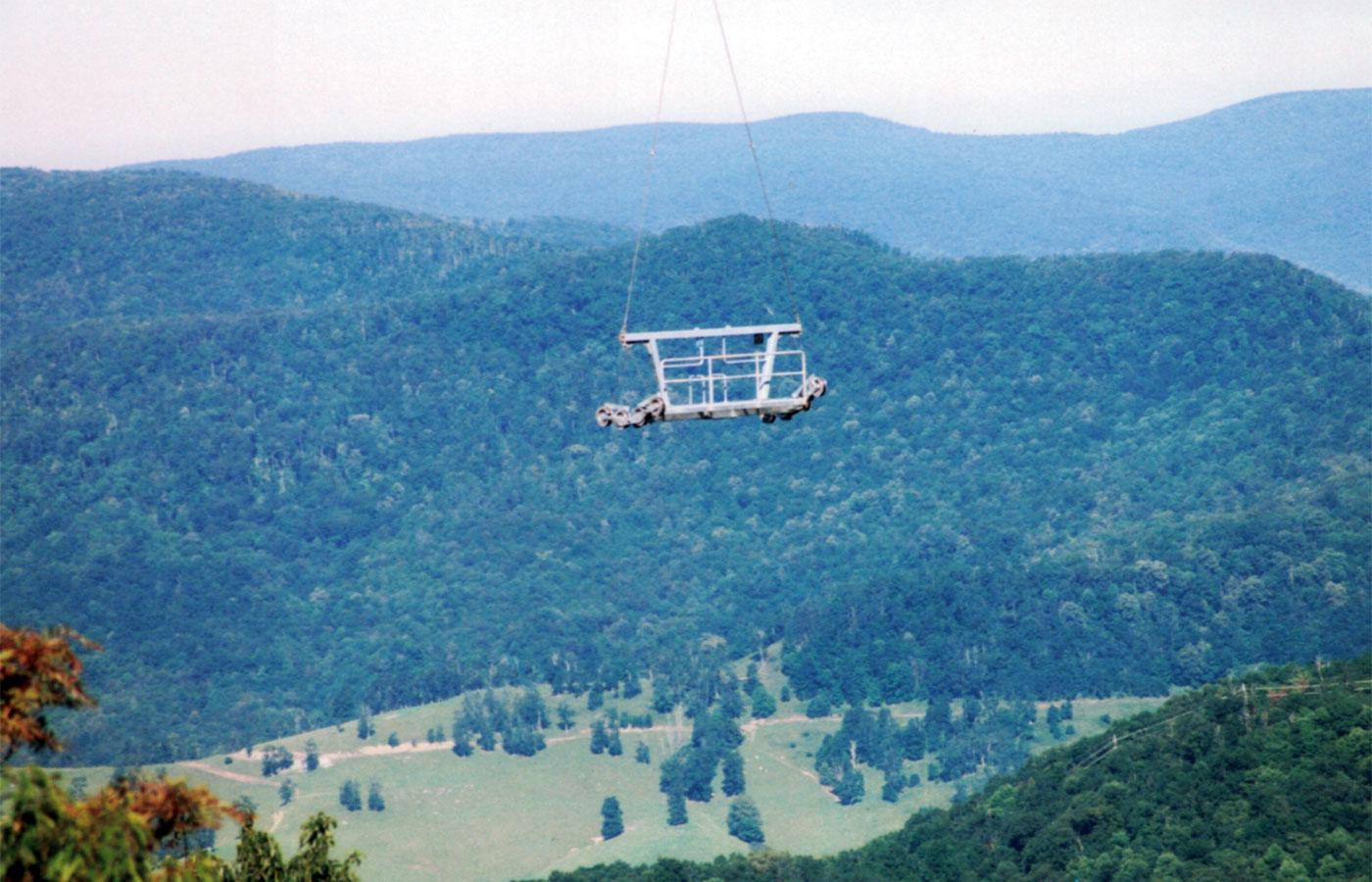
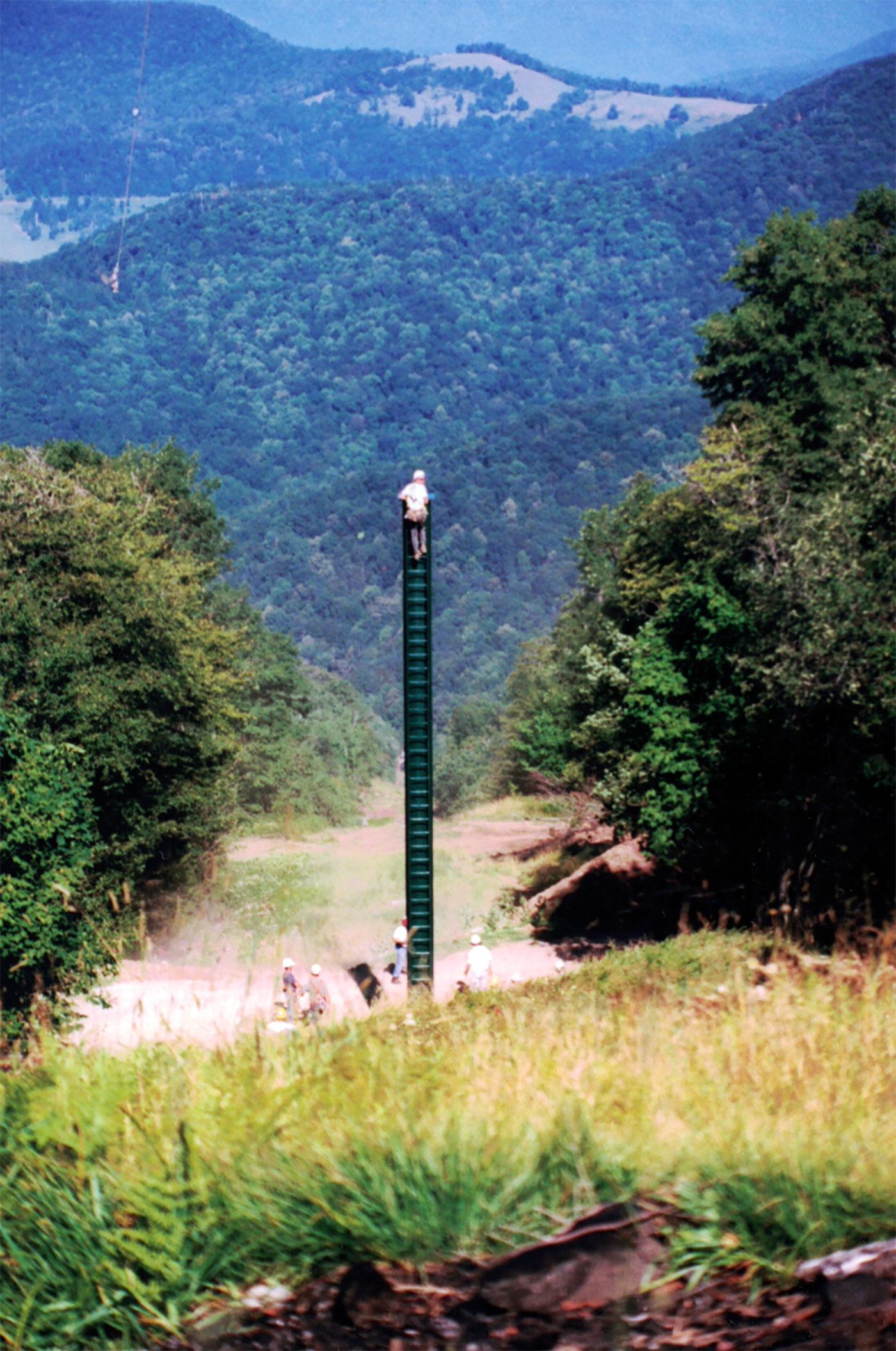
The images captured the installation of the Western Express high-speed quad as an expert cargo-helicopter pilot carried lift towers and crossarms up Snowshoe’s steep, forested Western Territory. Suspended beneath the helicopter by a long cable, each piece weighed thousands of pounds and had to be maneuvered to within inches of its target. Ground crews then guided the towers into concrete foundations and secured the crossarms above them, while the powerful rotor wash left nearby reporters struggling to keep their footing.
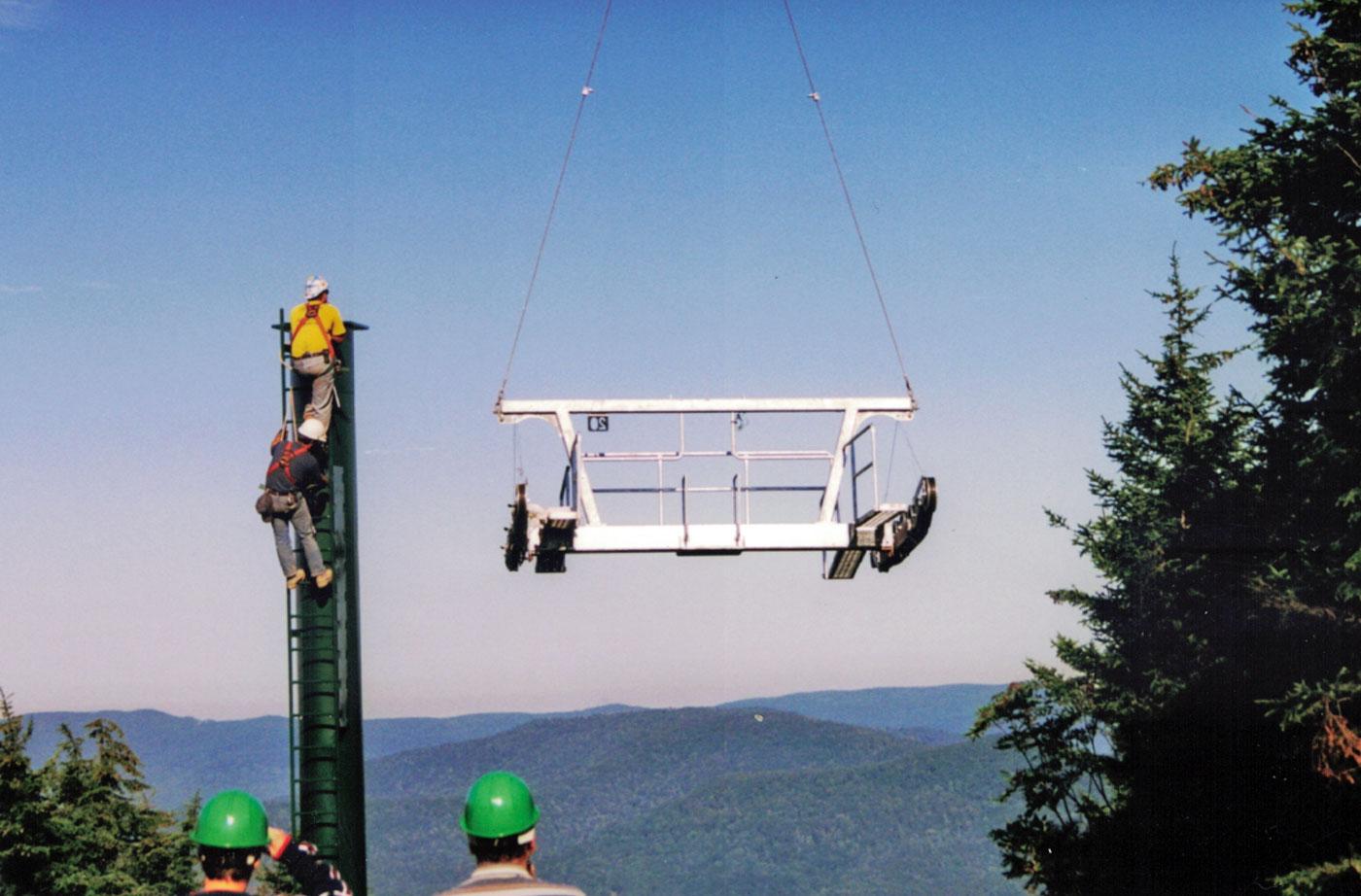
Nearly three decades later, the photographs capture more than a lift installation. They capture a particular moment in the history of Mid-Atlantic skiing — one filled with almost audacious optimism, when a major international resort developer was pouring money into a mountain in rural West Virginia and promising that much more was on the way.
For skiers accustomed to incremental improvements at local resorts, it was exhilarating. New lifts, new trails, expanded snowmaking, new lodging, restaurants, shops, and activities seemed to appear in rapid succession. Snowshoe was already the largest ski resort in the region, but Intrawest Corporation intended to transform it into something different: a destination resort built around skiing, real estate, and a purpose-designed mountaintop village — one that could compete with New England resorts or even destination resorts out west.
A New Owner with Big Plans
Vancouver-based Intrawest purchased Snowshoe in November 1995. At the time, the company was developing an increasingly prominent portfolio of mountain resorts, including Blackcomb in British Columbia, Stratton in Vermont, and Copper Mountain in Colorado. It had developed a reputation for pairing major improvements to the skiing experience with aggressive slopeside real-estate development.
Snowshoe offered an intriguing foundation. It sat at an elevation of nearly 4,850 feet (higher than any New England ski resort!) and occupied a favorable position along Cheat Mountain, where storms could deposit snow even while communities to the east saw rain. Its 1,500-foot Western Territory provided the greatest lift-served vertical drop in the Mid-Atlantic. Snowshoe also drew from heavily populated markets extending from Washington and Baltimore through Virginia, the Carolinas, Ohio, and beyond.
There were challenges. The resort was remote, reached by winding mountain roads far from an Interstate highway. Its facilities reflected different periods of development, and getting around the sprawling, inverted mountain could be confusing. Snowshoe had plenty of beds, but it lacked the cohesive pedestrian village that Intrawest had made a specialty at other resorts.
But Intrawest saw opportunity. By the summer of 1997, it had invested $12 million in Snowshoe, installing the Ballhooter high-speed detachable quad, expanding snowmaking, adding beginner terrain, and constructing a tubing hill. The Ballhooter lift dramatically improved access from Shavers Lake to the main mountaintop area, replacing a much slower ride at one of the resort’s most important circulation points.
It was immediately clear that this would not be a one-project effort. A multi-phase plan envisioned additional lifts and terrain, more snowmaking capacity, expanded amenities, and a new mountaintop village. Some elements would change or never materialize, as conceptual plans often do. But the scale of the vision was unmistakable.
“There are some pretty exciting times coming up,” longtime property owner and Courtesy Patroller John Menocal told DCSki in a March 1998 feature on Snowshoe’s renaissance.
Planting Towers in the Western Territory
One of Intrawest’s most significant early projects arrived in 1998. Intrawest replaced the ponderously slow fixed-grip chair serving Cupp Run with the Western Express high-speed quad. The old lift required approximately 22 minutes to cover its 1.5-mile route. The new Garaventa CTEC detachable quad would make the trip in about six.
That alone would have been a major improvement. But Intrawest paired it with a new trail: Shay’s Revenge, a sustained expert run descending alongside Cupp, and offering some of the most challenging terrain yet at the mountain. The Western Territory now had two trails dropping the full 1,500 feet, giving Mid-Atlantic skiers a combination of vertical, pitch, and high-speed access that could credibly evoke a trip to a much larger mountain.
Building the lift required far more than ordering towers and chairs. The route had to be surveyed. Trees were cleared, components were transported to the mountain, foundations were excavated and poured, and the upper and lower terminals had to be constructed. Because of the steep and forested terrain, a cargo helicopter was brought in to place the towers and crossarms.
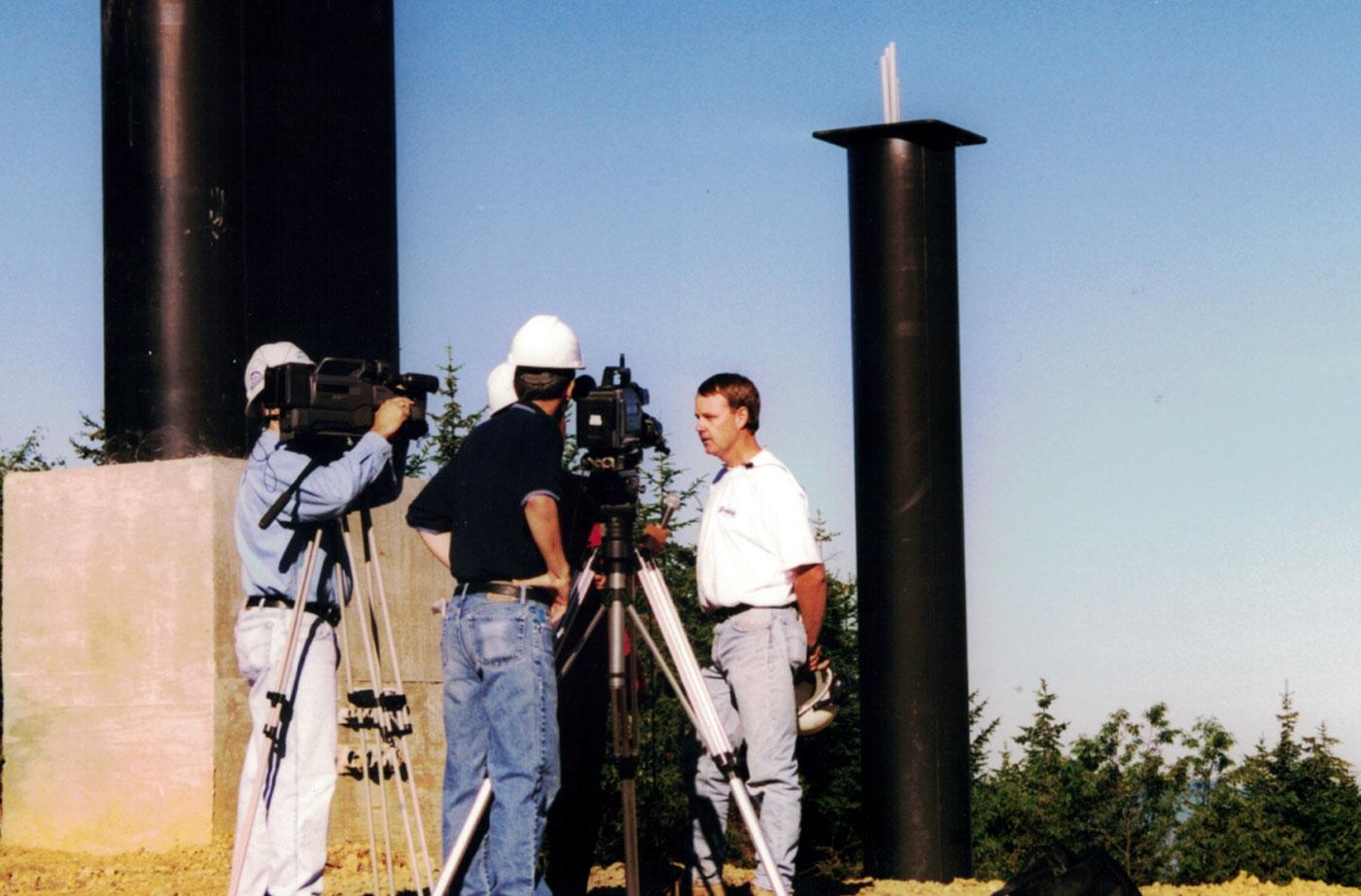
On August 21, 1998, Snowshoe invited journalists to watch. Communications Director Joe Stevens coordinated the event, ensuring that television crews and photographers had an exceptional view while representatives from Snowshoe and Garaventa CTEC were available to explain the operation.
The lift components had been staged near the bottom of the mountain. The helicopter alternated between towers and crossarms, carrying each piece uphill beneath a long cable. A ground crew guided a tower into its prepared foundation. Once it was secured, workers climbed it and waited for the helicopter to return with the crossarm. Under good conditions, a complete tower could be assembled in about 20 minutes.
The process looked precise and surgical from a distance. Up close, it was loud, windy, and slightly unnerving. As thousands of pounds of steel swung overhead, Garaventa CTEC’s John Dearborn reviewed the safety procedures.
“You never want to turn your back on the helicopter,” he warned the assembled reporters.
When the helicopter approached, rotor wash made it difficult to stand. When it retreated for the next component, a sudden silence settled across the slope. Tower, crossarm, tower, crossarm: within a few hours, the profile of the new lift had appeared on the mountain.
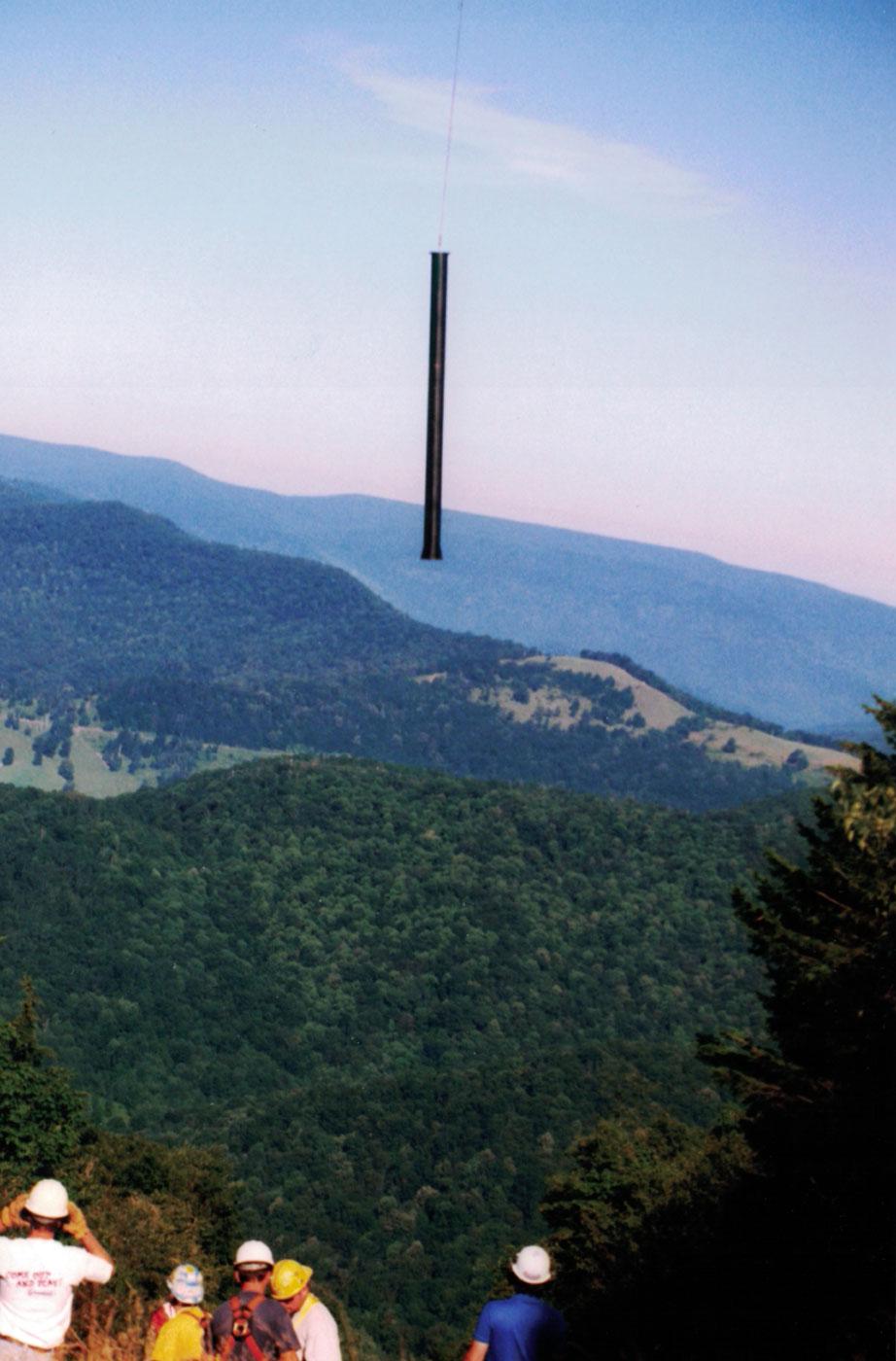
These images document a type of project few skiers ever witness firsthand, but they also convey the energy surrounding Snowshoe at the time. Intrawest had promised significant investments, and here was the evidence dangling beneath a helicopter.
Skiing as the Engine
For skiers, the logic behind the investment seemed simple: spend money on lifts, terrain, and snowmaking to produce a better ski area. But Intrawest’s business model was more expansive. Their focus wasn’t specifically on improving lift ticket sales.
The mountain experience was essential, but the real profit engine was lodging and real-estate development. Fast lifts, reliable snow, restaurants, activities, and attractive public spaces brought visitors to the resort. Slopeside lodging allowed them to stay. Some guests became property buyers. New beds brought more overnight visitors, whose spending supported restaurants, shops, and additional amenities.
In simplified ski-industry shorthand, the mountain put “heads in beds.” Intrawest sought to turn that relationship into a cycle: improve the resort, develop and sell real estate, increase visitation, and use the growing destination to support further investment.
Snowshoe’s mountaintop setting was particularly well suited to the concept. Rather than merely adding isolated condominium buildings, Intrawest planned a pedestrian village with lodging above shops and restaurants. The design would give Snowshoe a central gathering place and encourage visitors to spend more of their vacation without returning to their cars.
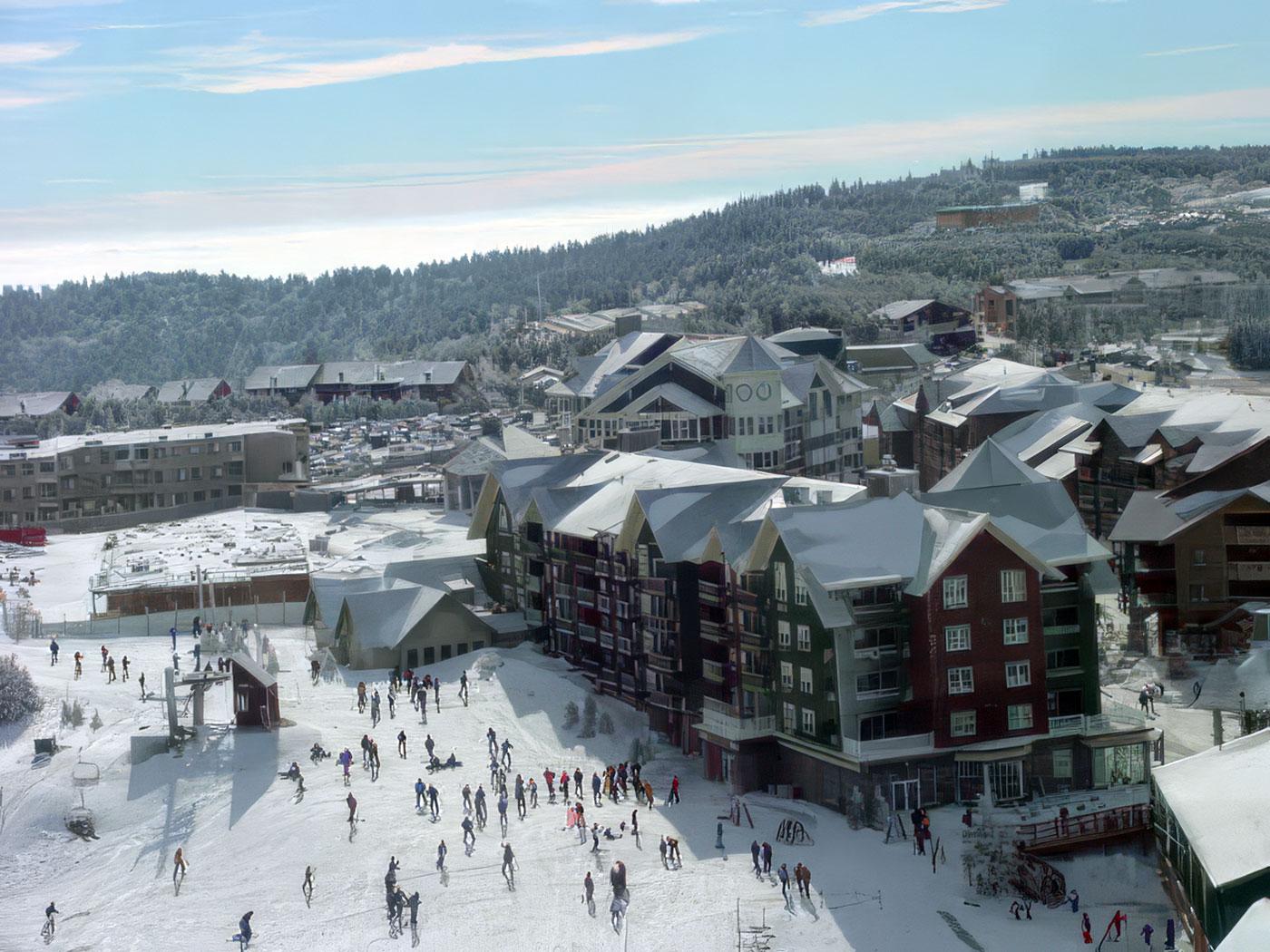
Rimfire Lodge became the first major component. When the project was introduced in early 1998, 60 percent of its mountain homes sold during a single weekend. Intrawest Senior Vice President Michael Coyle captured the company’s ambitions in one sentence: “We didn’t launch a building today, we launched a resort.”
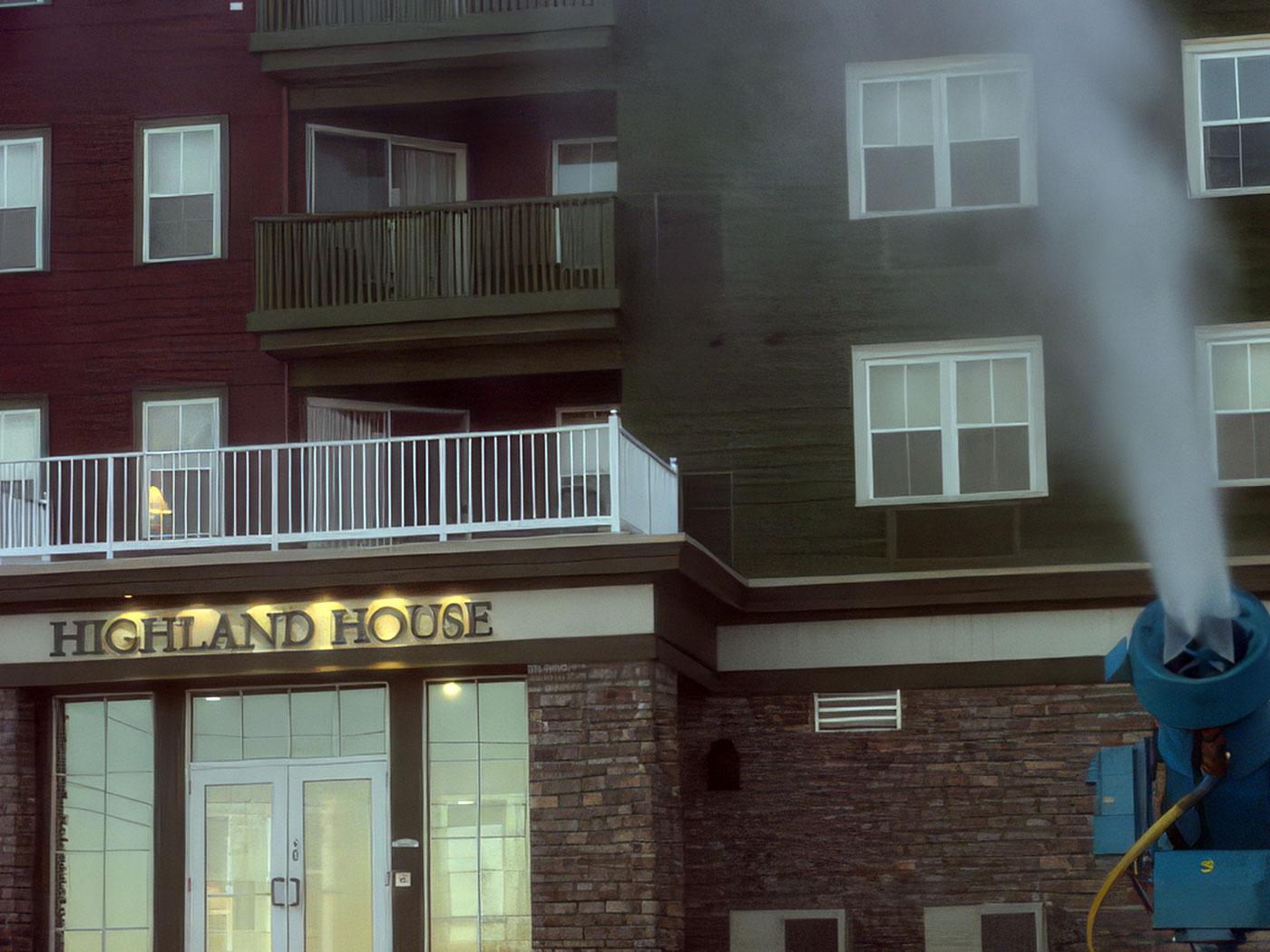
The momentum continued with Highland House. In May 1999, buyers purchased 38 of its 77 units in seven hours, representing $7 million in sales. Snowshoe had attracted $25 million in village real-estate sales over 15 months. Tom Wallington, Snowshoe’s Vice President for Resort Development, said the response demonstrated that buyers recognized Intrawest’s commitment to making Snowshoe “the premier four-season resort” in the region. DCSki’s report on the sale carried a headline that summarized the frenzy: “$7 Million in 7 Hours.”
By the fall of 1999, Rimfire Lodge was preparing to open with 142 residential units and 9,000 square feet of retail space. Highland House would add 78 ski-in, ski-out units and 13,000 square feet of restaurants and shops the following year. Those buildings formed the center of what became the Village at Snowshoe.
Money Across the Mountain
The village may have been central to the financial model, but the spending was visible throughout the resort.
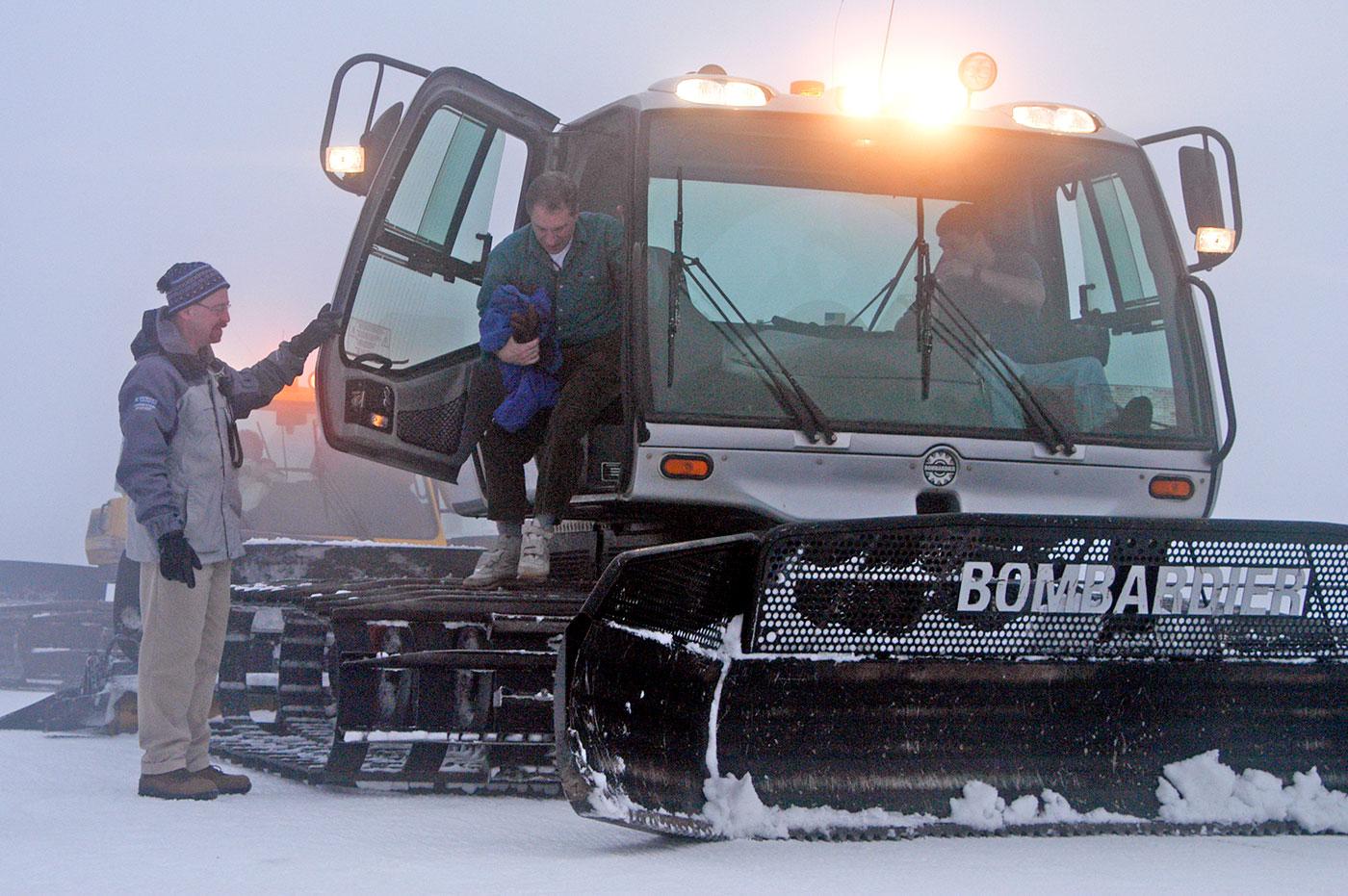
Snowmaking received new compressors, guns, water capacity, and supporting infrastructure. Shavers Lake was expanded to provide a larger reserve. The rental fleet gained thousands of shaped skis and step-in snowboard bindings, reflecting rapid changes in equipment at the end of the 1990s. New grooming machines arrived. Beginner terrain was expanded, and the Ballhooter Express later gained additional chairs to increase capacity.
Intrawest also broadened the reasons to visit Snowshoe. Kids World opened at Silver Creek. A Magic Carpet provided an easier introduction to skiing. Guided snowmobile tours, cross-country skiing, snowshoeing, mountain biking, summer events, and the Sunrise Backcountry Hut added activities beyond traditional lift-served skiing. Restaurants and retail outlets appeared throughout the resort.
The numbers were striking. In 1999, DCSki reported that Intrawest was spending another $20 million, bringing investment over two summers to $52 million. By August 2000, the reported total for three years had reached $72 million. Snowshoe recorded 432,000 skier visits during the 1998-1999 season and 464,000 the following winter, placing it among the most heavily visited winter resorts in North America.
For the Mid-Atlantic, this was a remarkable concentration of capital. Other regional resorts were making important improvements of their own, but Snowshoe’s pace and breadth stood apart. A major developer associated with Whistler and other nationally known destinations was applying its formula in West Virginia.
The investment raised expectations throughout the region. High-speed lifts began to feel less exotic and more expected. Skiers demanded more reliable snowmaking, better lodging, modern rental equipment, terrain parks, family programs, and activities away from the slopes. Snowshoe demonstrated that a Mid-Atlantic resort could compete for destination visitors rather than functioning solely as a collection of trails and lifts.
Joe Stevens Made Sure People Heard About It
Intrawest’s investments supplied plenty of news. Joe Stevens made sure that news traveled far beyond Cheat Mountain.
Stevens joined Snowshoe in 1990 and led its Communications Department for 15 seasons. He understood both the mountain and the media, and he approached regional outlets with the same energy he brought to national television networks. When DCSki was a tiny new web site, Joe treated it as a legitimate publication alongside established television and print organizations. His accessibility and encouragement helped DCSki gain its footing.
He also recognized the value of images. Installing the Western Express was an engineering project, but under Joe’s direction it became a media event: hard hats, carefully positioned reporters, interviews with lift experts, and a helicopter carrying towers through the West Virginia sky. The resulting coverage carried the story of Snowshoe’s transformation to viewers who might never otherwise have considered a ski trip to the state.
Snowshoe ultimately developed a television operation that was extraordinary for a ski resort. Snowshoe TV produced an in-resort channel, daily reports, promotional footage, and video for outside networks. Its satellite uplink truck — believed at the time to be the only one owned by a ski resort — could transmit live video from the mountain to broadcasters around the country.
Before the truck, footage had to be mailed or carried to an uplink facility in Charleston. With it, Snowshoe could quickly supply live images to CNN, The Weather Channel, and other outlets. The truck occasionally supported breaking-news coverage elsewhere in West Virginia and even assisted the White House communications operation during presidential visits.
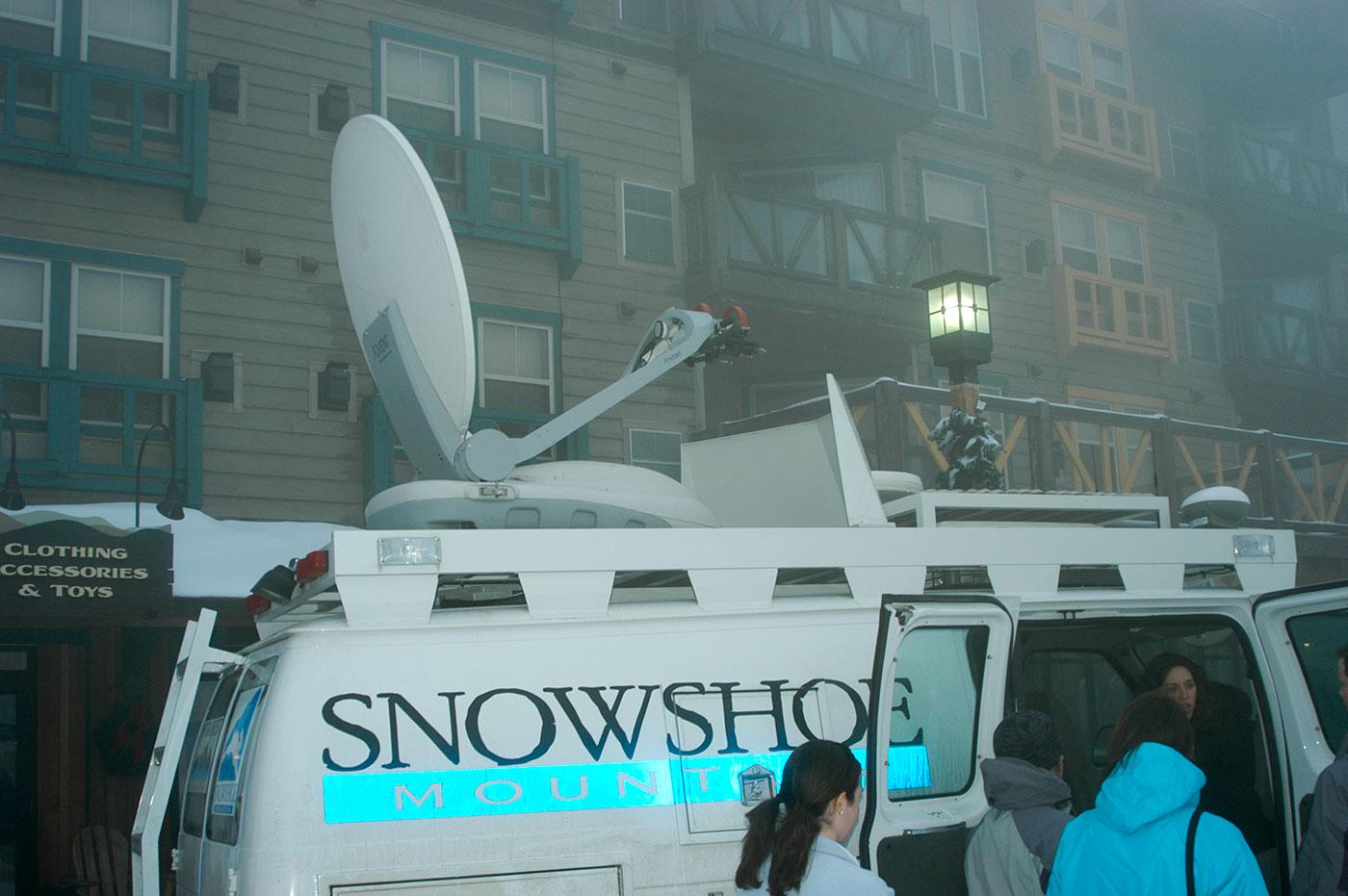
The investment in communications complemented the investment in steel, concrete, snowmaking, and real estate. A winter storm at Snowshoe was no longer merely weather on a remote mountain. It could become live national television — a powerful advertisement for a resort seeking to fill rooms and sell homes.
When Stevens left Snowshoe in 2005, he recalled that more than a quarter-billion dollars had been invested in terrain and lift improvements during Intrawest’s first decade, alongside construction of the Village. He also described snowmaking as “the heartbeat of the season at Snowshoe Mountain” in a DCSki interview. For all the attention paid to real estate and amenities, the entire enterprise still depended on delivering winter.
A Lasting Transformation
Intrawest’s plans did not unfold exactly as originally envisioned. Some proposed terrain and lifts were never built, while priorities changed as the resort, company, and ski industry evolved. The real-estate-driven resort model would later reveal vulnerabilities, particularly when broader property markets weakened.
But the transformation of Snowshoe was real and lasting.
The Ballhooter and Western Express lifts changed how visitors moved around the mountain. Shay’s Revenge became one of the region’s signature expert trails. Snowmaking and grooming investments improved reliability. Rimfire and Highland House established a village that gave the resort a new visual and social center. Restaurants, shops, family programs, and year-round activities supported a broader destination experience.
The impact extended beyond Snowshoe. Intrawest showed what could happen when destination-scale capital was applied to a Mid-Atlantic mountain with strong natural advantages. It raised the profile of skiing in West Virginia and helped reinforce Snowshoe’s position as the region’s largest winter resort. It also changed what local skiers imagined a resort in their own backyard could become.
That sense of possibility is what I see in the old photographs from August 1998. The workers guiding a tower into place were building a chairlift. The helicopter, media crews, freshly cut trail, and construction across the mountaintop told a larger story.
Something big was happening at Snowshoe, and everyone on that mountainside knew it.


Reader Comments