
And somehow, we keep coming back for more, to the confusion of our non-skiing friends.
But things are a bit more convenient now than they were 30 or 40 years ago.
Long before smartphones, RFID lift tickets, GPS navigation, and high-speed chairlifts became commonplace, a day on the slopes involved a lot of little inconveniences. Technology has swept away many of these hassles, although some of the old routines are worth remembering.
Calling the Snow Phone
Before ski resorts had websites, there was the snow phone. If you wanted to know what conditions were like at your favorite mountain, you picked up the telephone and listened to a recorded message.
The report typically included the overnight snowfall or snowmaking (if any), base depth, number of open trails, and a description of surface conditions. The recordings were usually updated once or twice a day, so a report could be several hours old by the time you heard it.
And resort snow reports weren’t necessarily known for their pessimism. The term “packed powder” could cover an impressive range of skiing conditions, and “frozen granular” meant “you could probably ice skate on it”. “Mixed precipitation” meant “rain.” You never actually heard the word “rain,” though, because ski areas treated that as a four-letter word.

Fun (?) fact: in the early days of DCSki, I received faxes of snow condition reports from many local ski areas. I was woken up each morning by the sound of my fax machine dropping sheets of curled paper onto the ground.
Today, skiers can examine mountain webcams, check hourly forecasts, study radar, and read firsthand reports from people already on the slopes. We can spend an entire evening poring over data and pontificating whether a storm will produce six inches of snow or six inches of disappointment.
The Lift Ticket Ritual
For many skiers, the first stop after arriving at a mountain was the ticket window. You stood in line, purchased a paper lift ticket, and attached it to your jacket using a small piece of bent wire known as a ticket wicket.
The wicket was threaded through a zipper pull, and the adhesive ticket was folded around it. Once attached, the ticket was remarkably difficult to remove without leaving behind bits of paper or adhesive. If you attached it to the main zipper of your jacket, you might find the ticket flapping against your face as you skied.
Of course, getting them attached wasn’t always a success. Sometimes a cool gust would grab the ticket out of your frigid, numb fingers and send it airborne, drifting across the base area as you attempted to chase after it in your ski boots. And other times you would do a poor job folding the ticket across the sprocket, misaligning the ends — and there was no undo.
Some skiers (including yours truly) simply left their old tickets dangling from their jackets, gradually building a colorful collection of past adventures. It was the ultimate flex, or at least we liked to think so.
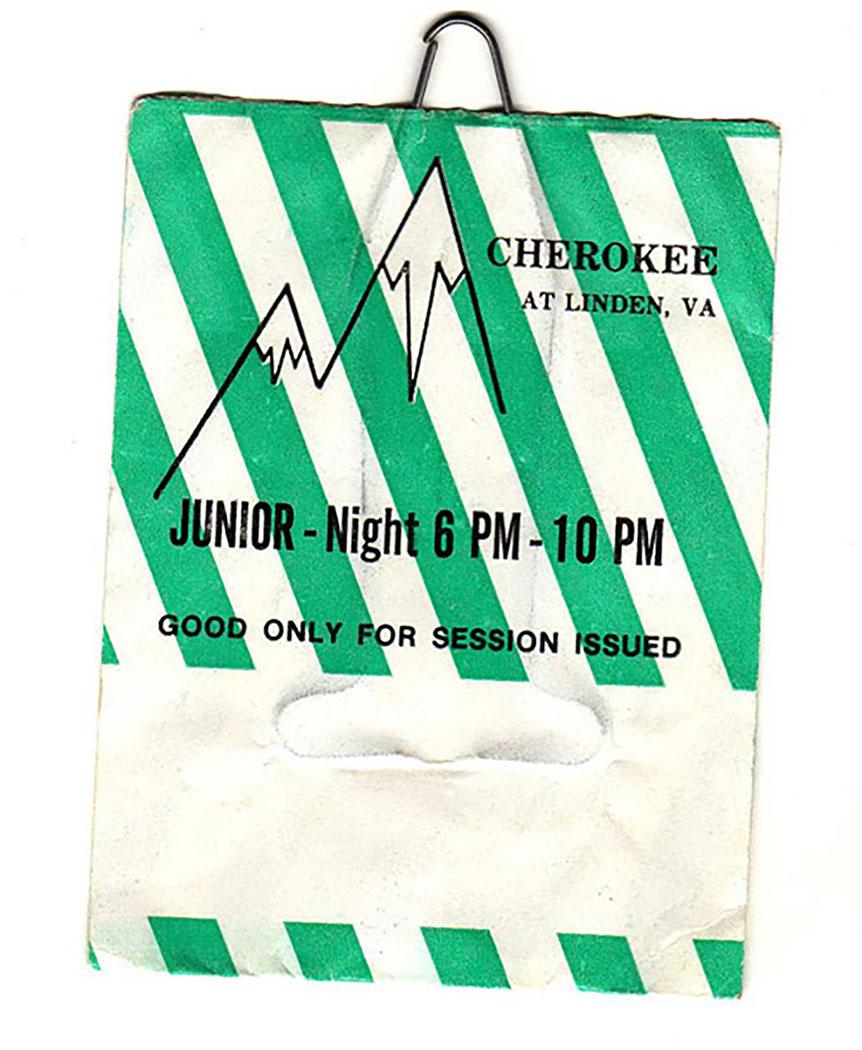
Season passes offered an alternative for frequent visitors (and was the ultimate flex, when strapped around your jacket arm), but the daily ticket ritual remained a fixture at ski areas for decades, and of course some areas still use them. They haven’t one the way of Betamax/VHS/DVD yet.
But more and more, many resorts use RFID cards that can be kept in a pocket and read automatically at lift gates. Tickets can often be purchased online, and some systems allow returning guests to reload an existing card without visiting a ticket window.
When used as a season pass, the card can be re-used from year to year. Resorts no longer have to laminate a new pass each winter with years printed on them. Pass validity is stored in a computer database.
These new passes are a welcome improvement, although there’s something nostalgic about those old collections of lift tickets. Each one was a little souvenir of a day on the mountain.
Losing Your Friends
Perhaps the greatest technological challenge of skiing in the pre-cell-phone era was keeping track of your companions, especially ones that tended to wander off.
If you became separated from your group, there was no way to send a quick text asking where everyone had gone. You couldn’t call them from the chairlift or check their location on a map. You simply had to hope that everyone remembered the plan.
Groups typically arranged to meet at a particular lift or lodge at a specific time. That worked reasonably well until someone took an extra run, misunderstood the meeting location, or decided to stop for lunch without telling anyone.
Some ski areas maintained message boards where skiers could leave handwritten notes for missing companions. Otherwise, you might spend a considerable portion of the afternoon searching for someone who was simultaneously searching for you.
At some of the smaller Mid-Atlantic ski areas, there was a chance of bumping into a lost friend on the slopes, but that could be a challenge at sprawling resorts like Snowshoe or of course larger resorts out west.
Cell phones have made coordinating a ski group dramatically easier, provided everyone has service and enough battery life.
The Paper Trail Map
Trail maps remain a familiar sight at ski resorts, and there’s still something satisfying about spreading one across a lodge table to plan the afternoon. But before interactive maps and resort apps, that folded piece of paper was often your primary means of navigation.
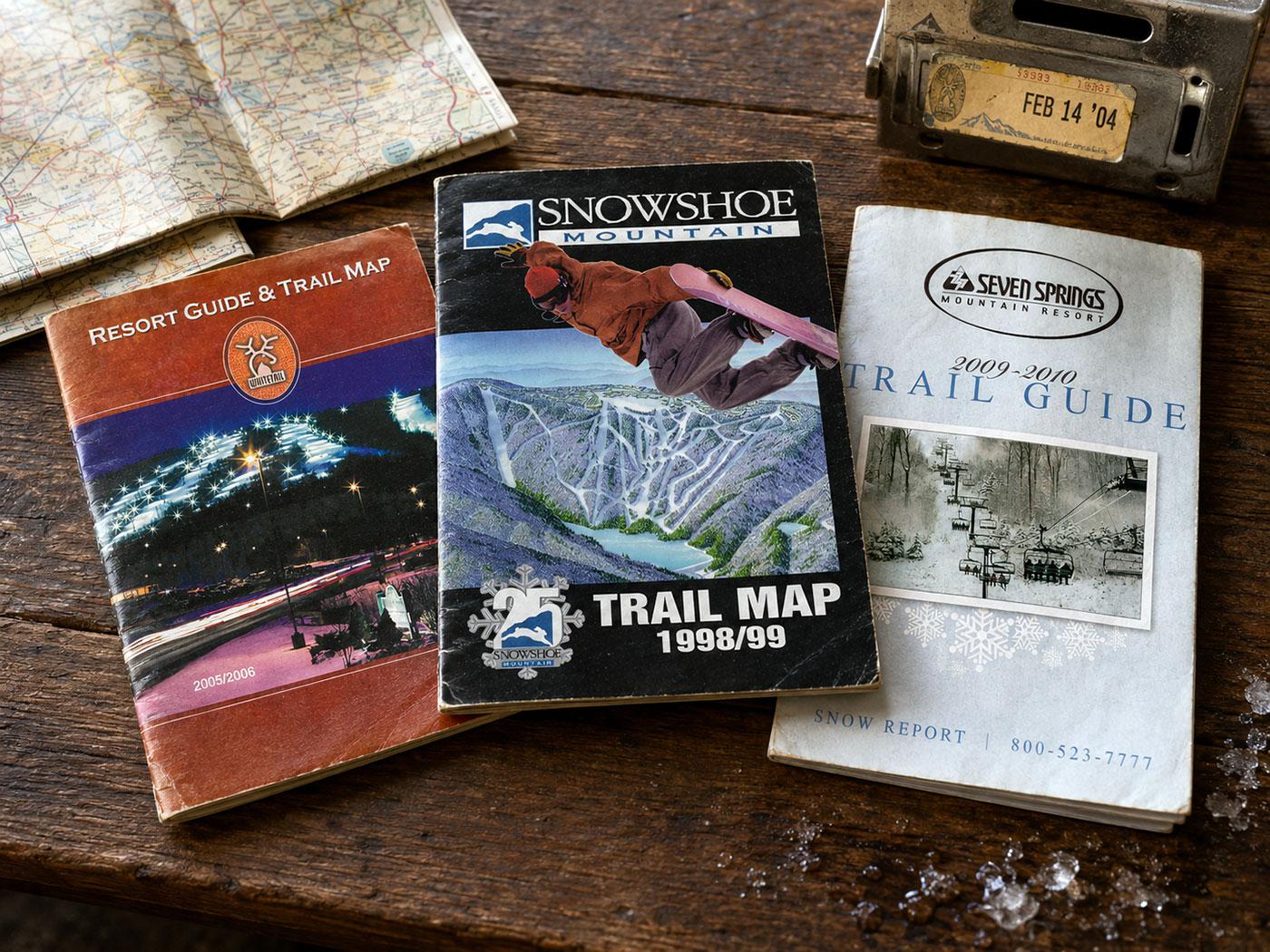
At an unfamiliar mountain, you carried the map in your jacket and consulted it throughout the day. This usually involved removing your gloves (possibly dropping one far below if you attempted this while on a chairlift), unfolding an increasingly battered piece of paper, and trying to figure out where exactly you were.
Modern resort apps can display your location, trail information, lift status, and sometimes even a record of your runs. They’re especially useful at large resorts where navigating between different sections of the mountain can be confusing.
Of course, a paper trail maps never need charging, and they worked perfectly well without a cellular signal. They’re also great souvenirs. Sometimes the old technology still has its advantages.
Waiting to See Your Ski Photos
Taking pictures on a ski trip once required patience. You loaded a roll of film into your camera, carefully rationed your 24 or 36 exposures, and waited until the film was developed to see what you had captured.
That spectacular photograph of your friend launching off a mogul might turn out to be mostly empty sky. The beautiful mountain panorama could be slightly out of focus. And if someone had their eyes closed in the group picture, you wouldn’t discover it until the trip was long over.
In the early days of DCSki, I took photos with a film camera and then paid extra to have Ritz Camera develop the film in an hour. I then scanned them on a flatbed scanner before posting a grainy, postage-sized image to a DCSki story.

Digital photography changed all that. Today, a smartphone can capture thousands of photographs, record high-resolution video, and let you review everything immediately and splatter them all over social media. Action cameras have also made it possible to record entire ski runs from perspectives that would have been difficult or impractical with traditional cameras.
For ski journalists, digital photography greatly accelerated the process of documenting and reporting a story. For recreational skiers, it made capturing memories easier than ever, while also ensuring that friends and family could be subjected to hundreds of nearly identical vacation photographs.
The Long Ride Up
Anyone who learned to ski on an old fixed-grip chairlift remembers the experience of loading one. The chair approached at the same speed it traveled up the mountain, sometimes delivering a fairly enthusiastic greeting to the backs of your legs, or knocking you over as the liftie rushed to hit the e-stop button.
Once aboard, there was plenty of time to admire the scenery, chat with your companions, or contemplate the increasingly unpleasant condition of your toes.
High-speed detachable chairlifts made a significant difference at resorts that installed them. By slowing the chairs in the terminal and allowing them to travel faster along the main cable, these lifts reduced uphill travel times and made loading and unloading more manageable.
Pennsylvania’s Whitetail Resort was the first Mid-Atlantic ski area to install a high-speed lift when it opened in the early-1990s, and it was one of the star attractions of the new resort. Today, multiple Mid-Atlantic resorts have added high-speed quads or even high-speed “six-packs” to their portfolio, although they still remain somewhat uncommon in the region. After all, Mid-Atlantic mountains are the same height as they were back in the days of rotary phones.
Cold Feet and Foggy Goggles
Ski equipment has undergone plenty of less conspicuous improvements over the years, particularly when it comes to keeping skiers comfortable.
Modern ski boots benefit from improved liners, insulation, and fitting techniques. Better socks help manage moisture, while battery-powered boot heaters offer relief to skiers whose feet never seem to stay warm.
Goggles have improved, too. Better ventilation, anti-fog treatments, and interchangeable lenses make it easier to maintain visibility in changing conditions. Some modern goggles allow lenses to be swapped in seconds.
None of these advances has completely eliminated cold toes or fogged lenses, of course. But skiers have more ways to deal with these problems than in the past.
Getting to the Mountain Without GPS
Before smartphones and dashboard navigation systems, driving to an unfamiliar ski resort required a little homework. You might pull out the ol’ road atlas, follow directions printed in a resort brochure, or write down a series of turns on a piece of paper.
The instructions often included memorable landmarks: turn left at the gas station, continue for 12 miles, then take the second right after the bridge. Missing one of those turns could lead to an unplanned tour of rural Pennsylvania or West Virginia.
Winter weather added another challenge. Road signs could be obscured by snow, and unfamiliar mountain roads were particularly difficult to navigate after dark.
Today, GPS navigation provides turn-by-turn directions, traffic information, estimated arrival times, and alternate routes.
Some Things Never Change
Modern technology has made skiing more convenient in countless ways. We have better information about mountain conditions, more comfortable equipment, faster lifts, easier ticketing, and instant communication with our companions. Getting to the resort, navigating the trails, and documenting the experience have all become considerably simpler.
Still, skiing retains a few timeless frustrations. You can lose a glove from a chairlift, discover that your goggles have fogged at precisely the wrong moment, or arrive at the mountain only to realize your ski boots are sitting in the garage at home — or that your fancy RFID season pass is securely stored in your other ski jacket, hanging in the closet at home hundreds of miles away.
Not that I would have ever done that, of course.



Reader Comments