
DCSki surveyed early-season activity at ski areas across the country, finding snowmaking underway from the Sierra Nevada to the mountains of New England. This roundup highlights a representative selection of resorts that have begun making snow or opened for skiing. It is not intended to be a comprehensive inventory of every ski area that has fired up its snow guns.
An Early Start in the West
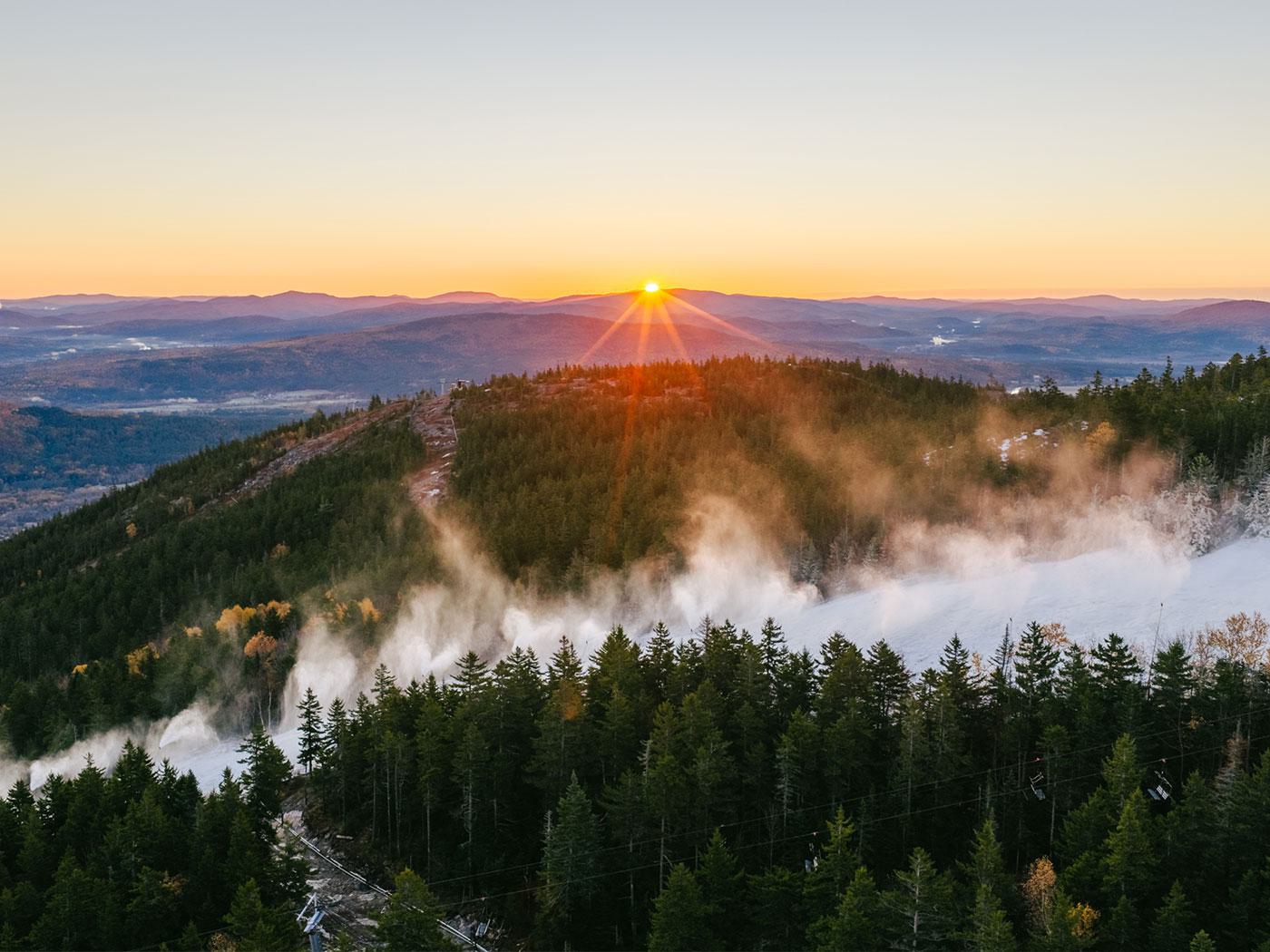
One of the earliest resorts to begin conventional snowmaking this fall was Mt. Rose – Ski Tahoe in Nevada, which started production on October 11. The resort took advantage of an early cold spell to operate approximately 40 snow guns over a 30-hour period, concentrating its efforts on Kit Carson Bowl.
Arizona Snowbowl followed on October 13, beginning snowmaking at 8 p.m. on terrain extending from the summit of the Arizona Gondola toward Agassiz Lodge.
By October 14, temperatures had dropped sufficiently for several Colorado resorts to begin making snow. Arapahoe Basin, Keystone, and Loveland were among the first to start, with Copper Mountain also reporting early-season activity.
At Loveland, crews began building coverage along Catwalk, Mambo, and Home Run, working toward a top-to-bottom opening route with approximately 1,000 feet of vertical drop.
Other Colorado resorts joined the effort as temperatures permitted. Winter Park began snowmaking October 15, followed by activity at Breckenridge, while Vail, Beaver Creek, and Purgatory have also been reported among the resorts taking advantage of October snowmaking opportunities.
Farther south, Taos Ski Valley in New Mexico began making snow October 15.
Snowmaking activity has also been reported at Heavenly in the Lake Tahoe region and Mammoth Mountain in California. At Mammoth, crews were operating snowmaking equipment on upper and middle Broadway during late October.
In Utah, Brian Head Resort confirmed that it had managed at least one day of snowmaking by the end of October, despite limited opportunities for sustained production.
Snowmaking Reaches New England
New England joined the snowmaking effort in mid-October, with Killington Resort in Vermont and Sunday River in Maine both beginning operations on October 17.
Killington fired up approximately 165 snow guns across five trails, including terrain in its North Ridge area and on Superstar. The resort has an additional incentive to establish early snow coverage on Superstar, which is scheduled to host World Cup ski racing in late November.
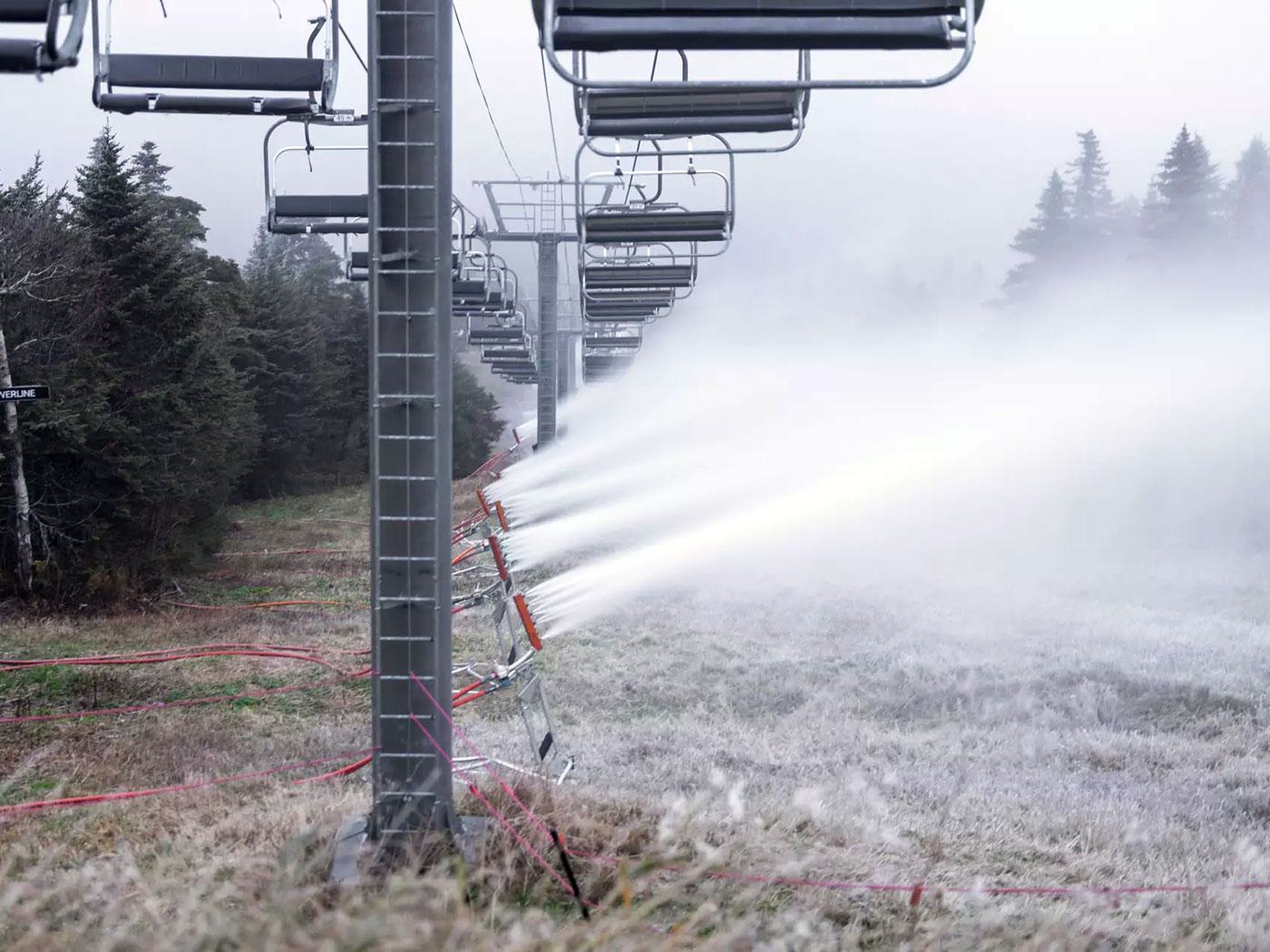
Sunday River began snowmaking at 7 p.m. on October 17, initially concentrating on Locke Mountain. A subsequent cold spell allowed the Maine resort to expand operations on October 27, when nearly 200 snow guns were operating across Locke, Barker, and Jordan mountains.
Sugarloaf, also in Maine, conducted its first snowmaking run overnight October 17–18 on Lower Competition Hill. The initial operation was brief, using approximately 500 gallons of water, but marked the resort’s first snowmaking activity of the season.
By the end of October, Killington was continuing to take advantage of favorable conditions, reporting another snowmaking run involving approximately 135 guns in the North Ridge area.
A Few Resorts Have Already Opened
While most ski areas are still preparing for opening day, several have already offered skiing during the 2026–2027 season.
One of the earliest was Ski Ward, a small ski area in Shrewsbury, Massachusetts, which opened a beginner slope for skiing on October 24–25 during its Fall Festival.
Ski Ward uses a Latitude 90 all-weather snowmaking system capable of producing snow at temperatures considerably warmer than those required for conventional snowmaking. The technology has allowed the resort to offer limited October skiing in recent years, even when New England’s autumn weather has been less than cooperative.
The technology is also making inroads in the Mid-Atlantic. As DCSki reported last December, Virginia’s Massanutten Resort installed a Latitude 90 system for its tubing hill, while Pennsylvania’s Spring Mountain installed two of the machines. These self-contained systems produce snow inside refrigerated chambers, allowing resorts to supplement conventional snowmaking during warmer weather.
The following week, Colorado’s Arapahoe Basin became the first resort in that state to open for the season, welcoming skiers and snowboarders on October 28. Initial operations included the High Noon trail, served by the Black Mountain Express lift.
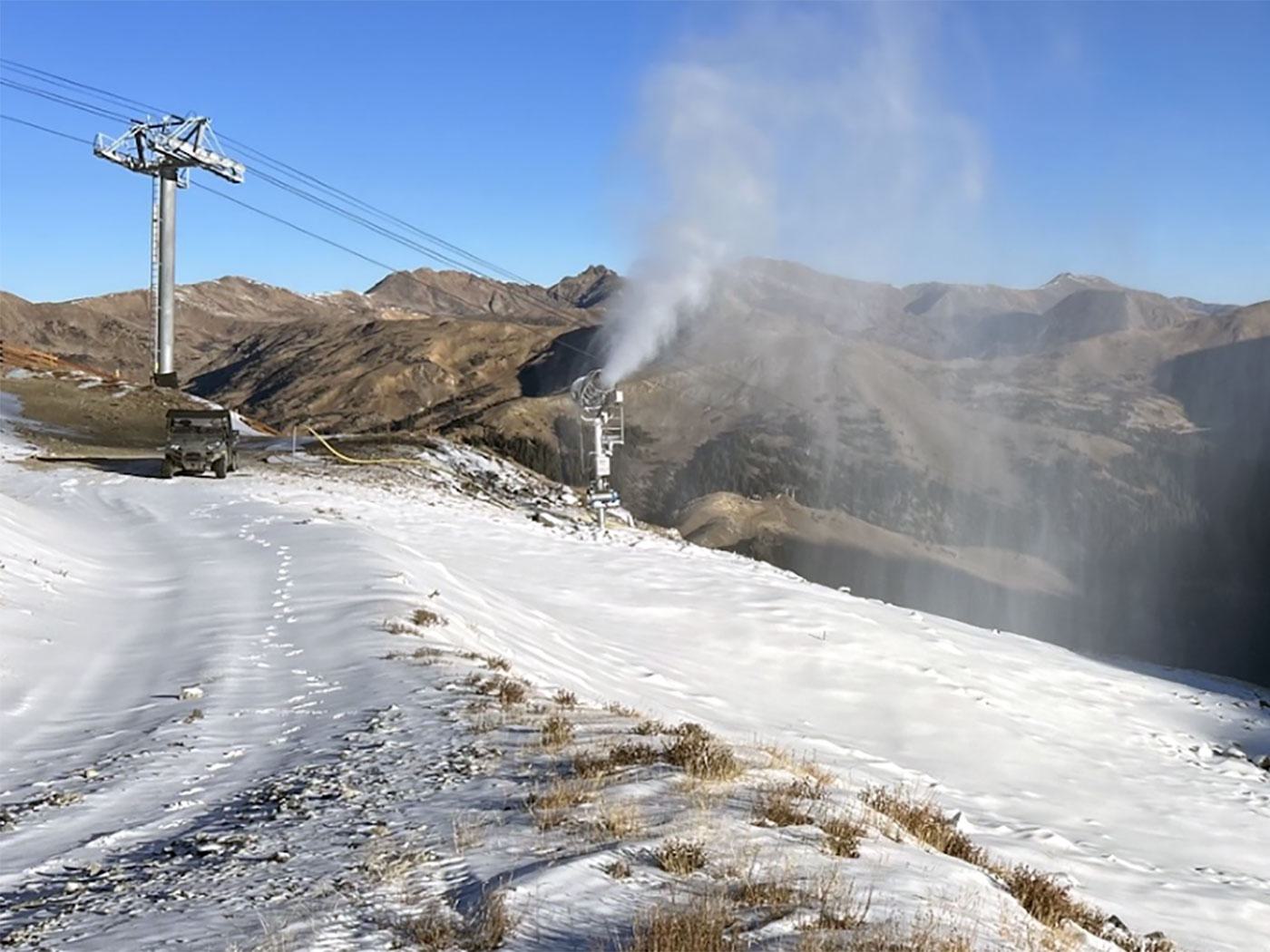
Keystone followed on October 30, becoming Colorado’s second ski resort to open for the winter.
Wolf Creek, another Colorado ski area, opened on October 31 after receiving substantial natural snowfall. Approximately 30% of its terrain was available, with the Treasure Stoke, Bonanza, and Nova lifts operating.
Wolf Creek’s season got off to an unusual start, however. The resort closed again on November 1 because of severe flooding and mandatory evacuation orders in Archuleta County. The closure was prompted by the regional emergency rather than a lack of snow, and the resort indicated that operations would resume once conditions permitted.
The Mid-Atlantic Waits for Its Turn
For skiers and snowboarders in the Mid-Atlantic, the first snowmaking reports from elsewhere in the country are an annual reminder that winter is approaching, even if local temperatures haven’t yet cooperated.
Higher-elevation resorts in West Virginia and North Carolina are typically among the first in the region to begin making snow when sustained cold weather arrives. As of November 2, however, DCSki had not confirmed the start of snowmaking operations at Mid-Atlantic ski areas.
The region’s resorts have been preparing for the coming season, with opening dates generally dependent on when temperatures allow snowmaking crews to establish sufficient coverage.


Reader Comments