
Summit County, home to Breckenridge, Keystone, Copper Mountain, and Arapahoe Basin, experienced its fifth-driest January-through-September period in 132 years of records. By mid-October, the entire county was experiencing drought conditions. Dillon Reservoir, a major source of drinking water for the Denver metropolitan area, stood at just 64% of capacity on October 1, compared with a seasonal average of 95%.
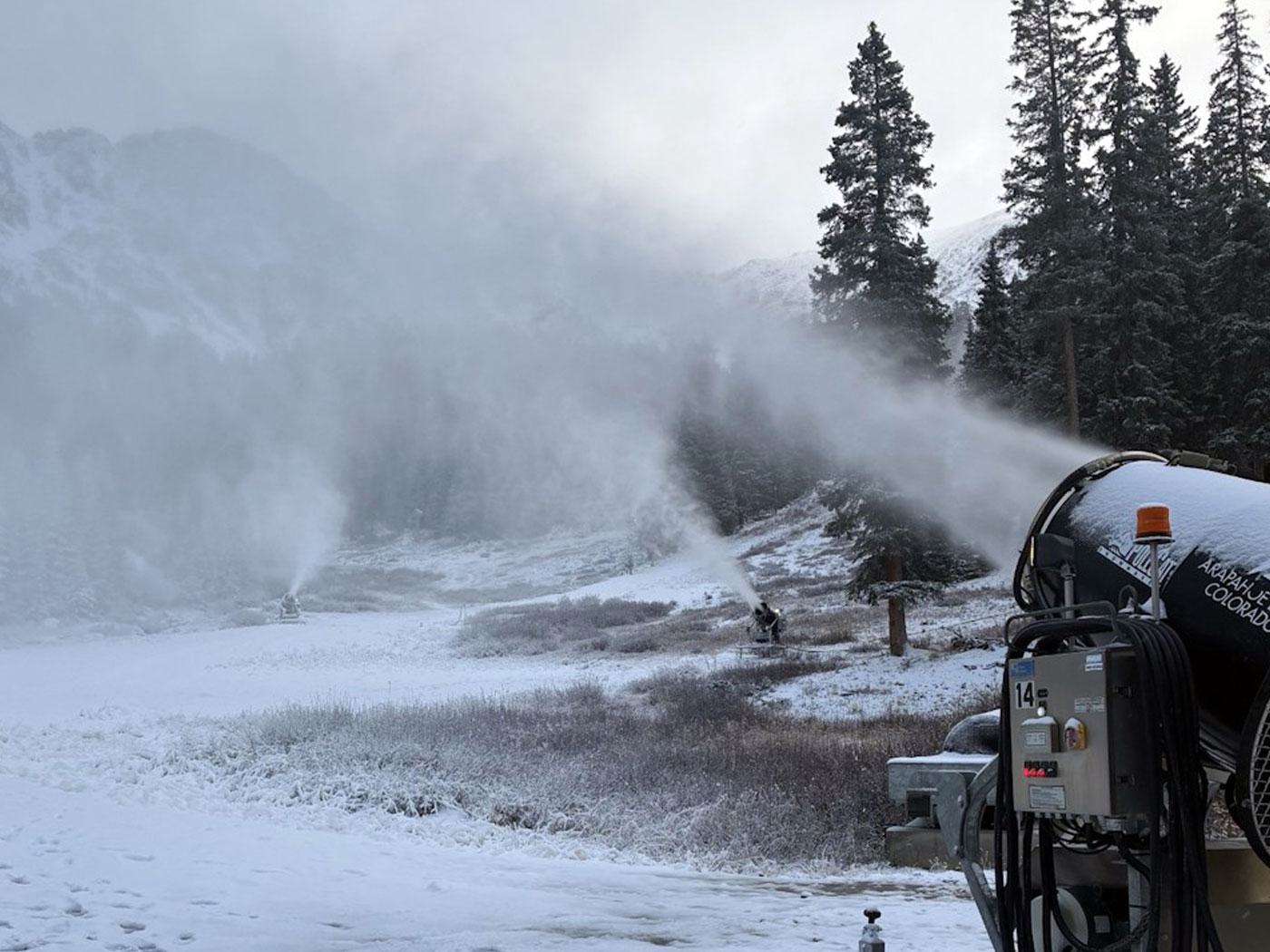
Snowmaking nevertheless began at several resorts in October. At Arapahoe Basin, where snowmaking covers approximately 5% to 6% of the mountain’s terrain, officials say they have adequate water rights to support operations. The resort estimates that 80% to 90% of the water used for snowmaking eventually returns to the surrounding watershed.
Some water is lost through evaporation and sublimation during snowmaking, while much of the remainder returns to streams and groundwater when the snow melts. However, water withdrawn during the fall and winter may not return until spring, potentially affecting streamflows during the intervening months.
The issue is particularly relevant to Mid-Atlantic ski resorts, where machine-made snow often covers most of the skiable terrain. Resorts typically obtain water from streams, reservoirs, or dedicated snowmaking ponds, with withdrawals subject to state regulations and available supplies.
When Pennsylvania’s Whitetail Resort opened in the early 1990s, its designers incorporated an extensive runoff collection system. Small channels direct water from melting snow into ponds, where it can be pumped back uphill and used for snowmaking again. The system, which DCSki described in a 2003 article, was intended to reduce the resort’s need for additional water withdrawals.
But recycling snowmaking water has its limits, particularly during extended periods of dry weather. Some water is inevitably lost, and even a well-designed collection system depends on precipitation and runoff to replenish its supplies. Whitetail’s original design was an innovative approach to water conservation, but no amount of recycling can guarantee an unlimited supply.


Reader Comments