
Known as snow farming, the process involves collecting snow into large piles at the end of winter and covering it with insulating materials to slow melting during the summer. When fall arrives, the surviving snow can be redistributed to create an early-season base, prepare racing facilities, or build terrain parks.
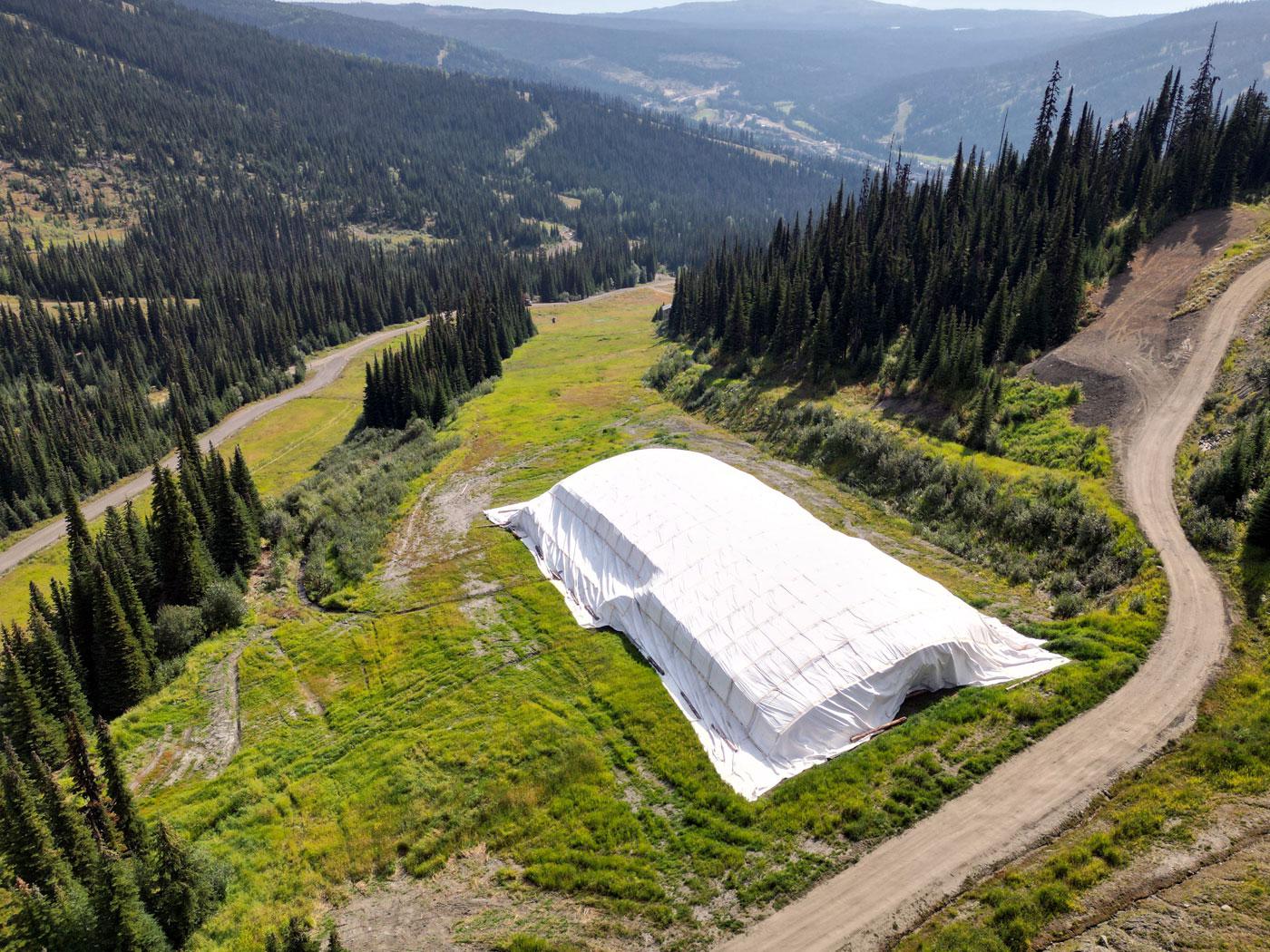
Finnish company Snow Secure has developed specialized insulating blankets for this purpose, allowing ski areas to preserve snow through months of warm weather. The technology has been used at several North American winter sports facilities, including Sun Peaks in British Columbia, Burke Mountain in Vermont, and Soldier Hollow in Utah.
One of the latest experiments took place at Colorado’s Aspen Snowmass, where crews covered piles of leftover snow at Snowmass and Buttermilk last spring. Despite Colorado experiencing its warmest summer on record, approximately 85% of the snow stored at Snowmass survived, according to resort officials.
On October 3 and 4, 2026, the resort put some of that preserved snow to use, opening a small rail park at Snowmass for free skiing and snowboarding. The event offered an unusually early opportunity to get on snow, weeks before the resort’s traditional opening.
Encouraged by the results, Aspen Snowmass plans to expand its snow-storage efforts. Rather than concentrating on an October terrain park, the longer-term goal is to preserve enough snow to help establish a base on selected trails ahead of the winter season.
But could snow farming work at Mid-Atlantic ski resorts, where summer temperatures are often considerably warmer than those at high-elevation Western destinations?
Research conducted at Vermont’s Craftsbury Outdoor Center suggests that the concept isn’t limited to cold mountain climates. In a 2019 study published in The Cryosphere, researchers documented how approximately 60% of a large snow pile survived from spring into October at an elevation of just 1,180 feet. The experiment used wood chips and reflective covering rather than Snow Secure’s blankets.
The Vermont study demonstrated that substantial amounts of snow can survive warm, humid summers when properly insulated. Researchers also found that larger piles generally retain snow more efficiently because less surface area is exposed relative to their volume.
Whether the technique would be practical in the Mid-Atlantic remains an open question. Resorts would need suitable storage space, equipment to move the snow, and enough leftover snow at the end of winter to make preservation worthwhile. The costs of insulation, labor, and redistribution would also need to be weighed against conventional snowmaking.




Reader Comments