
Resort Profiles have been a cornerstone of DCSki for decades, helping readers learn about unfamiliar mountains, compare ski areas, and plan ski trips. Recent enhancements have made the profiles even more useful, with improved navigation, additional resort information, and new ways to explore the region’s skiing and snowboarding options.
Exploring the Mid-Atlantic’s Ski Areas
The DCSki Resort Guide provides an overview of 30 active ski areas, ranging from smaller community mountains to some of the region’s largest destination resorts.
An interactive map shows exactly where each resort is located across the Mid-Atlantic, making it easy to visualize the region’s ski areas and their proximity to one another. DCSki was an early adopter of interactive mapping for ski resort information, introducing the feature when such maps were still relatively uncommon on the web. A sortable table complements the map, allowing visitors to compare mountains by vertical drop, trail count, and skiable acreage.
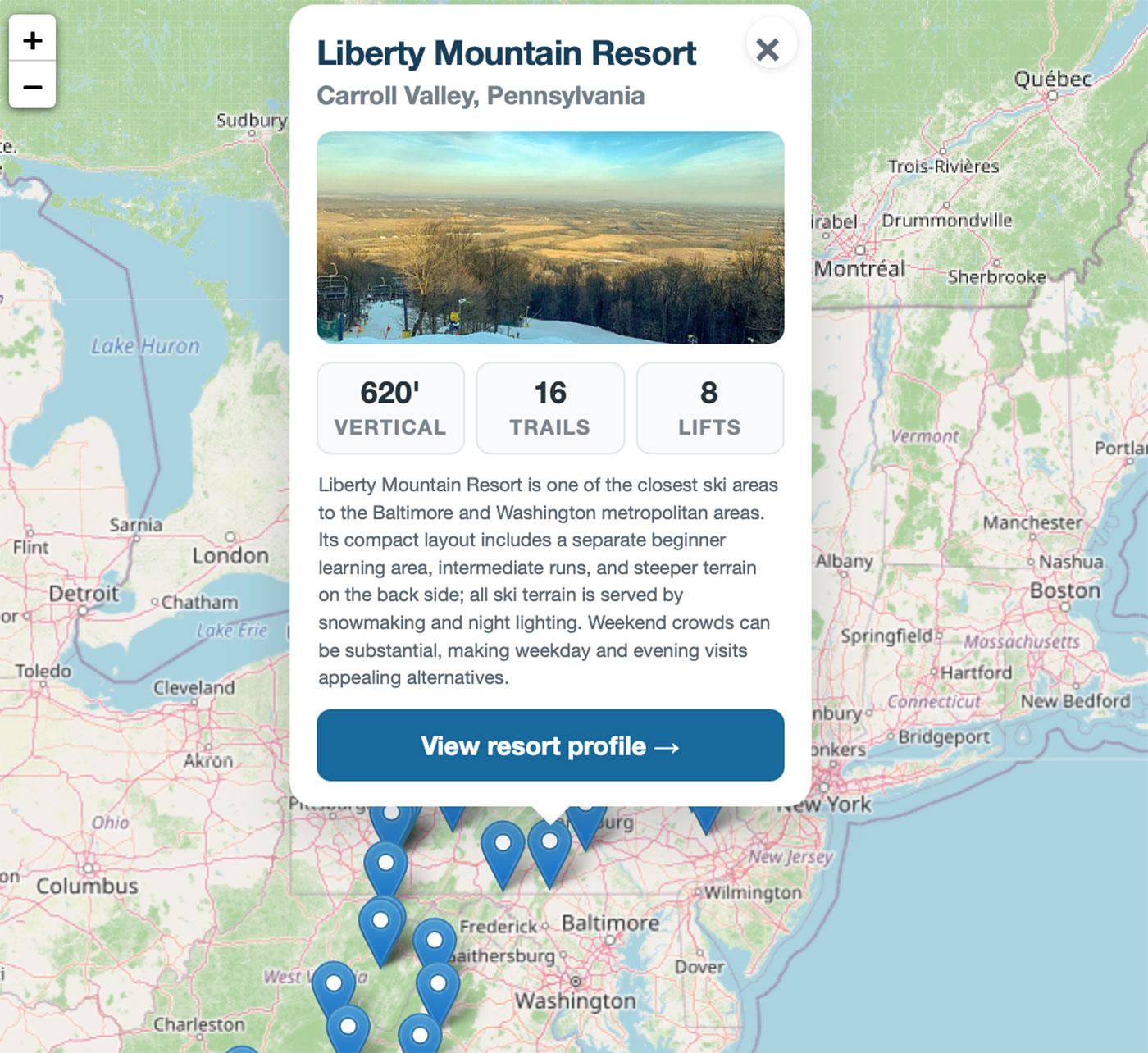
Filters make it possible to narrow the selection by state, mountain size, available amenities, and participation in major ski passes, including Epic, Ikon, and Indy. For example, visitors can identify Pennsylvania resorts offering night skiing and snow tubing, or find West Virginia mountains with at least 1,000 feet of vertical drop. Pass information has been updated for the 2026–2027 season.
Each resort has its own detailed profile, beginning with an overview of the mountain’s character, terrain, and distinguishing features. The latest updates include refreshed resort descriptions, mountain statistics, and information about recent improvements where applicable.
Profiles include vertical drop, base and summit elevations, skiable acreage, trail counts, lift information, and trail difficulty breakdowns. Regional rankings provide additional context, identifying how individual mountains compare with others throughout the Mid-Atlantic.
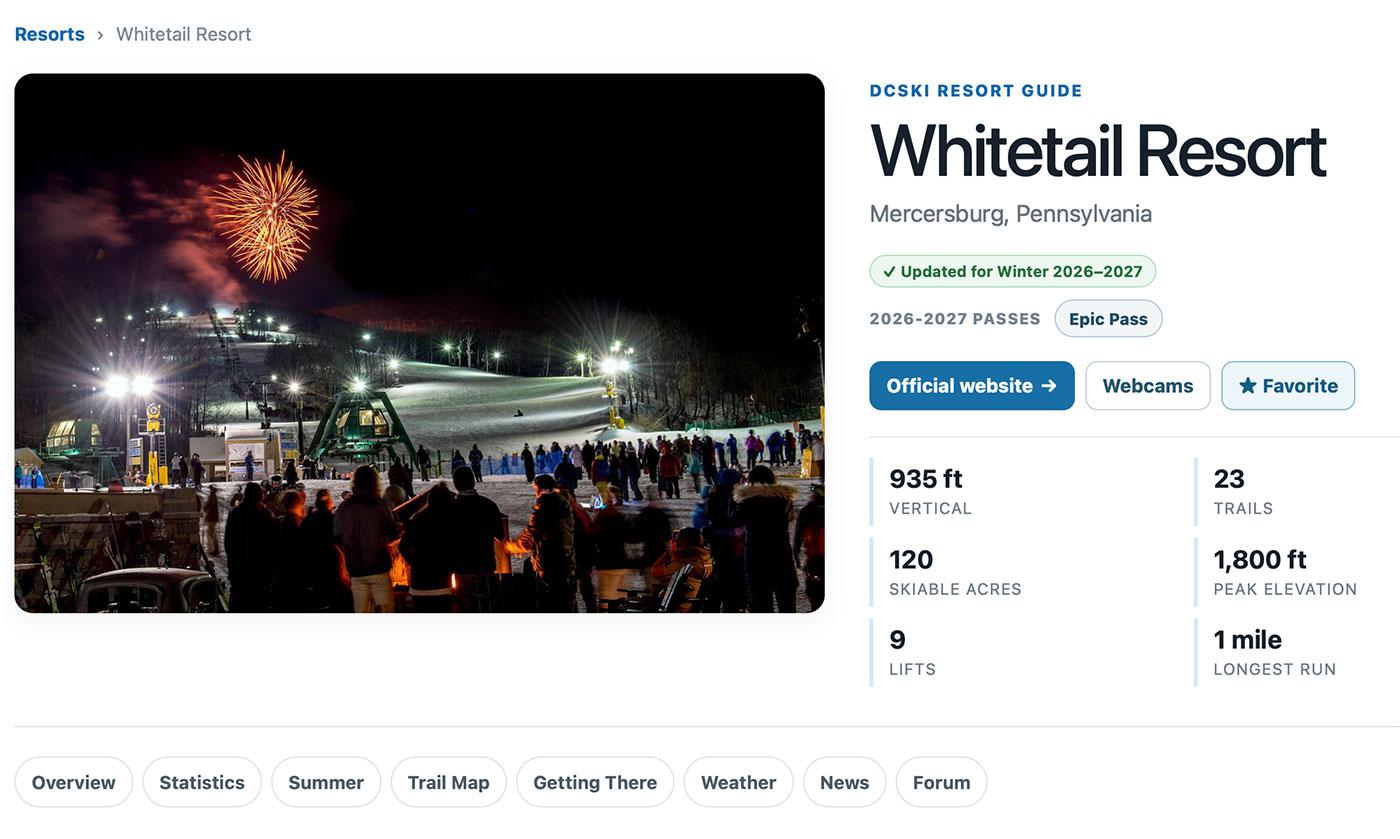
Visitors can also explore trail maps, terrain parks, snow tubing, and other resort amenities. Information about summer activities is included for mountains offering year-round recreation.
Planning a Trip and Exploring Resort History
Beyond basic mountain statistics, Resort Profiles bring together several resources useful for planning a visit.
The Getting There section provides estimated driving times and distances from major Mid-Atlantic cities, along with links to Google Maps for directions. Each profile also includes current weather observations and National Weather Service forecasts, helping visitors evaluate conditions before heading to the slopes.
Resort Profiles are also connected to DCSki’s extensive archives of news and community discussion. Related articles provide information about resort improvements, historical developments, and firsthand reports, while recent DCSki Forum discussions offer perspectives from other skiers and snowboarders.
Nearby resort recommendations help visitors discover other mountains in the same region, with distances and basic statistics provided for comparison. Registered DCSki members can also designate favorite resorts for convenient access.
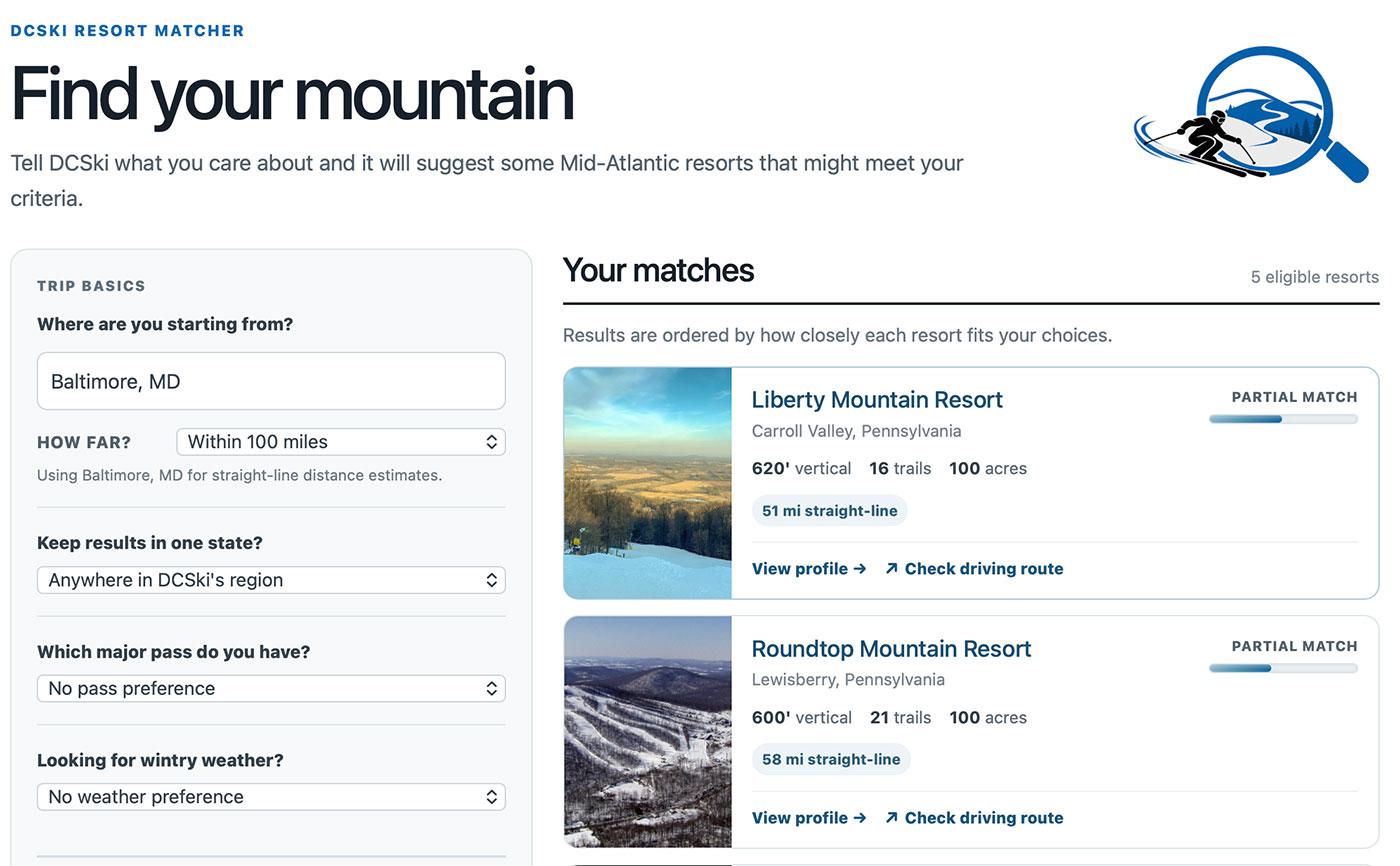
Another recent addition is DCSki’s Resort Matcher, which helps visitors identify ski areas based on their preferences. Users can specify a starting location, travel radius, preferred ski passes, mountain characteristics, and desired amenities. The tool then ranks resorts according to how closely they match those criteria, providing links to individual Resort Profiles.
Updated and Ready for Winter
DCSki’s Resort Profiles have evolved substantially since the site’s early years. What began as a resource for finding information about Mid-Atlantic ski areas has grown into a comprehensive guide combining resort statistics, maps, weather forecasts, travel information, historical coverage, and community discussion.
The latest updates bring the profiles up to date for the approaching winter season while building on improvements introduced throughout 2026. DCSki will continue revising information as resorts announce additional changes and the season progresses.
Readers are encouraged to explore the DCSki Resort Guide and discover the many resources available for researching mountains and planning ski trips throughout the Mid-Atlantic.





Reader Comments